How Much Does a Wedding Videographer Cost?
The flowers will wilt, the cake will be eaten, and the dance floor will clear out by midnight. But your wedding film will still be playing on your TV on your tenth anniversary, and your kids will watch it one day to see you young, nervous, and laughing. That is why the real question is not just how much does a wedding videographer cost, it is what that price actually buys you, and where it quietly climbs once you start adding the things you really want.
To work out how much does a wedding videographer cost for your own day, start with that average and then adjust it for hours, team size, and deliverables. In 2026, US couples spend a national average of about $2,300 for a wedding videographer, according to The Knot Real Weddings Study of more than 10,000 couples married in 2025, with most couples landing between $1,500 and $5,000 once coverage hours and deliverables are counted.
Below is the complete, no-fluff breakdown: the national average, the four price tiers item by item, what drives the price in each US region, the hidden extras that inflate the final bill, the photo and video bundle math, and the exact questions to ask before you sign a contract.
The National Average: What US Couples Actually Paid in 2026
Pinning down one number is tricky because videographers sell packages, not hours. But the benchmark data is consistent enough to budget with confidence:
- National average: about $2,300, per The Knot 2026 Real Weddings Study, with a median near $1,900. A quarter of couples paid $1,000 or less, and the upper quarter paid about $3,300 or more.
- Typical couple spend: $1,500-$5,000 for a standard package with 6 to 8 hours of coverage and a highlight film.
- Higher survey average: Zola reports $3,993, with most couples spending $3,200-$4,800, reflecting fuller packages with longer coverage and cinematic edits.
- Entry-level floor: $1,000-$1,500 buys 4 to 6 hours from an early-career videographer or a simple ceremony recording.
- Luxury ceiling: $7,000-$15,000+ for cinematic teams, multi-camera coverage, and multi-day destination weddings.
- Share of the total budget: videography runs about 8% of total wedding spend, roughly $2,400 on a $30,000 wedding, according to Zola.
Why do The Knot and Zola disagree by more than $1,600? They measure different things. The Knot surveys a broad national sample, including budget bookings and short coverage. Zola measures spending on its own platform, where couples book fuller packages in pricier metro markets. The truth for most couples sits between the two: a skilled mid-tier videographer for a full day costs $2,500-$4,000 in most US markets.
Only about 37% of couples hire a videographer at all, according to The Knot, which makes video the vendor couples most often debate, and the one they most often regret skipping. In the same study, 19% of couples who skipped video said they regretted it. That gap is why asking how much does a wedding videographer cost can give you two very different answers.
One more number explains the price better than any average: a wedding is an 8 to 12 hour shoot day plus 20 to 40 hours of editing. Colour grading, sound design, music licensing, multicam cutting, and audio sync are where most of the labour lives. When a quote looks high, you are mostly paying for the edit, not the day.
Wedding Videographer Cost by Package Tier
The single biggest variable in any quote is the combination of coverage hours and deliverables. More hours mean more footage, and more footage means more editing time. These four tiers cover nearly every quote you will see in the US in 2026. Keep that in mind when you compare quotes, because how much does a wedding videographer cost depends most on hours and deliverables.
| Package tier | Price range | Coverage | Cameras | Main deliverables | Turnaround |
|---|---|---|---|---|---|
| Budget / ceremony only | $1,000-$1,800 | 4-6 hours | 1 | Ceremony recording, basic highlight reel, digital delivery | 4-8 weeks |
| Standard / mid-range | $2,500-$4,000 | 6-8 hours | 1-2 | 3-5 minute highlight film, full ceremony edit, reception through first dances, licensed music | 6-10 weeks |
| Premium / cinematic | $4,000-$7,000 | 8-10 hours | 2-3 | 5-8 minute cinematic highlight, full ceremony and reception edits, getting-ready coverage, drone footage | 8-12 weeks |
| Luxury / destination | $7,000-$15,000+ | 12+ hours | 3+ | Cinematic trailer, 15-30 minute documentary film, full ceremony and reception, rehearsal dinner, same-day edit, raw footage | 12-16 weeks |
Budget Tier: $1,000-$1,800
The budget tier is basic documentation of the ceremony and the key moments. One videographer, usually one camera on a tripod, films the ceremony, the vows, and a short stretch of the reception. You get a ceremony recording of 30 to 60 minutes, a short highlight reel, basic colour correction, and digital delivery. Turnaround is usually 4 to 8 weeks. This tier suits couples who want the ceremony captured but are not prioritising video in their budget. Be honest with yourself about what it is: a record of the day, not a cinematic film. If someone offers cinematic quality at this price, they are either just starting out or overpromising. Ask to see two or three recent full-length examples, not just highlight reels, before you book.
A newer option in this price band is the wedding content creator, who delivers short, social-media-ready vertical clips within 24 hours for $500-$999, according to Zola. A content creator is not a replacement for a cinematic edit, but for couples who mainly want phone-ready clips to share, it covers a different need at a much lower price.
Standard Tier: $2,500-$4,000
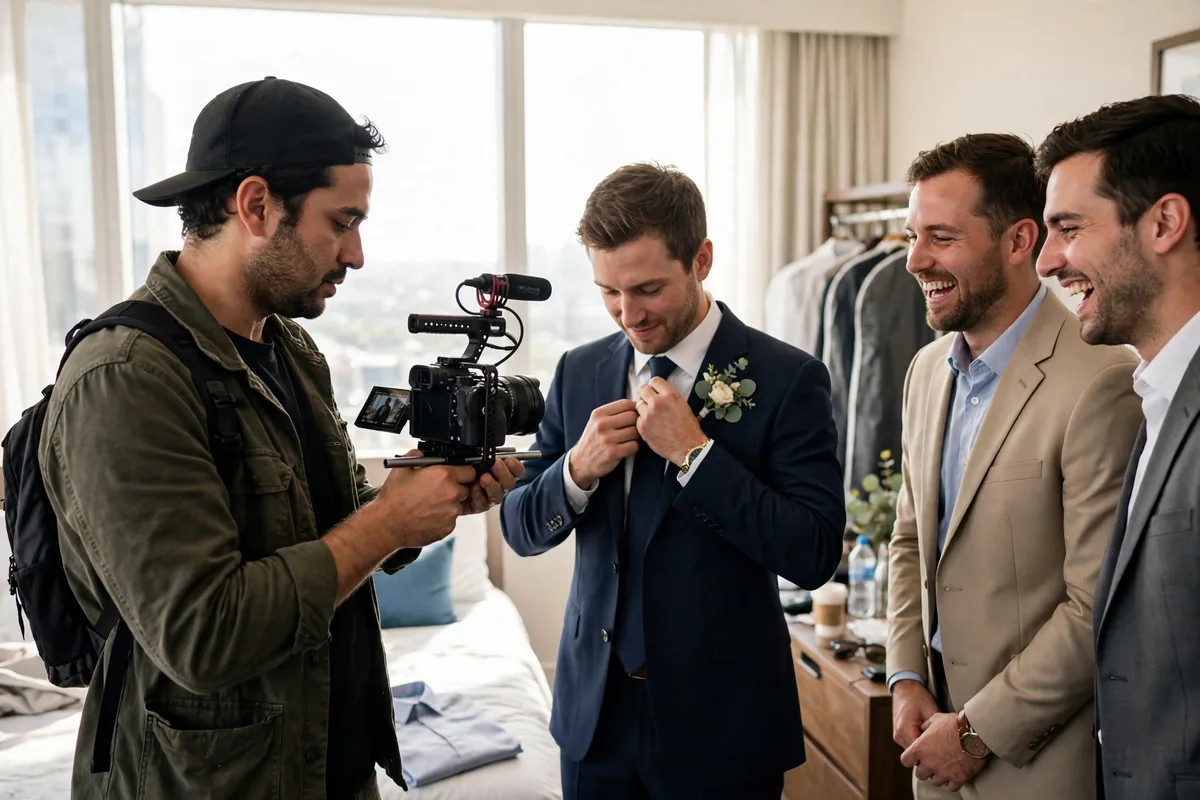
The standard tier is the sweet spot for most couples, and it is where the national average lands. Coverage typically starts at getting ready and ends after the first dances and toasts, about 6 to 8 hours. One or two cameras provide shot variety, and professional audio capture with lapel microphones on the officiant and the groom makes the vows sound close and clear instead of hollow and distant. Deliverables are a 3 to 5 minute highlight film, a full ceremony edit, reception coverage through the first dances, colour grading, licensed music, and digital delivery. Turnaround runs 6 to 10 weeks.
This is where you start getting a real wedding film, not just documentation. When you compare standard-tier quotes, check the audio setup first: camera-only audio is the single biggest difference between amateur and professional wedding video.

Premium Tier: $4,000-$7,000
The premium tier is a full cinematic wedding film. Two or three cameras cover every angle at once, so the film cuts between the bride walking down the aisle, the groom’s reaction, and the guests wiping away tears, all from the same moment. Getting-ready coverage, drone footage for venue establishing shots, and an extended documentary-style edit are usually included, along with a 5 to 8 minute cinematic highlight, full ceremony and reception edits, licensed music, an online gallery, and sometimes USB delivery. Turnaround runs 8 to 12 weeks.
At this price, expect a portfolio of consistent, high-quality work. If the samples vary wildly in quality, the studio may be inconsistent.
Luxury Tier: $7,000-$15,000+
The luxury tier is the full experience. A team of two to four videographers covers every moment from morning preparation through the last dance, often 12 hours or more. Deliverables include a cinematic trailer for social media, a 15 to 30 minute documentary film, the full ceremony and full reception, rehearsal dinner coverage, a same-day edit screened at the reception, drone footage, raw footage, and physical deliverables such as a boxed USB drive. Some studios offer multi-day coverage including the rehearsal dinner and a morning-after brunch. Turnaround runs 12 to 16 weeks. At this investment level, chemistry with your videographer matters enormously, since they will be with you for the entire day.
Highlight Film vs Full-Length Wedding Film
Every package decision comes down to two formats. A highlight film, also called a highlight reel, runs 3 to 10 minutes. It is edited cinematically, set to music, and built around the emotional peaks of the day: the ceremony, the first look, the first dance, and the key moments in between. This is the format most couples share with family and post online, and the one they actually rewatch.
A full-length film, sometimes called a documentary edit or feature film, runs 30 to 90 minutes. It captures the full ceremony, the speeches, the toasts, and the reception in sequence, without cutting for pace. Think of it as an archive: you will not watch it every year, but you will want it when a family member asks to see the vows.
Both films come from the same footage shot on the same day, so choosing both is a deliverable decision, not a shooting-day decision, and most mid-tier and premium packages include both. If your budget is tight, a polished 5 to 8 minute highlight captures the emotional arc of the day beautifully and keeps you in the $1,500-$3,000 range with a skilled mid-tier videographer.

What Drives the Cost of a Wedding Videographer
Coverage hours. Time on site is the primary cost driver. Packages are priced for a fixed number of hours, and overtime is billed separately, commonly $200-$400 per hour. If your ceremony venue is a 45 minute drive from the reception and your day runs long, overtime adds up fast. The biggest pricing jump is from ceremony-only coverage to full-day coverage, so decide your start and end times before you ask for quotes.
Experience and portfolio quality. An entry-level videographer may charge $800-$1,500 for a basic package. An established filmmaker with a recognisable style and hundreds of weddings in the portfolio commands $4,000-$8,000 for the same hours. The editing and storytelling skill, not the camera gear, is what you are paying for at the premium tier.
Team size. A solo videographer can only be in one place at a time. During getting-ready coverage, that means one location. A two-person team captures the bride’s prep and the groom’s prep at the same time, which makes the final film significantly richer. A second shooter typically adds $500-$1,500, and it is the add-on most couples say was worth it after the fact.
Location and travel. Destination or remote venues require travel, gear transport, and sometimes accommodation, adding $500-$3,000 or more. Most videographers include a free travel radius, often 50 to 75 miles from their base, and charge beyond it. Shooting in a major metro market also carries a regional premium, which the next section breaks down.
Deliverables and editing time. A 4 minute highlight reel is a very different editing project from a 60 minute cinematic feature. Colour grading, sound design, music licensing, multicam cutting, and audio sync all take time. The more polished and comprehensive the final product, the more post-production labour goes into it, and the longer the turnaround.
Season and day of the week. Peak season runs May through October, with Saturday bookings in June, September, and October the most competitive. Popular videographers in those windows fill up 12 to 18 months in advance. Off-peak bookings, November through March, and weekday weddings can come with reduced rates of 10-30%.
Style. A straightforward documentary style, which records the day as it happens, costs less than a cinematic or music-video style with staged shots, drone sequences, and heavy colour grading. A filmmaker who creates a narrative typically charges $3,000-$10,000+, while a videographer focused on documentation charges $1,000-$3,000. Decide which style you want before you compare prices, or you will be comparing two different products.

Wedding Videographer Cost by US Region
Location matters more than almost any other factor. The Knot Real Weddings Study breaks down average videography spend by region, and the gap between the cheapest and priciest regions is about $900 on the same service.
| US region | Average cost |
|---|---|
| Mid-Atlantic | $3,000 |
| Northeast / New England | $2,700 |
| Midwest | $2,200 |
| West | $2,200 |
| South / Southeast | $2,100 |
| Southwest | $2,100 |
Within each region, the city matters even more than the region. Zola’s market-level data puts San Francisco at about $6,091 and Salt Lake City at about $3,005 for comparable 150-guest coverage, a gap of more than $3,000 for the same day. Videographers in New York City, Los Angeles, and San Francisco regularly start basic packages at $3,500-$4,500. In Houston, most couples spend $1,500-$3,500 for a solid mid-range package. Smaller cities and rural markets in the Midwest and South offer the most competitive pricing in the country. If your wedding is in a high-cost city, get quotes from videographers in a nearby smaller market too, and compare the travel fee against the savings.
Hidden Extras: What Is Not Included in the Base Price
The base price advertised online is almost always the entry-level package, not the price for everything you will actually want. Always request an itemised quote that lists each deliverable explicitly, and check these extras before you sign.
| Extra or add-on | Typical cost |
|---|---|
| Second videographer | $500-$1,500 |
| Drone / aerial footage | $300-$800 |
| Overtime beyond package hours | $200-$400 per hour |
| Raw footage delivery | $200-$500 |
| Same-day highlight edit | $500-$2,000 |
| Rush / expedited editing | $200-$600 |
| Travel beyond included radius | $500-$3,000+ |
| Engagement session film | $300-$500 |
| Rehearsal dinner coverage | $400-$800 |
| Social media reels | $200-$400 |
| Physical delivery (USB, custom box) | $50-$200 |
Two extras deserve a closer look. Drone footage is a legal and logistical item, not just a camera angle. The operator must hold an FAA Part 107 licence, and indoor venues, national parks, and venues near airports often restrict or ban drones entirely. Confirm the licence and the venue’s drone policy in writing before you pay for it. Raw footage is the unedited files from the day. Some videographers charge $200-$500 extra for it, others include it. Ask, because raw footage is your only fallback if you ever want a re-edit or clips for an anniversary film years later.

Videographer vs Photographer: The Bundle Math
Photo and video are the two biggest creative line items in most wedding budgets, so the bundle question is worth doing properly. For reference, mid-range wedding photography packages typically run $3,000-$5,000. Our full breakdown of how much a wedding photographer costs shows the same tier structure, with the same regional premiums and the same hidden extras.
Adding a mid-tier videography package at $2,000-$3,500 to mid-tier photography brings the standalone combined cost to roughly $5,000-$8,500. A bundled studio package at the same tier often lands at $4,500-$7,000. According to Wezoree, most couples who book both services from a single vendor save 15-25% compared with hiring two separate professionals. On a $6,500 combined booking, that is $975-$1,625 back in your pocket.
The savings are real, but they come with a trade-off: you are placing both deliverables in the hands of one creative team. If the style is the right fit, the results are cohesive and worth it, since both the photos and the film share the same creative direction and lighting approach. Vet the combined portfolio carefully before committing, and make sure you love their work across both mediums, not just one.
Also confirm the team size in the bundle: some studios send one photographer and one videographer, others send a single person to do both, which is a very different product. For the full picture of where video sits in your overall spending, see our wedding budget breakdown, and watch out for the extras that catch couples by surprise in our guide to hidden wedding costs.
| Scenario (mid-tier, 8 hours) | Photo | Video | Combined total |
|---|---|---|---|
| Hired separately | $3,000-$5,000 | $2,500-$4,000 | $5,500-$9,000 |
| Bundled from one studio | Single package, one team | $4,500-$7,000 | |
| Typical saving | 15-25% off the separate total | $800-$2,000 | |
How much should video take from your total budget? A useful rule of thumb is about 8% of the total wedding budget for video alone, and about 18-20% for photo and video together. On a $20,000 wedding, that means roughly $1,600 for video. On a $30,000 wedding, about $2,400. On a $50,000 wedding, about $4,000. These are planning guides, not rules: a couple who cares most about the film can spend 12% on video and cut the florals, and a couple who barely watches video can spend 4% and put the money into the venue.
How to Save on Your Wedding Videographer
Bundle photo and video. The 15-25% savings from booking both with one studio is one of the clearest and most reliable ways to reduce combined vendor spend. Start your search with studios that advertise both services, and compare their bundle price against two separate quotes.
Shorten the coverage window. If you are not concerned about getting-ready footage and are willing to skip the final hours of the reception, a 4 to 6 hour package instead of an 8 to 10 hour package cuts cost meaningfully without sacrificing the ceremony and the key reception moments.
Choose highlight film only. A polished 5 to 8 minute highlight captures the emotional arc of your day beautifully and is the format you will actually watch regularly. Skipping the full-length documentary edit keeps you in the $1,500-$3,000 range with a skilled mid-tier videographer.
Book early. Popular videographers in peak-season markets fill their calendars 12 to 18 months out. Booking early gives you the most choice at every price point and sometimes better rates before a videographer raises prices as the calendar fills.
Pick an off-peak date. Weekday weddings and off-season dates from November through March can save 10-30% with the same videographer. A Friday wedding in February from a videographer who charges $4,000 for a June Saturday may come in closer to $3,000.
Skip the same-day edit. A same-day reception highlight sounds impressive but adds $500-$2,000 and requires considerable on-site setup. It is rarely worth the cost unless screening the film for your guests is a genuine priority.
Questions to Ask Before You Book
These questions separate professional videographers from people with cameras. The answers reveal their process, their reliability, and whether their work will match your expectations. Ask them in person or on a video call, and write the answers into the contract.
- What packages do you offer, and what is included in each? Ask for an itemised list, not a headline price.
- How many hours of coverage does the package include, and what is your overtime rate per hour?
- Will you personally be filming on the day, or will you send a team member or an associate?
- Can I see two or three full-length wedding films, not just highlight reels?
- What audio equipment do you use? Lapel microphones on the officiant and the groom are essential.
- How many videographers will be on site, and is a second shooter included or an add-on?
- What is the editing timeline, and will I see a draft before final delivery?
- What is your backup equipment plan if a camera or a microphone fails mid-ceremony?
- What happens if you get sick or have an emergency on the wedding day? Is there a replacement videographer?
- Do you carry liability insurance, and will your venue require a certificate of insurance?
- Is drone footage included, and are you FAA Part 107 licensed? Does my venue allow drones?
- Is raw footage included, and how is the final film delivered: online gallery, download link, or USB?
- What is the payment schedule, the cancellation policy, and the rescheduling policy?

Red Flags to Watch For
No full-length films to show. A portfolio of only 3 minute highlight reels hides weak ceremony audio, shaky reception footage, and inconsistent editing. Any professional should have two or three complete films ready to share.
No contract, or a vague one. A professional videographer works from a written contract covering hours, deliverables, delivery date, payment schedule, cancellation, and what happens if they cannot attend. A handshake and a Venmo request is a risk you do not need.
No liability insurance. Most US venues require vendors to carry liability insurance and provide a certificate before the day. A videographer without it may be turned away at the door.
Cinematic quality promised at a budget price. A $1,200 quote promising drone footage, a same-day edit, and a 30 minute documentary film is overpromising. Something in that list will not happen.
Pressure to pay in full up front. The standard US payment schedule is a deposit of 25-50% to hold the date, with the balance due one to two weeks before the wedding. Full payment months in advance, or cash only with no receipt, is a warning sign.
Booking Timeline, Payment, and the Contract
Book 8 to 12 months in advance for peak-season dates, and 12 to 18 months out for the most in-demand videographers in major cities. Off-season and weekday weddings have more availability, and a booking window of 3 to 6 months is usually enough.
If your date is within 3 months, check their full films extra carefully, since the videographers still available are often just starting out or had a cancellation. The standard payment schedule in the US is a deposit of 25-50% to reserve the date, a second payment partway through planning, and the balance due 1 to 2 weeks before the wedding. Never pay the full amount before the day, and pay by card or check, not cash, so you have a record.
Your contract should state the date, the hours, the number of videographers, every deliverable with its format and length, the delivery date, the overtime rate, the travel terms, the cancellation and rescheduling policy, and who owns the raw footage. Read the cancellation clause twice: some contracts keep the full deposit on cancellation, others apply it to a rescheduled date. Also confirm the venue requirements in advance. Many US venues require a certificate of insurance from every vendor, and some ban drones, which can change what your videographer can deliver.
Frequently Asked Questions
How much does a wedding videographer cost per hour?
Most videographers price by package rather than by the hour. When overtime is billed, expect $200-$400 per hour beyond your included package hours, according to Zola. If you find a videographer who books hourly, rates typically start around $150-$300 per hour, though this pricing structure is uncommon for weddings.
What is the average cost for a wedding photographer and videographer together?
Booking both services from a single studio typically runs $4,500-$7,000 for mid-tier quality, compared with roughly $5,500-$9,000 when hiring separately. Bundling saves most couples 15-25%, according to Wezoree. See our guide to wedding photographer costs for the full photography breakdown.
Is a wedding videographer worth it?
For most couples, yes. Video captures what photography cannot: vows, laughter, music, toasts, and movement. It is consistently the number one thing couples who skipped it say they regret, with 19% of couples in The Knot study saying they wished they had hired one. If the budget is tight, even a basic ceremony recording at $1,000-$1,500 captures the most important moments of the day.
How far in advance should I book a wedding videographer?
Book 8 to 12 months in advance for peak-season dates from May through October, especially Saturdays. Top videographers in major cities book 12 to 18 months out. Off-season dates from November through March and weekday weddings have more availability and sometimes lower rates.
The Bottom Line
So, how much does a wedding videographer cost? For most US couples in 2026, the honest answer is $2,300 on average, $1,500-$5,000 for a solid standard package, and $4,000-$7,000 if you want a cinematic film with drone footage and a second shooter. Start with the tier that matches how much you will actually watch the film, not the tier that sounds impressive. Get three itemised quotes, watch two full films from each videographer, ask about audio, backup equipment, insurance, and the delivery date, and get every answer in the contract. Then book early, pay the deposit, and stop worrying about the price. On the day, the best money you spend is the money that lets you be present, knowing the vows, the laughter, and the first dance are being captured properly, and will still be there to watch in fifty years.
In short, how much does a wedding videographer cost comes down to the tier you choose and the hours you book. Before you sign, ask again how much does a wedding videographer cost for the exact hours, team, and deliverables in your quote, so the price you compare is the price you will pay.