How Much Does a Wedding Photographer Cost? (2026 Guide)
The flowers will wilt, the cake will be eaten, and the dance floor will be cleared. But your wedding photos will be on your wall — and in your kids’ hands — fifty years from now. That’s why the real question isn’t how much does a wedding photographer cost, it’s what the price actually buys you and where it quietly climbs. In 2026, US couples spend a national average of roughly $2,900–$3,000 for full-day coverage (per The Knot’s 2025 Real Weddings Study of 17,000+ newlyweds), with most landing between $2,500 and $5,000 once extras are added. Below is the complete, no-fluff breakdown: the four price tiers item by item, what drives the price in each US region, the hidden extras that inflate the final bill, and the exact questions to ask before you sign.
The National Average: What US Couples Actually Paid in 2026
Pinning down one number is tricky because photographers sell packages, not hours. But the benchmark data is consistent:
- National average (full day): ~$3,000 — The Knot 2025 Real Weddings Study, 17,000+ respondents
- Typical couple spend: $2,500–$5,000 for a standard 8-hour package with digital delivery
- Entry-level floor: $1,000–$1,500 buys 4–6 hours from an early-career photographer
- Luxury ceiling: $10,000–$20,000+ for editorial specialists and multi-day destination coverage
- Effective hourly rate: roughly $300–$400/hour for an experienced pro’s 8-hour package
One thing the averages hide: prices have climbed steadily. The 2019 national average sat near $2,400; gear, editing software, and demand for richer deliverables (drone footage, same-day edits) have pushed it to ~$3,000 and rising. Booking early — 12 to 18 months out for peak-season Saturdays — locks in current rates before annual increases.
Where Your Money Actually Goes: Inside a Photographer’s Costs
A $4,000 package isn’t $4,000 of profit. Understanding the overhead explains why experienced photographers charge what they do — and why a suspiciously cheap quote usually means corners are being cut somewhere you can’t see:
- Gear: $15,000–$30,000 minimum for professional bodies, lenses, lighting, and full backup equipment. Top-tier photographers carry $100,000+ in gear so a dropped camera never ruins your wedding.
- Editing time: 20–40 hours per wedding — culling thousands of frames, color correction, retouching. You’re paying for a week of post-production, not just the 8 hours on site.
- Software and delivery: editing subscriptions (~$240/year for Adobe’s photography plan and up), gallery hosting platforms, backup storage.
- Business costs: liability insurance (many venues require it), taxes (self-employment tax alone is ~15%), website, marketing, accounting.
- The wedding day itself: 10–14 hours on their feet when you count setup, travel, and teardown — plus the consultations, timeline planning, and venue scouting beforehand.
None of this means you should overpay. It means when a quote looks too low, ask what’s missing — the answer is usually backup equipment, insurance, or editing time.
The 4 Price Tiers, Item by Item
Every photographer’s website shows a tier table with a one-line “what’s included” cell. Here’s the version that actually lets you compare quotes — the deliverables that change between tiers:
Tier 1: Budget / Entry-Level — $1,000–$2,500
- Coverage: 4–6 hours, one photographer
- Photos delivered: 200–400 edited images
- Editing: basic color correction and exposure fixes
- Gallery: online digital gallery, usually hosted 3–6 months
- Extras: rarely includes an engagement session or album; print release usually included
- Best for: elopements, micro weddings, courthouse ceremonies, or couples spending under $15,000 total
- Watch out for: limited experience with tricky lighting and fast timelines — see the red flags section below
Tier 2: Mid-Range Professional — $2,500–$6,000
- Coverage: 6–10 hours, one lead photographer (second shooter optional add-on)
- Photos delivered: 400–800 edited images
- Editing: professional, consistent style; galleries delivered in 4–8 weeks
- Gallery: online gallery hosted 6–12 months, high-res + web-size downloads
- Extras often included: engagement session, print release, timeline-planning help
- Best for: most couples — this is where the value sweet spot lives
Tier 3: Premium — $6,000–$12,000
- Coverage: 8–12 hours, two photographers standard
- Photos delivered: 700–1,200+ edited images, artistic retouching on selects
- Editing: signature style, priority turnaround (often 2–4 weeks for sneak peeks)
- Gallery: extended hosting, often with a mobile app for sharing
- Extras often included: engagement session, heirloom album or album credit, rehearsal-dinner or brunch coverage options
- Best for: large weddings (150+ guests), luxury venues, couples who want a white-glove experience
Tier 4: Luxury / Editorial — $12,000–$20,000+
- Coverage: full day to multi-day, a full team (lead + second + assistant)
- Photos delivered: 1,000+ images, editorial-grade retouching, often film + digital hybrid
- Editing: magazine-level finishing, dedicated album design service
- Extras: multi-event coverage (welcome dinner, rehearsal, brunch), destination travel coordination, published-work pedigree
- Best for: destination weddings, multi-day celebrations, couples for whom photography is the #1 priority
Photography Styles and What They Cost
Style affects price because specialists charge for demand. The five styles you’ll see most, and what each typically costs:
- Photojournalistic / documentary: candid, unposed, story-driven. Often needs longer coverage (8–10 hours) to build the narrative — packages typically start around $3,500.
- Traditional / classic: posed formals, standard shot list, clean compositions. The most widely available style — $2,000–$5,000 for full-day coverage.
- Fine art: highly stylized, editorial posing, dramatic light. Specialists charge a premium — $5,000–$10,000+.
- Editorial / fashion: magazine-style, creative direction, statement images. Nationally recognized editorial photographers start at $8,000.
- Film + digital hybrid: 35mm or medium-format film alongside digital. Film stock, developing, and scanning add $350–$750 as an add-on; dedicated film photographers start around $4,000–$5,000.
Most photographers blend styles — ask to see how they handle the parts of the day you care about most (getting ready, ceremony, reception), not just their favorite portraits.
What Moves the Price Up or Down
Six factors separate a $2,000 quote from a $6,000 one for the “same” 8 hours:
- 1. Experience and demand. The single biggest driver. A photographer who’s shot 300+ weddings has solved every disaster — rain, dark ballrooms, timeline chaos — and charges for that reliability. Award-winning and frequently published photographers command premiums because their dates are scarce.
- 2. Coverage hours. Each extra hour typically adds $200–$500. Note the math quirk: shorter bookings cost more per hour, because the photographer’s fixed costs (travel, editing, admin) are spread over fewer hours.
- 3. Team size. A second shooter adds $500–$1,500. (See the decision framework below — headcount alone isn’t the test.)
- 4. Season and day of week. Peak-season Saturdays (May–October) carry 20–40% premiums. Friday and Sunday weddings often cost less, and November–April dates can come with 10–20% off-season discounts. A Friday in October can save $1,000–$2,000 versus the same package on Saturday.
- 5. Guest count. More guests means more group shots, more candids, and a longer reception to cover. Under 50 guests, one photographer and 4–6 hours is plenty; over 150, you’re in 8–10 hour, two-photographer territory.
- 6. Style specialty. Film photography, fine-art, and editorial specialists typically charge 15–30% more than generalists in the same market.
Elopement and Micro-Wedding Pricing
Smaller weddings change the math completely — and they’re often the best value per photo you’ll find:
- Elopement (under 20 guests, 2–4 hours): $800–$2,500. Many photographers offer dedicated elopement collections; adventure elopements in scenic locations may add travel fees.
- Micro wedding (20–50 guests, 4–6 hours): $1,500–$3,500. One photographer is plenty, timelines are simple, and you get generous coverage of every guest.
- Courthouse ceremony (1–2 hours): $500–$1,200. Some photographers offer hourly mini-sessions — perfect when the “wedding” is twenty minutes at city hall and lunch after.
The rule holds at every size: fewer moving parts means fewer hours needed, which means a lower package price for the same quality of photographer.
Wedding Photographer Cost by US Region
Location is the single biggest pricing variable — bigger than experience tier. A Manhattan photographer charges 2–3 times what an equally skilled photographer charges in Indianapolis. Here’s how the four US regions compare for a standard 8-hour, mid-range package:
- Northeast (NYC, Boston, DC): $4,500–$7,000. Manhattan’s floor for experienced pros sits around $5,500; the region’s luxury market runs to $12,000+.
- West Coast (LA, SF Bay Area, Seattle): $4,500–$7,000. LA has the widest spread in the country thanks to its celebrity-adjacent luxury tier; the Bay Area rarely dips below $4,000 for established pros.
- South (Dallas, Atlanta, Nashville, Miami): $3,000–$4,500. Dallas and Atlanta are genuine value markets; Nashville prices have climbed 25–30% since 2022 as it became a destination-wedding city. Miami runs hotter than the rest of the Southeast.
- Midwest (Chicago, Minneapolis, Indianapolis): $2,500–$4,000. The best value in the country — experienced photographers at $2,500–$3,500 are common. Chicago runs higher than its suburbs by 10–25%.
Money-saving angle most couples miss: a photographer based in a smaller market near your venue can charge 20–30% less than a city-based competitor with comparable quality — and you’ll skip the big-city travel premium. If you’re marrying in the Hudson Valley, check Poughkeepsie, not just Manhattan.
The Hidden Extras Nobody Puts in the Package Price
The package quote is the starting line, not the finish. These are the add-ons that quietly move a $3,500 package to $5,000:
Second shooter: $500–$1,500
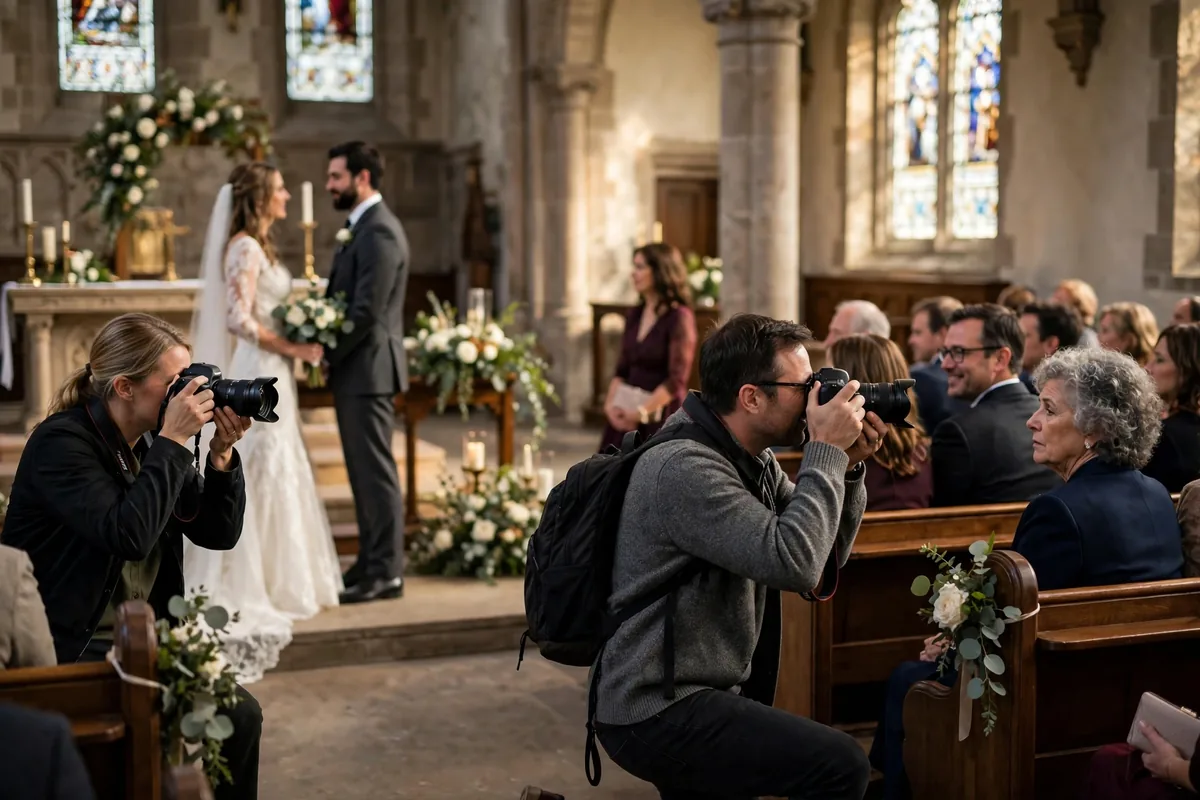
Do you actually need one? Ignore the old “100 guests” rule — use your timeline as the test. You need a second shooter when: you and your partner get ready in separate locations; the ceremony and cocktail hour overlap; or events run simultaneously (portraits while guests mingle). Sixty guests across two prep locations need a second camera more than 180 guests in one ballroom on a simple schedule. Budget a vendor meal ($50–$75 catering cost) and a $50–$100 tip for the second shooter too.
Second shooter vs. assistant: not the same thing
A second photographer takes photos that end up in your gallery — a second creative eye. An assistant carries gear, holds lighting, and manages logistics but doesn’t shoot. If your concern is a dark reception venue, an assistant with lighting gear may solve more of the problem than a second camera — and usually costs less to add. When a package says “two-person team,” ask which one you’re getting.
Engagement session: $300–$800 standalone (often bundled)
Usually 1–2 hours with 50–100 edited photos. Beyond the photos — which double as save-the-date material — it’s a rehearsal: you learn how your photographer directs, and they learn your angles before the pressure of the wedding day.
Printed album: $500–$2,000 (premium labs: $800–$3,000+)
This is where quotes diverge most. The spread comes from page count (20 vs. 40 spreads), materials (linen vs. leather vs. acrylic covers), and lab quality. If albums matter to you, ask which lab prints them — premium labs like GraphiStudio cost real money and it’s worth knowing what you’re paying for. Parent copies run $300–$600 each.
Travel: $500–$2,000 domestic, $1,500–$5,000+ international
Local travel within ~50 miles is usually included. Beyond that: mileage (often the IRS rate, ~$0.67/mile), flights, hotel, rental car, and sometimes an extra day’s per diem. Destination weddings routinely add $1,000–$3,000 on top of the base package.
Overtime: $200–$500 per hour
Receptions run long. Know the overtime rate before the wedding day — deciding at 10:45 p.m. under pressure is how couples overpay.
Rush delivery: $200–$600
Standard galleries arrive in 4–8 weeks. Need them in two? That’s a line item.
Drone coverage: $500–$1,500
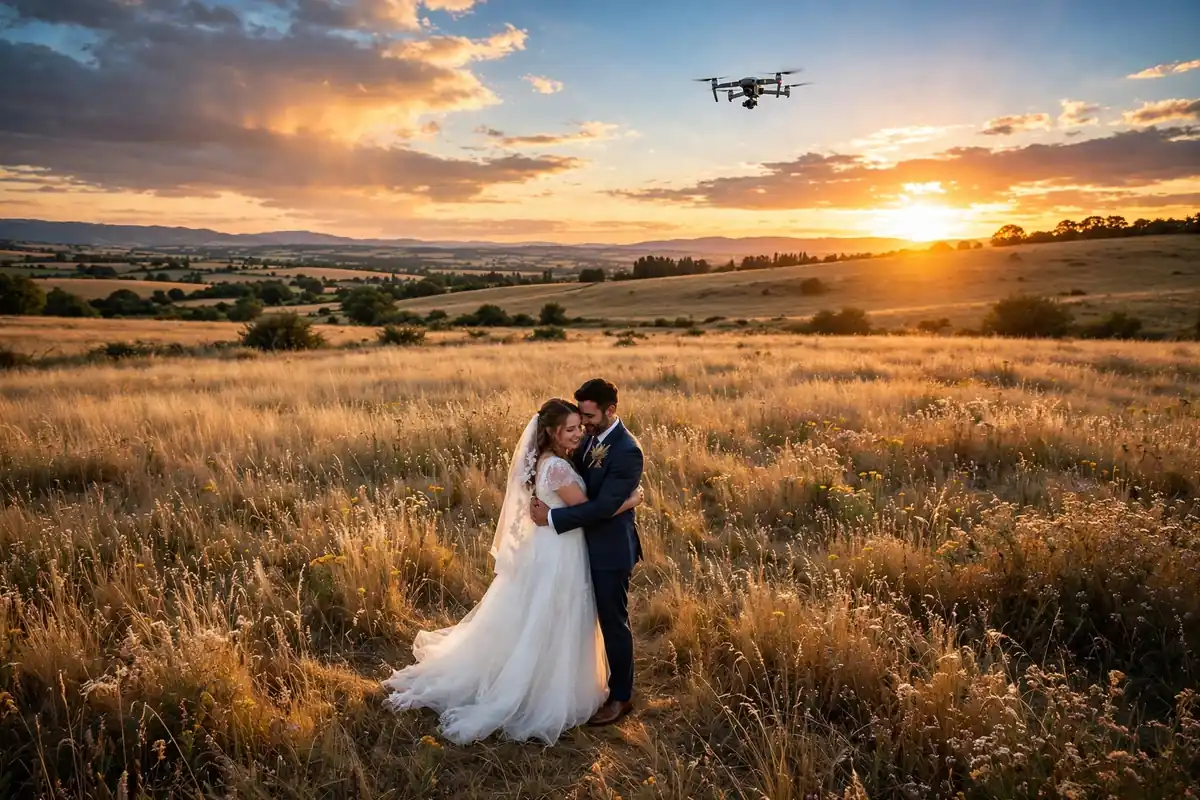
Aerial shots of the venue and wedding party are a popular add-on — but check two things first: the photographer must hold an FAA Part 107 drone license to fly commercially, and many venues (and national parks) ban drones outright. Confirm both before you pay.
Same-day slideshow: $500–$1,000
A curated set of ceremony and portrait photos edited on-site and projected during the reception. A genuine crowd-pleaser — and it requires the photographer to bring an editor or second shooter dedicated to the task, which is why it costs real money.
Photo + video bundle: $1,500–$5,000 for video
Videography is a separate budget line — the average US wedding videographer costs around $1,800–$3,500 for a highlight film plus full ceremony coverage. Booking photo and video from the same studio typically saves $500–$1,500 versus hiring separately, and the two teams coordinate seamlessly on the day instead of competing for the same angles.
Tips and vendor meals: $150–$300
Tipping isn’t required but is customary: $100–$200 for the lead photographer, $50–$100 for the second. A vendor meal for each shooter is standard etiquette (and keeps them on-site, not leaving for food).
How to Compare Quotes Like a Pro
Headline prices lie. A $3,200 quote with no second shooter, no engagement session, and a 4-week-later album upsell costs more than a $4,000 all-inclusive package. Put every finalist’s quote into the same grid before you decide:
- Coverage hours — and the overtime rate per hour, in writing
- Number of photographers — lead only, or second shooter / assistant included?
- Edited photo count — exact range promised (aim for 50–60 per coverage hour)
- Editing level — basic correction vs. artistic retouching; cost per image for heavy retouching
- Delivery — online gallery? For how many months? High-res + web sizes? USB or print box?
- Gallery turnaround — weeks to delivery, and rush options with prices
- Engagement session — included, discounted, or full standalone price?
- Album — included, album credit amount, or full add-on price with page count and materials
- Travel — included radius, mileage rate, and what’s billed beyond it
- Print rights — written print release included? Who holds copyright?
- Payment terms — retainer percentage, balance due date, cancellation/postponement policy
The cheapest headline price almost never wins this grid. The winner is usually the mid-range quote where the most boxes are already checked.
7 Questions to Ask Before You Book
Ask every finalist these seven — and judge the answers, not just the price:
- “Can we see two full galleries from recent weddings?” Good answer: they send complete galleries — getting ready through exit — without hesitation. Red flag: only a highlight reel of 30 perfect shots. A highlight reel hides how they handle dark receptions and chaotic family formals.
- “What happens if you’re sick or have an emergency?” Good answer: a named backup photographer in the contract plus a network of peers. Red flag: “That’s never happened.” Everyone gets sick eventually.
- “Do you carry backup equipment and liability insurance?” Good answer: two camera bodies on the day, plus insurance certificates (many venues require them). Red flag: one camera, no insurance.
- “How many edited photos will we receive, and when?” Good answer: a specific range (e.g. 50–60 per hour of coverage) and a specific timeline (e.g. 6 weeks), in writing. Red flag: “as many as turn out well” or “a few months.”
- “What’s included in the editing, and what costs extra?” Good answer: color/exposure correction and light retouching included; heavy retouching quoted per image ($5–$15). Red flag: editing is vague or “everything is extra.”
- “Who owns the images, and what are our print rights?” Good answer: you get a written print release for personal printing; the photographer retains copyright (standard). Red flag: no print release, or they claim you’ll “figure out prints later.”
- “What’s the payment schedule and cancellation policy?” Good answer: a retainer of 25–50% to hold the date, balance due 2–4 weeks before the wedding, and a written cancellation/postponement policy. Red flag: full payment upfront in cash with no contract.
5 Red Flags That a Low Price Is a Trap
A $900 full-day package isn’t a bargain — it’s a risk profile. Walk away when you see:
- No contract. A legitimate business puts deliverables, timelines, and cancellation terms in writing. No contract means no recourse.
- Highlight reel only. If they won’t show a full, uncurated gallery, assume the gallery doesn’t hold up.
- No backup gear or backup photographer. One camera body and no plan B means one equipment failure ruins your only record of the day.
- “Unlimited photos” promises. Professionals deliver a curated set; “unlimited” usually means unedited dumps with no quality control.
- Cash-only, full payment upfront. Standard is a 25–50% retainer with the balance due near the wedding date. Full cash upfront is how deposits disappear.
7 Ways to Save Without Sacrificing Quality
- Book early. Top photographers raise rates annually. Booking 12–18 months out locks in current pricing — and the best dates go first.
- Go Friday or Sunday. Many photographers discount non-Saturday weddings, and off-season dates (November–April) can run 10–20% less.
- Trim the hours, not the talent. A 6-hour package from a great photographer beats 10 hours from a mediocre one. Cover getting-ready through the first dance; skip the 2 a.m. exit shots.
- Hire an associate shooter. Established studios train associate photographers who shoot under the lead’s brand at 20–40% lower rates — same editing pipeline, lower price.
- Skip the album for now. Order it later from the photographer (or a quality third-party lab). The digital files are what matter on day one; albums can wait a year.
- Bundle photo + video. One studio for both typically saves $500–$1,500 and eliminates day-of turf wars.
- Look one market over. A photographer from a nearby smaller city often charges 20–30% less than a big-city counterpart with comparable skill — with lower travel costs to boot.
When to Book: The Photographer Timeline
- 12–18 months out: start inquiries for peak-season Saturdays (May–October). This is when the best photographers’ calendars fill.
- 9–12 months out: consultations, full-gallery reviews, quote comparisons. Sign the contract and pay the retainer (typically 25–50%) to lock your date.
- 6 months out: engagement session — doubles as your trial run and produces save-the-date photos.
- 2–4 weeks before: final balance due (standard). Confirm the timeline, shot list, and vendor-meal count.
- After the wedding: sneak peeks in days, full gallery in 4–8 weeks, album design whenever you’re ready.
Planning on a shorter timeline? Start the photographer search before the florist, DJ, and caterer — photographers book out faster than almost any other vendor.
How Much of Your Budget Should Go to Photography?
The standard planning guideline is 10–15% of your total wedding budget — and photography is one of the few categories where couples consistently say they wish they’d spent more, not less. It’s the one vendor whose work you use for decades.
- $15,000 wedding → $1,500–$2,250 (entry tier, shorter coverage)
- $30,000 wedding → $3,000–$4,500 (mid-range, the national sweet spot)
- $60,000 wedding → $6,000–$9,000 (premium, second shooter + album)
Photography is also one of the most fixed costs in a wedding budget — unlike catering, it barely moves with guest count. That makes it one of the first vendors to book: 12–18 months out for peak-season Saturdays. For the full picture of where every dollar goes, see our wedding budget breakdown — and don’t forget the hidden costs like tips, vendor meals, and overtime that live outside the package price.
Frequently Asked Questions
How much does a wedding photographer cost for an elopement?
Elopement packages (2–4 hours, under 20 guests) typically run $800–$2,500, with many photographers offering dedicated elopement collections. Adventure elopements in national parks or mountaintops may add travel fees.
What is the average hourly rate for a wedding photographer?
Based on the ~$3,000 national average for an 8-hour day, the effective rate is about $375/hour. Entry-level photographers charge $150–$200/hour; established pros $400–$600/hour. Most sell packages rather than hourly blocks.
When should I book my wedding photographer?
12–18 months before the wedding for peak-season Saturdays (May–October). Photographers are among the first vendors to fill their calendars — book before the florist, DJ, and often right after the venue.
Do you tip a wedding photographer?
Not required, but customary: $100–$200 for the lead photographer and $50–$100 for a second shooter. Exceptional service (staying late, handling a crisis) warrants more — plus an online review, which photographers value enormously.
Is $4,000 a lot for a wedding photographer?
No — nationally, $4,000 sits in the mid-to-premium range: an experienced photographer, 8 hours of coverage, an engagement session, and a full digital gallery. In New York, San Francisco, or Los Angeles, $4,000 is closer to the entry threshold for established professionals.
Is $1,000 too cheap for a full wedding day?
For a full 8-hour day, yes — $1,000 typically buys 3–4 hours from an early-career photographer. Below ~$2,000 for full-day coverage, you’re usually hiring someone building a portfolio, with no backup gear and no safety net. Fine for a courthouse elopement; risky for a 150-guest wedding.
How much extra does a destination wedding add?
Expect $1,000–$3,000 on top of the base package for domestic destinations (flights, hotel, rental car, per diem) and $1,500–$5,000+ internationally. Some photographers offer flat destination collections that bundle travel — always cheaper than itemized billing.
Should I hire the cheapest photographer with a good Instagram?
Instagram is a highlight reel by design — 30 perfect shots tell you nothing about consistency across a full day. Before booking on portfolio alone, demand two complete galleries, verify backup gear and insurance, and get everything in the contract. A strong Instagram with no full galleries to show is exactly the profile the red-flags section above warns about.
The bottom line: most US couples land between $2,500 and $5,000 for photography they’ll keep forever — roughly 10–15% of the total wedding budget. The price is worth it when you know exactly what’s included, what’s extra, and who’s holding the camera. Compare itemized quotes — not headline prices — ask the seven questions above, and book early. Your future self, framing these photos, will thank you.
Still building the full budget? Start with our wedding budget breakdown to see where photography fits alongside venue, catering, and everything else — and check the 23 hidden wedding costs so nothing blindsides you later.