
How Much Does a Wedding Planner Cost?
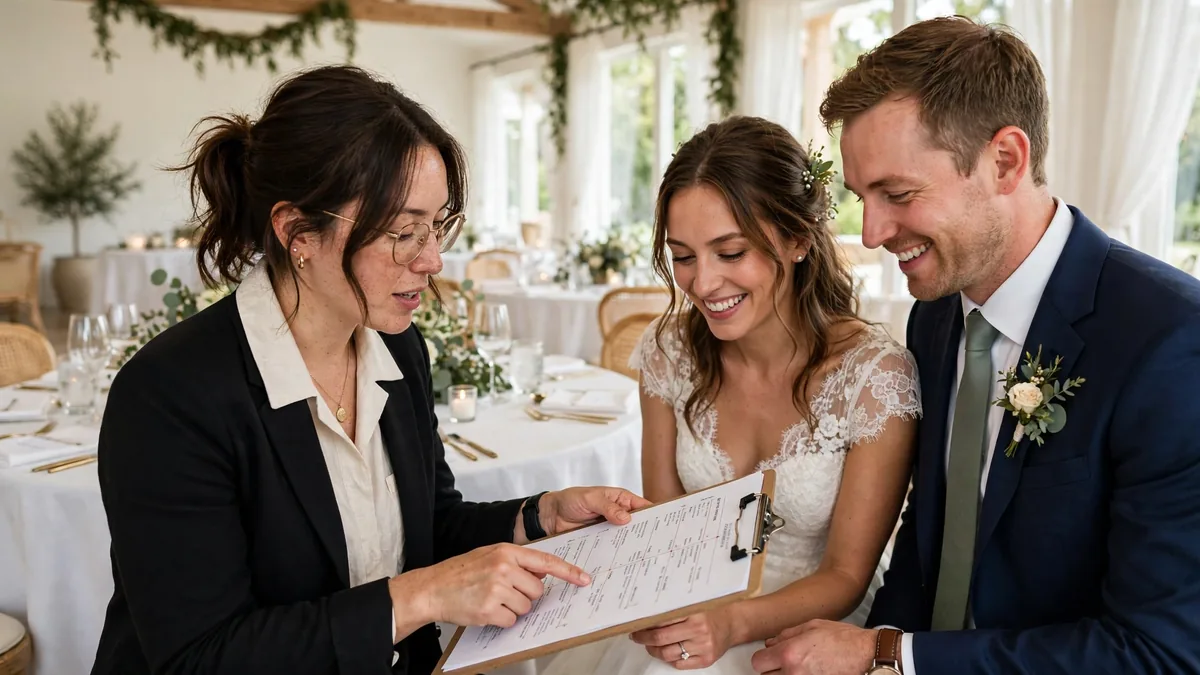
How much does a wedding planner cost? For most couples in the United States in 2026, the answer depends on how much help you hire. A day-of coordinator costs $800 to $3,500, with a national average of about $1,600. A full-service planner who handles everything from the venue search to the last dance costs $3,500 to $15,000 or more, with a national average near $3,800 according to The Knot Real Weddings Study. Across all service types combined, the average couple spends about $2,100 on professional planning help, though Zola’s Wedding Cost Index puts the average higher at $4,047, because Zola counts only couples who actually hire a planner at a meaningful level of service.
A wedding planner is one of the few vendors who can genuinely change how the whole day feels. The right planner keeps your budget on track, catches vendor mistakes before they become expensive problems, and lets you enjoy your wedding instead of managing it. Before you collect quotes, it helps to know what each service level actually buys, so check your overall wedding budget breakdown first to see where planning fees fit.
How Much Does a Wedding Planner Cost?
The short answer is $2,100 on average across all types of planning help, but that single number hides a very wide range. The Knot surveyed more than 10,000 couples who married in 2025 and found the combined average at $2,100. Zola, which tracks real bookings, reports $4,047 as its average, with most couples paying between $3,200 and $4,900. The gap exists because the two studies measure different things: The Knot averages everyone who hired any level of help, including a $1,200 day-of coordinator, while Zola’s index leans toward couples who booked fuller service.
Think of planner pricing in three tiers. Day-of coordination costs $800 to $3,500. This is the most popular hire, chosen by about 37 percent of couples who get planning help, and it covers the final weeks of preparation plus running the wedding day itself. Partial planning costs $2,000 to $6,000, with an average near $3,200. A partial planner steps in a few months before the wedding, helps with the remaining vendors and design, and runs the day. Full-service planning costs $3,500 to $15,000 or more, with a national average of $3,800 to $5,500 depending on the source. Luxury planners in major cities can charge $15,000 to $25,000 or more for a large, complex wedding.
| Service Level | Typical Price Range | National Average | Best For |
|---|---|---|---|
| Day-of coordinator | $800-$3,500 | $1,600 | Couples who planned everything and want someone to run the day |
| Partial planning | $2,000-$6,000 | $3,200 | Couples who booked the big vendors and need help finishing |
| Full-service planner | $3,500-$15,000+ | $3,800-$5,500 | Couples who want a full handoff from engagement to send-off |
| Luxury full-service | $15,000-$25,000+ | Varies | Large, multi-day, or destination weddings in major metros |
Three realistic scenarios make the tiers concrete. A modest budget of $1,200 to $2,000 books a day-of coordinator for a 100 guest wedding: final timeline, vendor confirmations, rehearsal, and 8 to 10 hours of day-of management. A mid-range budget of $3,000 to $5,000 books partial planning: vendor recommendations, design help, budget tracking for the last six months, and full day-of coordination. A premium budget of $6,000 to $10,000 or more books full-service planning: budget setup, venue search, every vendor, design, contracts, timeline, and a team running the wedding day.
Wedding Planner Cost by Service Type
The service level is the single biggest driver of price, because it determines how many hours the planner spends on your wedding. A full-service planner typically spends 80 to 250 hours on one wedding. A day-of coordinator spends about 25 hours of preparation plus 8 to 10 hours on the day itself. You are paying for time, experience, and vendor relationships, so the more of those you need, the higher the fee.
Day-of coordination: $800-$3,500
Despite the name, a day-of coordinator does not start on your wedding day. Most coordinators begin 4 to 6 weeks before the wedding. They take your plans, build a detailed timeline, confirm every vendor, run the rehearsal, and manage the wedding day from setup to send-off. They do not choose your vendors, design your event, or negotiate contracts. That work is already done by you. This is the right tier if you enjoy planning, you have booked your venue and vendors, and you want a professional to execute the plan so you are not the one answering the caterer’s questions in your dress.
Partial planning: $2,000-$6,000
A partial planner, sometimes called month-of planning, steps in 3 to 6 months before the wedding. They review what you have booked, fill the gaps, recommend vendors for the pieces still missing, help with design and layout, manage the budget for the remaining spend, and then run the wedding day. Partial planning usually costs 40 to 60 percent of full-service pricing. This tier fits couples who booked the venue and photographer early, then realized they need professional help with the details, the timeline, and the final stretch.
Full-service planning: $3,500-$15,000+
A full-service planner is with you from engagement to the last dance, usually 12 to 18 months. They set the budget, search for venues, shortlist and book every vendor, negotiate and review contracts, design the look of the event, manage RSVPs and guest logistics, build the timeline, and run the wedding day with a team. On a $50,000 wedding, a full-service fee of $5,000 to $7,500 is typical. In New York, Los Angeles, Chicago, and San Francisco, full-service planners commonly charge $7,000 to $12,000, and luxury planners in those markets start above $15,000.
| What Is Included | Day-of Coordinator | Partial Planning | Full-Service Planner |
|---|---|---|---|
| Budget setup and tracking | No | Partial, final months | Yes, full budget |
| Venue search | No | No | Yes |
| Vendor selection and booking | No | Remaining vendors only | Yes, all vendors |
| Contract review | No | Some | Yes |
| Design and styling | No | Yes, partial | Yes, full design |
| Timeline and floor plan | Yes | Yes | Yes |
| Vendor confirmations | Yes | Yes | Yes |
| Rehearsal management | Yes | Yes | Yes |
| Day-of management | Yes | Yes | Yes, with a team |
| Typical start time | 4-6 weeks out | 3-6 months out | 12-18 months out |

How Wedding Planners Charge: Flat Fee, Percentage, or Hourly
Planners charge in three main ways, and the model changes what you pay and how predictable the final bill is. Always ask which model a planner uses before you compare quotes, because a flat fee and a percentage fee on the same wedding can differ by thousands of dollars.
Flat fee is the most common model in the US. The planner quotes one set price for a defined package, such as $2,200 for day-of coordination or $6,500 for full-service planning. Flat fees are predictable and easy to budget, and most couples prefer them. The price is usually based on guest count, wedding complexity, location, and the planner’s experience.
Percentage of budget is the second model. The planner charges 10 to 15 percent of your total wedding budget, and some luxury planners charge 15 to 20 percent. On the US average wedding of $34,200, 10 percent is $3,420 and 15 percent is $5,130. On a $50,000 wedding at 15 percent, the fee is $7,500. On a $25,000 wedding at 10 percent, it is $2,500. Percentage pricing scales with your spend, which is fair when a bigger budget means more vendors and more work, but it also means the fee grows every time you upgrade the florals or add a course to dinner. Some planners set a minimum fee alongside the percentage, so a small wedding still has a floor price.
| Total Wedding Budget | 10% Planner Fee | 12% Planner Fee | 15% Planner Fee |
|---|---|---|---|
| $25,000 | $2,500 | $3,000 | $3,750 |
| $35,000 | $3,500 | $4,200 | $5,250 |
| $50,000 | $5,000 | $6,000 | $7,500 |
| $75,000 | $7,500 | $9,000 | $11,250 |
| $100,000 | $10,000 | $12,000 | $15,000 |
Hourly is the third model, used most often for consultations and small-scope help. Planners charge $75 to $275 per hour depending on experience and market. At $150 per hour, a $1,600 flat fee buys about 10 to 11 hours of a planner’s time, while a $3,800 full-service fee buys about 25 hours at that rate, though full-service planners rarely bill hourly for the whole job. Hourly pricing works well when you need a few hours of expert advice, such as a venue shortlist review or a budget rescue session, but it is a poor fit for full planning because the hours add up fast.
Industry professionals generally recommend allocating 8 to 15 percent of your total wedding budget to planning services. On a $30,000 wedding, that is $2,400 to $4,500, which covers a strong day-of coordinator or a solid partial planning package. If planning is a top priority and you want full service, budget toward the top of that range.

Wedding Planner Cost by Region in the US
Location shapes wedding planner cost more than almost any other factor. A planner in Manhattan averages around $5,922, while the national average is $4,047, according to Zola market data. Major metros charge 2 to 3 times national averages because planners there pay more for everything from office space to insurance, and because their clients’ weddings are bigger and more complex.
| US Market | Day-of Coordinator | Full-Service Planner |
|---|---|---|
| Manhattan, New York | $2,500-$4,500 | $8,000-$15,000+ |
| Los Angeles, California | $2,000-$4,000 | $7,000-$12,000 |
| Chicago, Illinois | $1,800-$3,500 | $6,000-$10,000 |
| San Francisco Bay Area | $2,000-$4,000 | $7,000-$12,000 |
| Boston, Massachusetts | $1,500-$3,000 | $5,000-$9,000 |
| Washington DC | $1,500-$3,000 | $5,000-$9,000 |
| Dallas and Houston, Texas | $1,200-$2,500 | $4,000-$8,000 |
| Atlanta, Georgia | $1,200-$2,500 | $4,000-$7,000 |
| Midwest small cities | $900-$1,800 | $2,500-$5,000 |
| Rural South and Southeast | $700-$1,500 | $2,000-$4,000 |
Within those markets, the city matters as much as the state. In New York City, premium full-service planners start at $8,000 and luxury planners run $15,000 or more. In smaller Midwest cities, mid-range full-service planning runs $2,500 to $5,000. In the rural Southeast, local listings show day-of coordination from about $700 and full planning from about $2,000. Guest count moves the price too, because a 250 guest wedding with a band, a late-night snack station, and a shuttle schedule is far more work to manage than a 60 guest dinner party.
Travel is the last regional cost to check. Many planners charge for venues more than 30 to 50 miles from their base, plus a hotel stay for destination weddings or late-night events. If your venue is an hour from the nearest city, confirm whether travel is included in the quoted fee before you sign.

Venue Coordinator vs. Day-of Coordinator vs. Full-Service Planner
This is the most common source of confusion in wedding planning, and it costs couples real money when they misunderstand it. A venue coordinator works for the venue. A day-of coordinator works for you. A full-service planner also works for you, but from the very beginning. They are not interchangeable.
A venue coordinator is usually included in your venue rental, and their job is to protect the venue: they manage the venue’s staff, the setup and breakdown of the venue’s own equipment, the catering timeline, and the venue’s rules. They do not confirm your outside vendors, manage your personal timeline, handle your family logistics, or solve problems with your florist or DJ. If your venue says coordination is included, that is the venue coordinator, not a substitute for your own planner.
| Factor | Venue Coordinator | Day-of Coordinator | Full-Service Planner |
|---|---|---|---|
| Works for | The venue | You, the couple | You, the couple |
| Typical cost | Included in venue rental | $800-$3,500 | $3,500-$15,000+ |
| Confirms all vendors | No | Yes | Yes |
| Builds your timeline | Venue timeline only | Yes | Yes |
| Chooses vendors | No | No | Yes |
| Manages your budget | No | No | Yes |
| Handles family logistics | No | Yes | Yes |
| Runs the wedding day | Venue side only | Yes | Yes, with a team |
If your venue includes a coordinator, you still need your own day-of coordinator in most cases, unless your wedding is very small and simple. The venue coordinator will not chase your photographer when they are running late, pin your boutonnieres, or cue your DJ. That is your coordinator’s job.

What Is Included in Full-Service Wedding Planning?
Full-service planning is a long list of jobs, and it helps to see them written out before you decide whether the fee is worth it. A full-service planner typically handles budget creation and tracking, venue research and tours, vendor shortlists and bookings for every category, contract negotiation and review, design and styling, floor plans and layouts, RSVP and guest logistics, hotel blocks and transportation, the detailed wedding day timeline, vendor confirmations in the final weeks, rehearsal management, and full day-of execution with an assistant or team.
The vendor list alone shows the scope. A full-service planner books and manages the photographer, videographer, caterer, florist, DJ or band, cake baker, hair and makeup team, transportation, rentals, lighting, and stationery. Each of those vendors needs a contract, a payment schedule, a delivery time, and a point of contact on the day. That is dozens of moving parts, and the planner is the one keeping them aligned.
Design work is the part couples underestimate. A planner helps you choose a color palette, a floral style, a tablescape, lighting, and a ceremony layout that fits your venue, then sources the rentals and decor to make it happen. If you have a clear vision and strong opinions, the planner executes it. If you only know that you want something romantic and timeless, the planner builds the vision with you.
What full-service planning usually does not include: the cost of the vendors themselves, the venue rental, catering, florals, and decor items. The planner’s fee pays for their time, expertise, and management. Some planners receive commissions or referral fees from vendors, which is legal in many states, but a good planner discloses it. Ask directly whether the planner takes commissions, because it affects whose interests they are serving when they recommend a vendor.
Hidden Costs and Extra Fees to Watch For
The quoted fee is rarely the final number. These are the costs that catch couples off guard, and most of them are avoidable if you ask about them before signing.
Travel and lodging fees are the most common. A planner based in the city may charge for a venue 30 to 50 miles away, plus a hotel room for a destination wedding or a late-night event. Assistant fees show up on larger weddings: a full-service planner may bring one or two assistants on the day, and some planners charge $300 to $800 per assistant. Rehearsal fees apply when the rehearsal is a separate day or location from the wedding, and some coordinators charge $200 to $500 extra for it.
Overtime fees apply when your wedding runs long. If the reception extends past the contracted hours, expect $100 to $250 per extra hour for the planner and team. Vendor meal fees are another quiet line item: your caterer charges $50 to $100 per vendor meal, and your planner, their assistants, the photographer, and the DJ all need one. Holiday and peak date surcharges apply to New Year’s Eve, holiday weekends, and peak season Saturdays from May through October. Some planners charge 10 to 20 percent more for those dates.
Insurance and cancellation terms are worth asking about directly. A professional planner carries liability insurance, and some venues require proof of it before the planner can work on site. Most planners take a nonrefundable deposit of 20 to 50 percent to hold the date, with the balance due in installments or one to two weeks before the wedding. Read the cancellation clause before you pay the deposit, and ask what happens if the planner cancels. A professional contract names a backup planner or a refund process. For a full rundown of the surprise charges that appear across every vendor category, read our guide to hidden wedding costs before you finalize your budget.

How a Wedding Planner Can Save You Money
The best way to judge a planner’s fee is to ask what it prevents. A good planner regularly saves couples more than the fee costs, and the savings come from four places: vendor discounts, mistake avoidance, budget discipline, and time.
Vendor discounts are the most direct saving. Planners who book the same venues and vendors dozens of times a year often negotiate rates you cannot get on your own. A planner might secure a 10 percent discount on rentals, a complimentary ceremony rehearsal hour, or a waived delivery fee. On a $5,000 rental order, a 10 percent discount is $500. On a $10,000 catering bill, a negotiated upgrade or waived cake cutting fee can be worth several hundred dollars. Not every planner passes discounts through, so ask whether negotiated savings go to you or to the planner.
Mistake avoidance is where the big money hides. A planner catches the florist who quoted for 10 centerpieces when you need 14, the rental order that forgot the dance floor, the timeline that left 20 minutes for family photos that actually need 45, and the contract that charges a $500 fee for a Saturday setup. Each of those mistakes costs hundreds of dollars if it is caught on the wedding day, and some cannot be fixed at all. A coordinator who spots a missing vendor, a wrong delivery time, or a setup error in the final weeks has already paid for herself.
Budget discipline is the quiet saving. A planner tracks every deposit, every payment deadline, and every change order, so you do not double book a vendor, miss a payment and lose a date, or overspend in one category without noticing. Couples without a planner routinely overspend by 10 to 20 percent because no one is watching the running total. On a $35,000 wedding, that is $3,500 to $7,000 of drift, which is more than most day-of coordination fees.
Time is the saving that does not show up on a spreadsheet. A full-service planner spends 80 to 250 hours on your wedding. Even at a modest value of $25 per hour for your own time, 100 hours is $2,500. For couples with demanding jobs, the time saved alone justifies the fee.
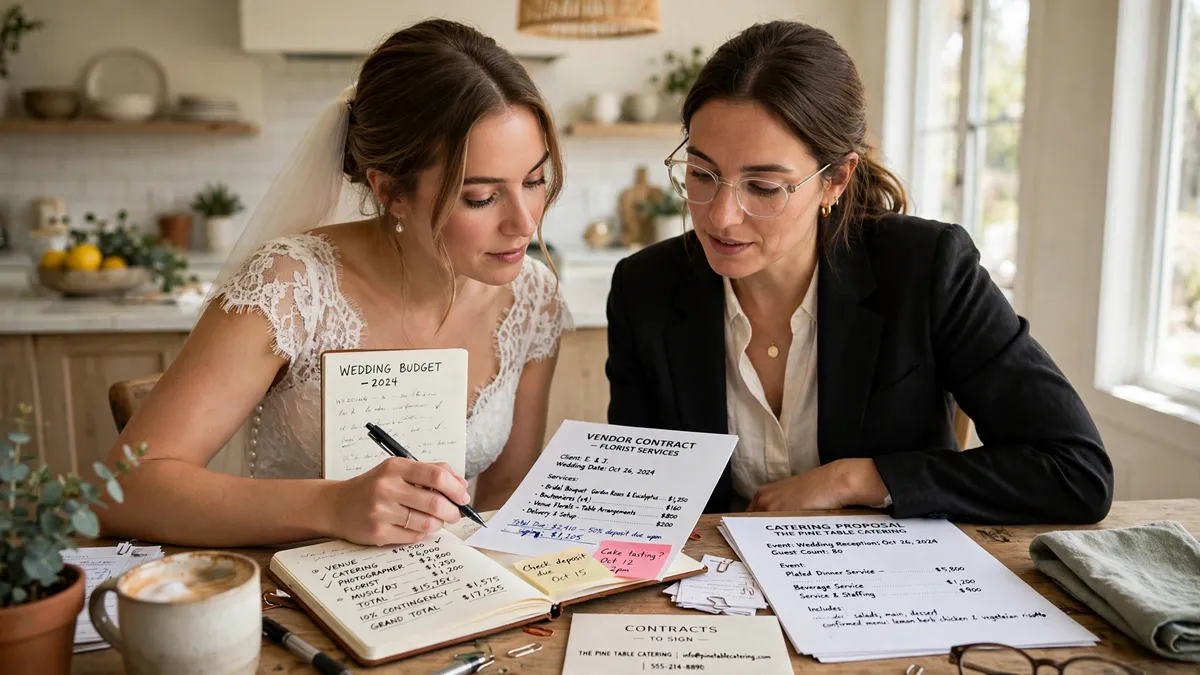
How to Save Money on a Wedding Planner
You do not need to hire the cheapest planner to save money. You need to buy the right level of help and cut the costs that do not change your wedding.
Hire the lowest tier that covers your real need. If you have already booked your venue and major vendors, a day-of coordinator at $1,200 to $2,000 gives you professional execution for a fraction of full-service pricing. If you love planning but need help with the final stretch, partial planning is the middle ground. Full service is worth it when you are starting from zero, planning a large or complex wedding, or working with a short timeline.
Book an off-peak date. January, February, and March, plus Sunday evenings and Friday nights, offer meaningful discounts, and planners often price these slots 15 to 30 percent lower than a Saturday in June. A Friday wedding can save a similar amount, and a Thursday wedding can save even more if your venue and guests are flexible.
Choose a newer planner with a strong portfolio. A planner with two to three years of experience and polished real weddings can be just as effective as a ten year veteran at half the price. Watch for the warning signs, which include no real wedding photos, no references, and no written contract. A newer planner with a real portfolio and happy past clients is a smart buy.
Negotiate the scope, not just the price. Ask whether the planner will remove services you do not need, such as design help or RSVP management, in exchange for a lower fee. Ask about a shorter engagement package if your wedding is six months away instead of eighteen. Get quotes from three planners before deciding. Three quotes from similarly experienced planners in your market can vary by $1,000 to $3,000 for the same service level. Use the lowest quote as a negotiating anchor with your preferred choice.
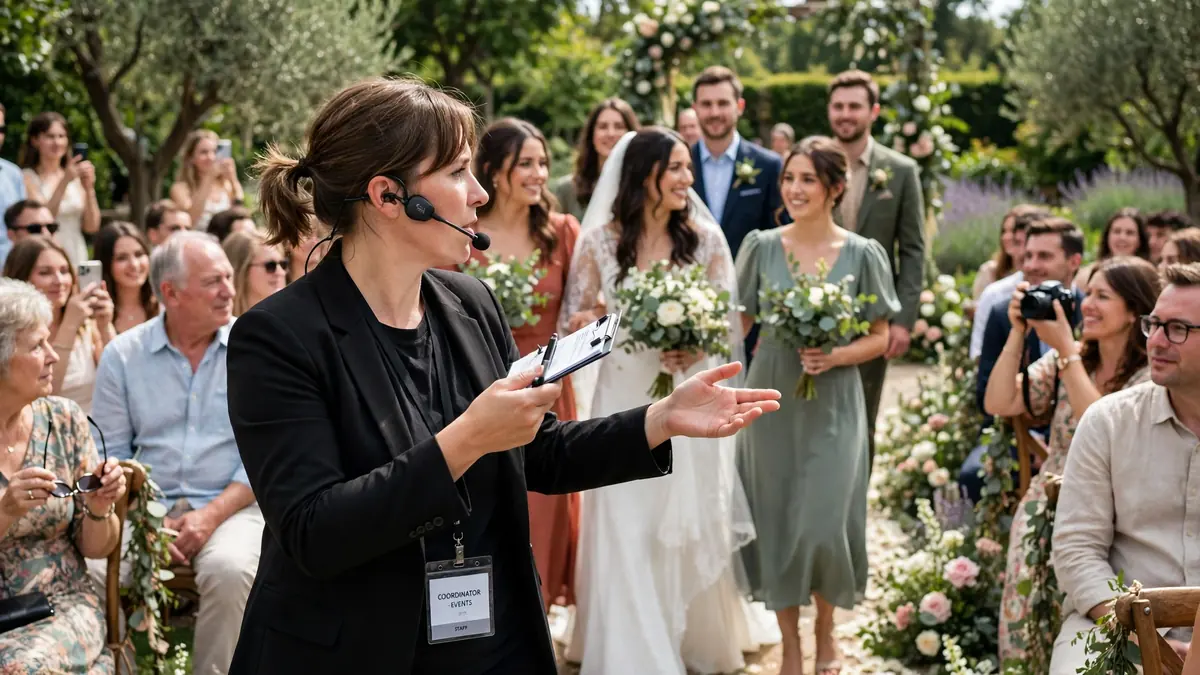
Questions to Ask a Wedding Planner Before You Hire
Once you have a shortlist, these questions separate the professionals from the risky bookings. Ask them in a call or a meeting, not just by email, and get the answers in writing before you sign.
How many weddings have you planned, and how many do you take on per year? A planner who takes 40 weddings a year cannot give your wedding the same attention as one who takes 12. Can I see full galleries from three recent weddings, not just the highlight photos? Full galleries show how a planner handles real venues, real lighting, and real timelines.
What is included in your fee, and what costs extra? Get an itemized list in writing. Do you charge a flat fee, a percentage, or hourly, and is there a minimum? If percentage, what does the percentage apply to, and is there a cap? Do you take commissions or referral fees from vendors? A transparent answer builds trust, and a defensive answer is a warning sign.
Who will be the actual planner at our wedding? Some companies assign a lead planner for sales and a different coordinator for the day. Get the name in the contract. What is your backup plan if you get sick or have an emergency? A professional has a named backup and a written plan. Do you carry liability insurance, and can you provide proof? Many venues require it.
How do you handle vendor communication and payments? Will you review our contracts before we sign them? How often will we meet, and how do you prefer to communicate? What happens if we need to cancel or postpone? Read the cancellation and postponement clauses before you pay the deposit, and confirm how much of it is refundable.
Red Flags When Hiring a Wedding Planner
A low price is not a red flag by itself, but a low price combined with any of these signs should make you walk away.
No written contract is the biggest one. A planner who works on a handshake has no cancellation policy, no payment schedule, no scope of services, and no legal obligation to show up. No insurance is the second, because many venues require proof of liability insurance before a planner can work on site. No backup plan is the third: if a planner cannot tell you who runs your wedding when they are sick, you have no safety net.
Other warning signs: a planner who will not name the person who will actually work your wedding, a planner who insists on full payment upfront instead of a 20 to 50 percent deposit, a planner who pushes specific vendors without explaining why, a planner who takes undisclosed commissions from vendors, and a planner with no real wedding photos or references. Trust your gut in the meeting too. If the planner talks more than they listen, dismisses your budget, or seems uninterested in your vision, they will be the same person on your wedding day.

How Far in Advance Should You Book a Wedding Planner?
For full-service planning, booking 12 to 18 months in advance is standard, especially for peak season Saturdays from May through October. The best planners fill their calendars quickly, and many take only 10 to 20 weddings a year. If your wedding is in a popular month, start the planner search as soon as you are engaged.
Partial planning can usually be booked 6 to 9 months out, and day-of coordination can be booked 2 to 4 months out, though the best coordinators still go first even in winter. Add the planner to your wedding planning checklist right after the venue, because planning help shapes every vendor decision that follows. A standard booking flow is a 20 to 50 percent deposit to hold the date, planning meetings or calls on a regular schedule, a final timeline meeting 2 to 4 weeks before the wedding, and the balance due 1 to 2 weeks before the event. Get every date, every rate, and the name of your planner in the written contract before you pay the deposit.

Do You Need a Wedding Planner?
Not every couple needs one, and an honest guide should say so. You probably do not need a full-service planner if your wedding has fewer than 50 guests, your venue is all-inclusive with catering, rentals, and coordination bundled in, you have planned large events before, or your budget is so tight that the planner’s fee would force cuts to the photographer or the food. In those cases, a day-of coordinator is usually enough, and sometimes even that is optional.
You almost certainly need help if your wedding has more than 150 guests, you are planning a destination wedding, you are working with a raw venue such as a barn, a garden, or a private estate that needs rentals and infrastructure brought in, you have a complex timeline with a ceremony and reception in different locations, or you and your partner both work demanding jobs with little free time. In those situations, the planner is not a luxury, it is the person who keeps the wedding from falling apart.
The middle ground is where most couples land. You can plan the fun parts yourself, the venue, the dress, the music, and hire a professional for the execution. A day-of coordinator at $1,200 to $2,000 is one of the best value purchases in the entire wedding budget, because it buys you a stress-free wedding day.
Frequently Asked Questions About Wedding Planner Cost
How much does a wedding planner cost per hour?
Most wedding planners charge $75 to $275 per hour when billing hourly, depending on experience and market. Hourly pricing is most common for consultations and small-scope help. Full weddings are almost always priced as a flat fee or a percentage of the budget, because the hours add up fast.
Is $2,000 enough for a wedding planner?
Yes, in most markets $2,000 will book a solid day-of coordinator or a basic partial planning package. It is usually not enough for full-service planning, except in smaller cities and rural areas where full-service fees start around $2,000 to $3,000. In major metros like New York or San Francisco, $2,000 covers day-of coordination only.
What percentage of my wedding budget should go to a planner?
Industry professionals recommend 8 to 15 percent of your total wedding budget for planning services. On a $35,000 wedding, that is $2,800 to $5,250. The Knot’s data shows the average couple actually spends about 6 percent, because many couples hire only a day-of coordinator or no planner at all.
Do wedding planners get vendor discounts?
Often, yes. Planners who book the same venues and vendors repeatedly can negotiate rates, upgrades, or waived fees that individual couples cannot get. Ask whether negotiated savings are passed on to you or kept by the planner, and get the answer in writing.
Is a wedding planner worth the cost?
For most couples who hire one, yes. A planner saves money through vendor negotiations and mistake avoidance, saves time by managing dozens of vendor relationships, and removes stress on the wedding day. The value is highest for large weddings, destination weddings, raw venues, and couples with limited free time. If your wedding is small and your venue is all-inclusive, a day-of coordinator may be all you need.
When should I hire a wedding planner?
Hire a full-service planner 12 to 18 months before the wedding, a partial planner 6 to 9 months out, and a day-of coordinator 2 to 4 months out at minimum. Peak season Saturdays book fastest, so start earlier if your date falls between May and October.
What is the difference between a wedding planner and a day-of coordinator?
A wedding planner handles the wedding from start to finish: budget, venue, vendors, design, and the day itself. A day-of coordinator starts 4 to 6 weeks before the wedding, takes over your existing plans, and runs the wedding day. A full-service planner costs $3,500 to $15,000 or more, while a day-of coordinator costs $800 to $3,500.
How much does a wedding planner cost comes down to three choices: how much help you need, where your wedding is, and how experienced you want your planner to be. A national average of $2,100 across all service levels is a fair planning number, most couples pay $800 to $3,500 for a day-of coordinator or $3,500 to $10,000 for full-service planning, and the quote you sign should be itemized so you can see exactly what the money buys. Get three quotes, read the contract, confirm the backup plan and the overtime rate, and book early for a peak season Saturday.