How Much Does a Wedding Florist Cost?

How much does a wedding florist cost? For most couples in the United States in 2026, the answer is $1,500 to $6,000, with the national average landing at $2,800 according to The Knot Real Weddings Study, which surveyed more than 10,000 couples who married in 2025. The median couple spent $1,900, and the middle half of couples spent between $900 and $4,800. Zola’s Wedding Cost Index puts full-service florist budgets higher, at $5,100 to $7,600 with an average near $6,300, because that figure covers couples who hire a florist for design, delivery, setup, and breakdown of the whole event. The gap between those two numbers tells you something useful right away: wedding florist cost depends heavily on how many tables you have, how full each arrangement is, and whether you hire a full-service studio or buy flowers a la carte.
Flowers are usually the second biggest decor line in a wedding budget, around 8 to 13% of total spending, and the price is the least transparent line on the budget because you are not just buying stems. You are buying stems plus the hours somebody spends processing them in a cold studio at dawn, plus a refrigerated van, plus the crew that hangs the arch and drives back late at night to take it down. Check your overall wedding budget breakdown first so you know what share of the budget flowers should take, then use this guide to read every florist quote like a pro.

How Much Does a Wedding Florist Cost?
How much does a wedding florist cost for a typical American wedding? The short answer is $1,500 to $6,000 for most couples, with $2,800 as the national average. Couples who hire a full-service florist for ceremony and reception florals, including an arch installation, typically land in the $4,000 to $7,500 range, while smaller, more focused budgets can stay well under $2,000. At the top end, couples who pay for installations such as hanging pieces and full arch coverage can spend $15,000 or more.
Three numbers explain most of the spread. The Knot average of $2,800 covers every couple, including those who supplement with grocery store flowers or go partly DIY. Zola’s $5,100 to $7,600 range covers full-service florist budgets only, including design work and setup. WeddingWire’s average of about $1,500 comes from vendor reviews, where most couples report spending $700 to $2,500. Your number depends on which of those three couples you are, and the per-item table below shows exactly where the money goes.
| Floral Element | Typical Price Range | Notes |
|---|---|---|
| Bridal bouquet | $150 to $350 | $400 to $600 for large, lush designs; $500+ for cascading premium blooms |
| Bridesmaid bouquet | $65 to $120 | Smaller version of the bridal bouquet |
| Boutonniere | $20 to $45 | One per groom, groomsman, father, and ring bearer |
| Corsage | $35 to $75 | Mothers and grandmothers |
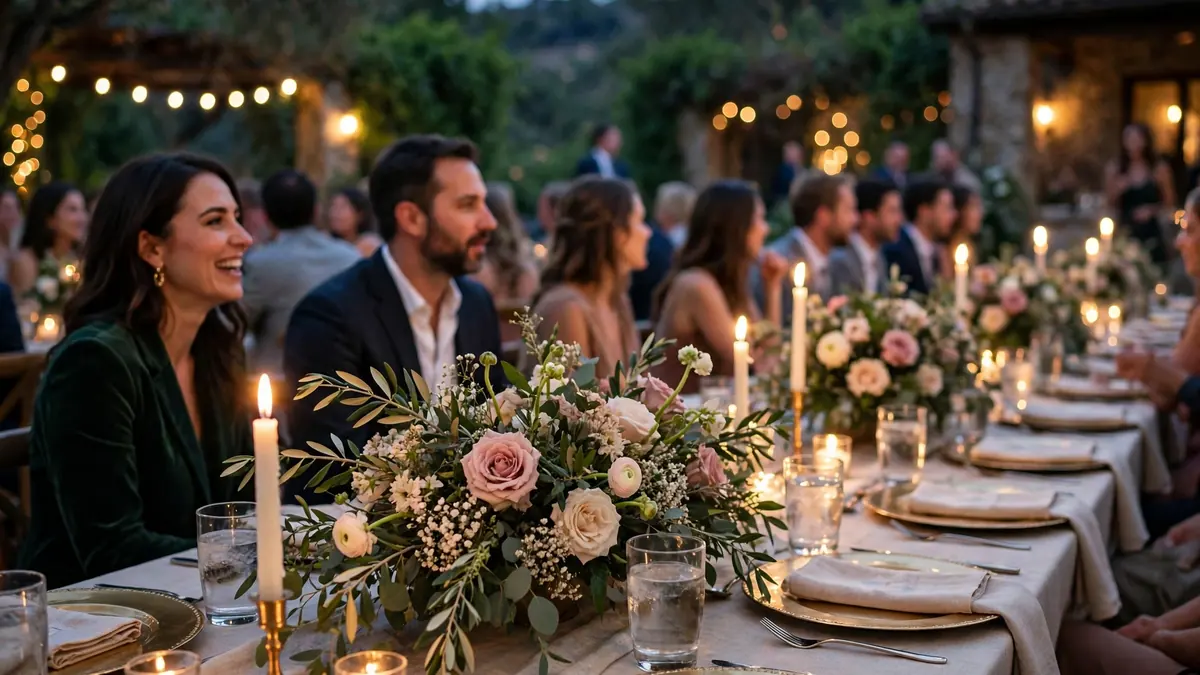
| Low centerpiece | $75 to $200 | Per table; greenery-heavy designs at the low end |
| Tall centerpiece | $200 to $600 | Per table; $100 to $500 each per Zola |
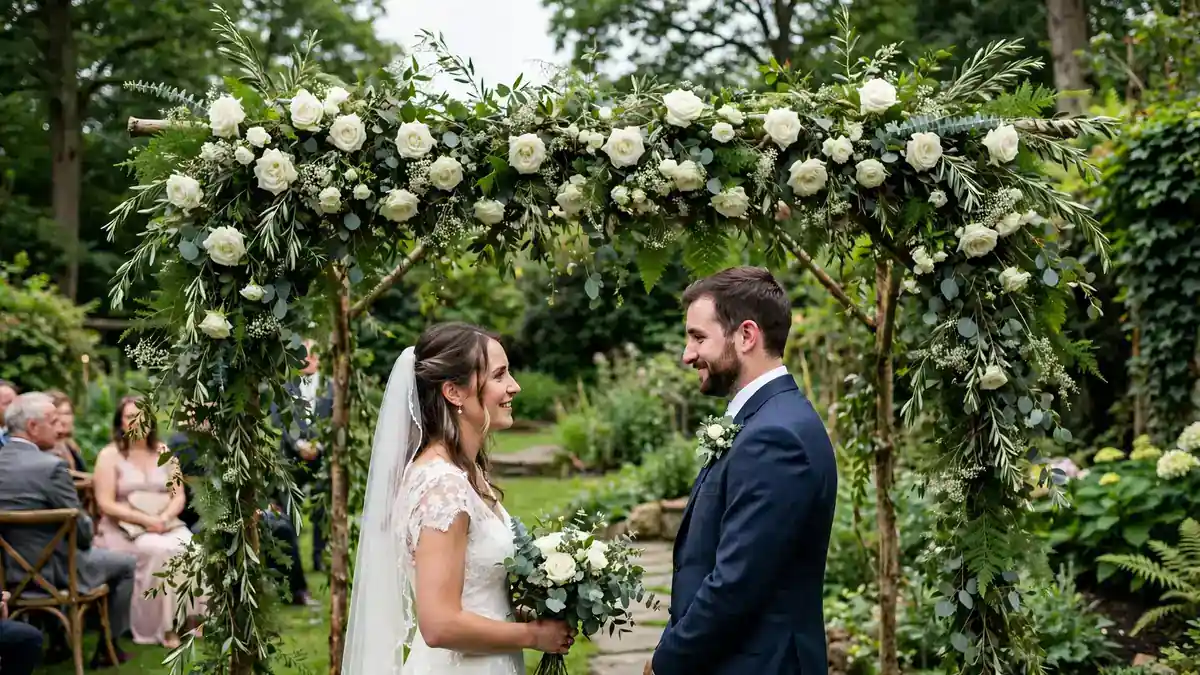
| Ceremony arch / chuppah | $500 to $2,500 | Size and flower density drive the price |
| Ceiling installation | $3,000 to $12,000 | Dance floor installations, crew of six on ladders |
| Delivery, setup, breakdown | $200 to $500+ | Often 10 to 20% of the floral subtotal |
Design fees, setup time, delivery, and breakdown typically add 15 to 25% to your raw flower costs. Wholesale flowers are usually only 25 to 30% of what you pay; labor runs 40 to 60%. That is why two quotes for the same flowers can look so different: you are paying for different amounts of skilled work.
Wedding Florist Cost by Guest Count
Guest count is the biggest driver of wedding florist cost, because every extra table needs a centerpiece and every extra guest needs a chair, a place setting, and flowers nearby. A 50 guest wedding with six tables costs far less than a 150 guest wedding with eighteen tables, even with the same flowers.
| Guest Count | Tables | Typical Floral Range |
|---|---|---|
| 50 guests | 5 to 6 | $1,000 to $2,500 |
| 100 guests | 10 to 12 | $2,000 to $5,000 |
| 120 guests | 12 to 14 | $2,500 to $6,000 |
| 150 guests | 15 to 18 | $3,500 to $8,000 |
| 200 guests | 20+ | $5,000 to $12,000+ |
For a 100 to 120 guest wedding in a mid-size US market, wedding florist cost in 2026 lands between $4,500 and $9,000 at a full-service studio. That covers personal flowers, twelve to fourteen centerpieces, a ceremony focal piece, delivery, and setup. Below $3,000 you are in bud vase and greenery territory, which can still look beautiful when it is designed well. Above $15,000 you are paying for installation: hanging pieces, full arch coverage, imported focal blooms, and a crew working for hours.
Small weddings have a different math problem: the studio minimum. Many florists will not take a wedding below a minimum spend, and that minimum matters more than any percentage rule. A solo florist in a secondary market will happily take an $1,800 wedding on a Friday in November. In Chicago, Dallas, or Atlanta, most established studios hold a $5,000 to $8,000 minimum for a Saturday in May. Design houses in New York and Los Angeles open at $15,000 and climb. If your budget is below a studio’s minimum, ask about a smaller a-la-carte order or a weekday date before you move on.
What Is Included in a Florist Quote?
Florist quotes are not standardized, so two quotes for the same wedding can include very different things. Before you compare prices, check which of these each quote covers.
Personal flowers. The bridal bouquet, bridesmaid bouquets, boutonnieres, corsages, and flower girl petals. These are almost always included in a full-service quote and are the easiest items to price a la carte.

Ceremony flowers. The arch or chuppah, aisle markers, altar arrangements, and any large focal pieces. Some florists price the arch separately because it is the most labor-heavy item in the whole order.
Reception flowers. Centerpieces for every table, plus the sweetheart table, cake table, bar, and welcome table arrangements. Ask whether the quote counts the head table and the extra display tables, because couples often forget them and the count grows by two or three arrangements.
Delivery and setup. Transport in a refrigerated van, on-site arrangement, and placement. This typically runs 10 to 20% of the floral subtotal. A simple drop-off runs a flat $250 to $600, while full setup with a crew costs more.
Breakdown and strike. Taking the flowers down at the end of the night, removing rentals, and cleaning up. Some florists charge a separate strike fee of around $300. Ask whether it is included, because venues often require the florist to clear everything the same night.
Rentals. Vases, stands, arches, candle holders, and pedestals. Some florists include standard vases and charge for specialty pieces; others rent everything separately. Get the rental list in writing so you know what you are paying for and what you must return.
Tax. Sales tax applies to flowers and rentals in most states, and it is often left off the first quote. Ask for the tax-inclusive total before you compare quotes.
How Much Does a Wedding Florist Cost by City?
City prices vary as much as any other wedding cost. Across twenty US cities checked in October 2026, full wedding florals usually ran $1,500 to $12,000, with the national average of $2,723 from The Knot as the middle line. San Diego tops the range at up to $12,000, and Las Vegas has the lowest typical start at $1,500.
| City | Typical Full-Wedding Range |
|---|---|
| San Diego | $4,000 to $12,000 |
| New York City | $3,000 to $8,000 |
| Austin | $2,500 to $10,000 |
| Charlotte | $2,500 to $7,500 |
| Seattle | $2,500 to $7,000 |
| Chicago / Dallas / Atlanta | $2,500 to $8,000 |
| Milwaukee | Average around $5,500 |
| Las Vegas | From $1,500 |
The city gap comes from studio minimums, labor costs, and flower supply. New York City averages around $8,000 for wedding florals, while Milwaukee averages closer to $5,500. In smaller markets, a solo florist with low overhead can deliver a beautiful wedding for $1,500 to $3,000. In a major metro, the same flowers cost more because the studio pays more for rent, labor, and delivery, and because demand lets them hold a higher minimum.
Seasonal Flowers: What Costs Less in Each Month
Season is the easiest way to cut wedding florist cost without cutting beauty. Flowers in season are abundant, fresh, and cheap; flowers out of season are imported, fragile, and expensive. A peony in May costs a fraction of a peony in November.
| Season | Budget-Friendly Blooms | Expensive Out-of-Season Picks |
|---|---|---|
| Spring (Mar-May) | Tulips, daffodils, lilacs, peonies (late spring), ranunculus | Dahlias, sunflowers |
| Summer (Jun-Aug) | Roses, dahlias, sunflowers, zinnias, hydrangeas | Peonies, tulips |
| Fall (Sep-Nov) | Dahlias, chrysanthemums, marigolds, roses, amaranthus | Peonies, lilacs |
| Winter (Dec-Feb) | Amaryllis, anemones, roses, evergreens, hellebores | Peonies, garden roses |
Roses are available year round and are the safest budget anchor in any season. Garden roses and peonies are the classic budget busters: beautiful, but two to three times the price of standard roses when they are out of season. If your heart is set on a flower that is out of season on your date, ask your florist for a close substitute in the same color. Most guests cannot tell a garden rose from a standard rose in a bouquet, but your budget can.
Greenery is the other seasonal lever. Eucalyptus, ruscus, olive branches, and Italian ruscus are available most of the year and cost far less per stem than blooms. A greenery-heavy design with a few focal flowers can cut the flower bill by 30 to 40% while still looking lush in photos.

Full-Service Florist vs A-La-Carte vs DIY: The Real Math
Couples usually choose one of three routes, and the price difference is mostly about labor. For the same 120 guest wedding with twelve tables, one ceremony arch, and a full wedding party, worked examples built from published price guides come out like this.
| Route | 120-Guest Example Cost | What You Do |
|---|---|---|
| Fresh, full-service florist | About $4,240 | Nothing: design, delivery, setup, breakdown included |
| Artificial, designed by a florist | About $2,090 | You keep the flowers; florist designs and sets up |
| Artificial, assembled yourself | About $765 | You buy, assemble, transport, and set up everything |
| Fresh flowers, DIY with grocery and wholesale | $800 to $1,500 | You buy, condition, arrange, transport, and set up |
The DIY route saves the most money and costs the most time. Fresh DIY flowers need to be bought two days before the wedding, conditioned in water overnight, arranged the day before, stored in a cool place, transported carefully, and set up the morning of the wedding. That is a full weekend of work for you and your helpers, on the weekend you are getting married. Many couples who try it say the savings were real and the stress was real too.

A middle path works well for many couples: hire the florist for the bridal bouquet, the arch, and the ceremony pieces that show in photos, and DIY the centerpieces with grocery store flowers or a wholesale order. That split keeps the professional finish where it matters most and saves money where guests will not notice the difference. Another middle path is artificial flowers for the ceremony arch and reception pieces, with fresh flowers only for the bouquets. Artificial flowers have improved so much that guests rarely notice, and you keep them afterward.

Repurposing Flowers: How Much It Actually Saves
Repurposing is the smartest savings trick in wedding flowers, and it is free. Ceremony flowers can move to the reception if you plan for it, and the savings are exact: every arrangement you move is one you do not buy twice.
Move the arch flowers. A ceremony arch costs $500 to $2,500. Ask your florist to design it in pieces that can be moved to the sweetheart table or the bar after the ceremony. Some florists charge a small fee of $50 to $150 to move and reset pieces; others include it in setup. Either way, you get a second display for a fraction of the cost of a new one.
Move aisle markers to the tables. Aisle arrangements, usually $50 to $100 each, can become centerpieces or cake table decor. Eight aisle markers moved to eight tables can save $400 to $800 in centerpiece costs.
Move bridesmaid bouquets. Bridesmaid bouquets cost $65 to $120 each. Placed in vases on the head table, the cake table, or the welcome table, they decorate three more spots for the price of the vases alone.
Plan the move in advance. Repurposing only works if someone is assigned to move the flowers. Ask your florist whether the crew handles the move, or assign a trusted friend or your day-of coordinator. Flowers left at the ceremony site after the guests move on are flowers you paid for and never saw again.
Extras and Hidden Fees That Raise the Final Bill
The floral subtotal is rarely the final number. These are the extras that most often surprise couples, and each one is easy to catch if you ask about it before signing.
| Extra | Typical Cost | How Often It Applies |
|---|---|---|
| Delivery and setup | 10 to 20% of subtotal | Almost always |
| Breakdown / strike fee | $200 to $500 | Often, when not included |
| Rentals (vases, stands, arch) | $200 to $1,000+ | Often, specialty pieces |
| Sales tax | Varies by state | Almost always, often left off first quote |
| Preservation of the bouquet | $150 to $400 | Optional, after the wedding |
| Tip for the florist team | $50 to $100 lead, $5 to $10 per crew member | Common for delivery and setup crew |
| Rush or peak-season premium | 10 to 20% extra | May through October Saturdays |
Tipping deserves a note. Zola suggests $50 to $100 for the lead florist and $5 to $10 per person for the delivery and setup crew, if you choose to tip. Hand the tip to the lead florist in an envelope on the day, and confirm whether a service charge is already included in the quote so you do not tip twice.
Preservation is the extra couples discover after the wedding. Professional bouquet preservation, pressing or freeze drying, costs $150 to $400 and must be arranged quickly, because fresh flowers fade fast. If you want to keep your bouquet, ask your florist about preservation before the wedding, not after.
The True Total: A Worked Example for 120 Guests
Quotes are hard to compare until you add up everything. Here is the true total for a typical 120 guest wedding in a mid-size US market, with a full-service florist, twelve tables, one arch, and a full wedding party.
| Line Item | Cost |
|---|---|
| Bridal bouquet | $300 |
| 4 bridesmaid bouquets at $90 | $360 |
| 6 boutonnieres at $30 | $180 |
| 3 corsages at $50 | $150 |
| 12 low centerpieces at $125 | $1,500 |
| Ceremony arch | $1,200 |
| Sweetheart table and cake table arrangements | $250 |
| Subtotal | $3,940 |
| Delivery and setup (15%) | $591 |
| Breakdown / strike fee | $300 |
| Rentals (vases and stands) | $250 |
| Sales tax (about 7%) | $356 |
| Tip for the florist team | $100 |
| True total | $5,537 |
Notice how the extras add up: delivery, breakdown, rentals, tax, and tip add $1,597 to a $3,940 flower subtotal, a 40% increase. That is the number to compare when you collect quotes. A florist whose subtotal looks high but includes delivery and breakdown may be cheaper than a florist whose low subtotal hides those fees.
Use this table as a template for your own quotes. List every line item from each florist you interview, add the delivery, breakdown, rentals, tax, and tip, and the cheapest quote on paper often stops looking cheap.
How to Save Money on Your Wedding Florist
Flowers are one of the easiest wedding costs to trim without guests noticing, because most guests cannot name the flowers in your centerpieces. These are the savings that work.
Use in-season flowers. The single biggest lever. A peony in season costs a fraction of a peony flown in from another hemisphere. Build your palette around what blooms in your wedding month.
Go greenery-heavy. Eucalyptus, ruscus, and olive branches cost far less per stem than blooms. A greenery-heavy design with a few focal flowers can cut the flower bill by 30 to 40% and still look lush in photos.
Repurpose ceremony flowers. Move the arch pieces, aisle markers, and bridesmaid bouquets to the reception. Every arrangement you move is one you do not buy twice.
Use bud vases instead of full centerpieces. Three small bud vases with a few stems each can decorate a table for $25 to $40 instead of $125 for a full centerpiece, and the look is modern and elegant.
Mix fresh and artificial. Fresh flowers for the bouquets that show in close-up photos, artificial flowers for the arch and high installations that guests see from a distance. You keep the artificial pieces afterward, and nobody can tell from across the room.
Cut the flower count, not the design. Fewer tables with fuller arrangements look better than many tables with thin ones. If your guest count allows it, a long family-style table with one runner of greenery and candles can replace a dozen separate centerpieces.
Book a Friday or off-season date. Florists charge a premium for Saturdays in May through October. A Friday wedding or a November date can bring a studio under its minimum or earn you a discount.
Questions to Ask Your Florist Before You Book
The right questions protect you from surprises and reveal how professional a studio really is. Ask these before you sign anything.

What is your minimum spend, and what does it include? Minimums matter more than any percentage rule. Ask what counts toward the minimum and whether delivery and setup count.
What exactly is included in this quote? Get the list in writing: personal flowers, ceremony pieces, reception pieces, delivery, setup, breakdown, rentals, and tax. Ask what costs extra.
Which flowers will be in season on our date? A good florist will steer you toward in-season blooms and warn you about out-of-season prices before you fall in love with a flower that costs three times the budget.
Can ceremony flowers be repurposed at the reception? Ask whether the florist designs the arch in movable pieces and whether the crew handles the move, or whether you need to assign someone.
What happens if flowers arrive damaged or the wrong color? Every florist should have a backup plan: a second wholesaler, a substitute flower, or extra stems on hand. A studio with no backup plan is a red flag.
What is your deposit and cancellation policy? Most florists ask for a 30 to 50% retainer to hold the date, with the balance due one to two weeks before the wedding. Ask what happens to the deposit if you cancel or change the date, and whether the final flower order can be adjusted as the guest count firms up.
Do you handle setup and breakdown, and is the strike fee included? Confirm the crew size, arrival time, and whether the venue requires same-night breakdown. Venues with strict load-out rules can add a rush fee if the florist is not prepared.
Red Flags When Hiring a Wedding Florist
Most florists are professionals, but a few warning signs should make you keep looking. Walk away when a studio will not put the quote and inclusions in writing, because verbal quotes have a way of growing. Be cautious of a florist who refuses to show photos of real weddings they have done, or who shows only stock images, since that is the product you are buying.
Watch for a studio with no contract, no backup wholesaler, and no refrigeration. Fresh flowers are perishable, and a florist without cold storage or a backup supplier is one delivery delay away from a disaster. Also be wary of prices far below the local range: a full-service wedding for $800 in a major city usually means inexperienced labor, grocery store flowers, or corners cut on setup and breakdown.
Finally, check reviews for the same complaint twice. One unhappy couple is noise; three couples reporting wilted flowers, late delivery, or missing centerpieces is a pattern. The right florist is transparent about minimums, honest about seasonal prices, and happy to show you real work from real weddings.
How Far in Advance Should You Book a Florist?
Book your florist nine to twelve months before the wedding in peak season, and at least six months ahead in the off season. Popular studios in major cities book their Saturdays a year out, and the best dates in May, June, September, and October go first.
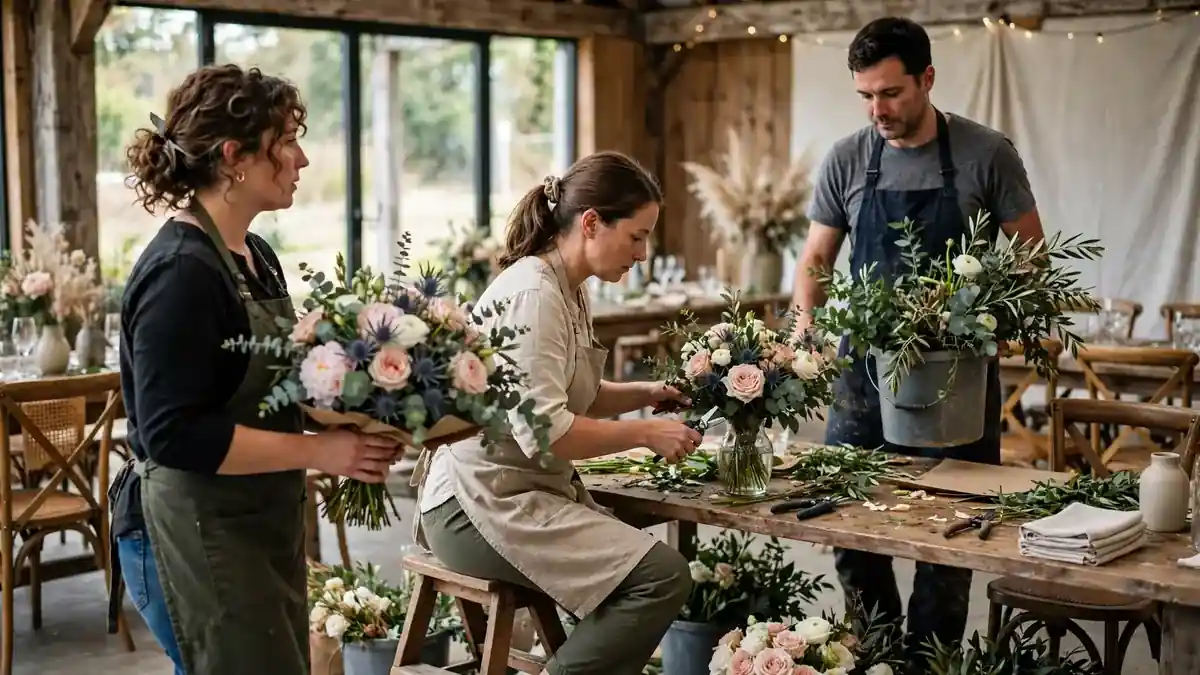
Your first meeting is usually a consultation, not a booking. Bring your color palette, your venue photos, and your guest count, and leave with a proposal and a quote. Expect to pay a 30 to 50% retainer to hold the date, with the final flower order confirmed one to two weeks before the wedding as the guest count firms up.
Last minute bookings are possible for small weddings. A solo florist may take a wedding with a few weeks of notice in the off season, and grocery store floral departments can assemble bouquets and simple centerpieces with a week or two of lead time. But for a full-service Saturday wedding in June, assume the best studios are gone months ahead, and book early.
Frequently Asked Questions About Wedding Florist Cost
How much does a wedding florist cost on average? The national average is $2,800 according to The Knot Real Weddings Study, with a median of $1,900. Full-service florist budgets run $5,100 to $7,600 according to Zola. Most couples spend between $1,500 and $6,000.
How much does a wedding florist cost for a bridal bouquet? A classic bridal bouquet costs $150 to $350. Large, lush designs run $400 to $600, and cascading designs with premium blooms can reach $500 or more.
How much does a wedding florist cost per table? A low centerpiece costs $75 to $200 per table, and a tall centerpiece costs $200 to $600 per table. Bud vase designs can bring the per-table cost down to $25 to $40.
What percentage of the wedding budget goes to flowers? Flowers usually take 8 to 13% of the total wedding budget. The Knot’s data puts floral spending near 8 to 10%, while Zola puts full-service floral budgets near 13%.
Is it cheaper to DIY wedding flowers? Yes, DIY can save 50% or more. A 120 guest wedding that costs about $4,240 with a full-service florist can cost $800 to $1,500 in fresh DIY flowers. The trade-off is a full weekend of work: buying, conditioning, arranging, transporting, and setting up.
Do you tip a wedding florist? Tipping is not required but is common. Zola suggests $50 to $100 for the lead florist and $5 to $10 per person for the delivery and setup crew. Check whether a service charge is already included so you do not tip twice.
How much does a wedding florist cost for a small wedding? A 50 guest wedding with five or six tables typically costs $1,000 to $2,500. Watch out for studio minimums: many established studios hold a $5,000 to $8,000 minimum for a Saturday in peak season, so small weddings often book a solo florist or a Friday date.