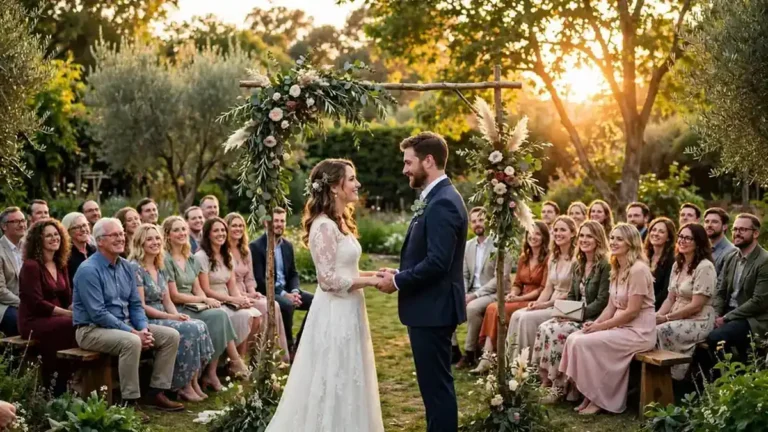

Wedding Planning Checklist: 12-Month Timeline (2026)
Congratulations — you’re engaged. Now comes the part nobody warns you about: somewhere between the happy tears and the ring selfies, wedding planning quietly turns into a second job. The average US engagement lasts about 15 months, per The Knot’s Real Weddings Study, and most couples juggle a dozen-plus vendors, a five-figure budget, and a guest list with opinions of its own.
This wedding planning checklist is the month-by-month timeline we wish someone had handed us on day one. It runs from 12+ months out all the way through the week after your wedding, with every task in the order it actually needs to happen — not just a random list of “don’t forgets.” It’s written for couples planning without a full-service planner: every step tells you not just what to do, but why now and what happens if you wait. Print it, bookmark it, or copy it into your notes app. Every other guide on Posy Mag links back here, because this is the spine your whole plan hangs on.
How to Use This Wedding Planning Checklist
Before you dive in, three rules that will save you more stress than any single tip on this page:
- Start at your month, not at the top. Engaged with only 8 months to go? Jump straight to the 7–8 month section and work forward — then circle back and compress the earlier sections using our short-timeline guide below.
- Follow the booking order, not just the calendar. Some vendors book out a year in advance; others can be hired in weeks. The timeline below is sequenced so the time-sensitive bookings come first.
- Track money separately from tasks. Every booking comes with a deposit schedule. Keep a simple payment calendar (we built you a template in the payment section) so a surprise $3,000 balance never ambushes you.
12+ Months Out: Lay the Foundation
The first month isn’t about booking anything — it’s about decisions. Couples who rush this phase spend the next year undoing early mistakes. Slow down for two or three weeks and get these five things right.
1. Have the money talk (yes, the awkward one)
Before you look at a single venue, sit down with your partner and answer: what’s our total number, and who’s contributing? If parents or family are chipping in, have that conversation now — not after you’ve fallen in love with a venue that’s $8,000 over budget. Get specific: is it a lump sum, or are they covering specific vendors? Put it in writing, even just a text thread. Money misunderstandings are the number one source of wedding planning fights, and they’re almost always preventable.
2. Set your budget and estimate your guest count together
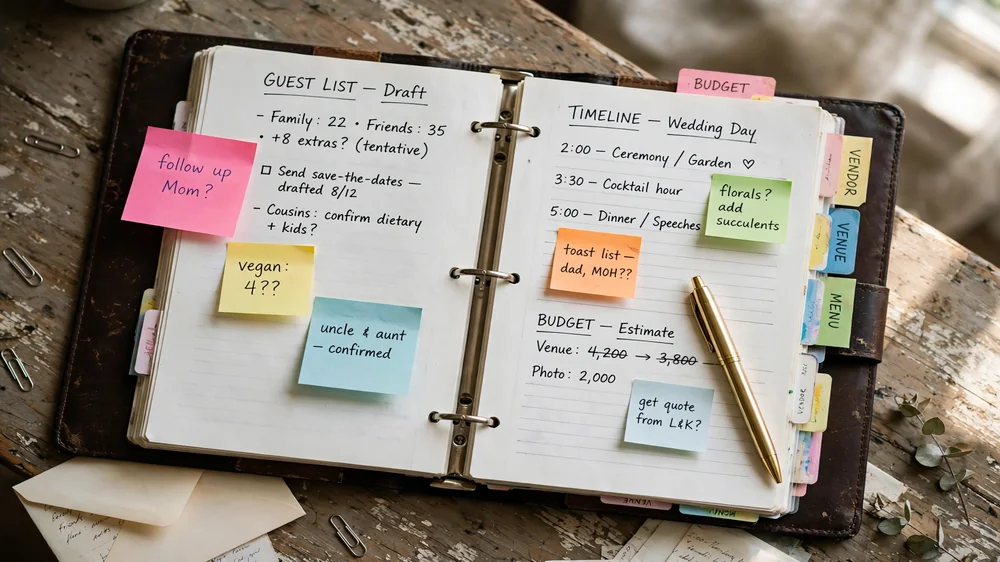
Budget and guest count are a package deal — every additional 10 guests adds roughly $1,000–$2,000 in catering, rentals, and stationery at typical US prices. Start with three lists: must-invite (non-negotiables), want-to-invite (if budget allows), and only-if-space. Most couples land between 100 and 150 guests; intimate weddings under 50 are a growing trend and cut costs dramatically. For a full breakdown of where the money actually goes, see our wedding budget breakdown.
3. Pick your season and date window
You don’t need an exact date yet — but you need a season and a shortlist of 2–3 weekends. Peak wedding season in the US runs May through October, with September and October the most in-demand months. Saturday dates at popular venues book 12–18 months out. If you’re flexible on a Friday or Sunday, you’ll find better availability and often 10–20% lower venue pricing. Check for conflicts: major holidays, your VIPs’ existing plans, and local events that spike hotel prices.
4. Decide how much help you need
There are three tiers, and most couples only need one:
- Full-service planner ($3,000–$10,000+): handles everything from vendor sourcing to design. Worth it for large, complex, or destination weddings.
- Month-of / day-of coordinator ($1,000–$2,500): takes over logistics in the final 4–6 weeks and runs the wedding day. The best value for most couples.
- DIY with tools (free–$200): spreadsheets, planning apps, and this checklist. Totally doable for weddings under 75 guests or simple venues.
Book a planner now if you want one — the good ones reserve dates as early as venues do.
5. Start your inspiration system
Create one shared place for ideas: a Pinterest board, a shared album, or a folder. The trick is curation — save everything for two weeks, then delete ruthlessly until a clear style emerges. Are you seeing garden party, modern minimalist, or ballroom glam? Your style direction will guide every vendor conversation from here on. While you’re at it, consider a low-key engagement party — it’s optional, but it’s a great excuse to celebrate before the real work begins.
12+ months checklist: money talk done · total budget set · guest count estimated · season/date window chosen · planner decision made · inspiration system started
11–12 Months Out: Book the Big Three
Three bookings determine everything else — your date, your capacity, your food, and your photos. They also sell out first. This is the month to move fast.
Book your venue
Tour 3–5 venues before deciding, and always visit your top choice in person. Ask about what’s included (tables? chairs? linens? getting-ready suites?), capacity minimums and maximums, vendor restrictions, noise curfews, and what’s required for a weather backup plan. Bring our 25 questions to ask a venue on every tour — the answers vary wildly and the fine print matters. Expect to put down a 25–50% deposit to hold your date.
Book your photographer
Top photographers in major metros book 9–12 months out, especially for fall Saturdays. Review full galleries, not just Instagram highlights — you want to see how they handle dark receptions, harsh midday light, and real (not model) couples. Expect $2,500–$5,000 for experienced pros in most US markets, more in NYC, LA, and Chicago. Ask about second shooters, turnaround time, and what’s included in the package.
Lock in catering direction
If your venue doesn’t include catering, book a caterer now — the good ones go as fast as venues. Even if tastings happen later, get the contract signed: confirm the per-plate price range ($70–$150 is typical for plated dinner), bar packages, cake-cutting fees, and whether vendor meals are required (budget for them — most contracts require feeding your vendors).
Venue red flags to watch for
Most venues are wonderful. A few aren’t. Walk away (or negotiate hard) if you spot these:
- Required vendor lists with kickbacks. “Preferred” lists are normal; exclusive lists that forbid outside vendors often mean the venue takes a cut — and you pay for it.
- Vague overtime terms. “Additional fees apply” without numbers is a blank check. Get the hourly overtime rate in writing.
- No weather backup in the contract. For outdoor venues, the rain plan must be a contractual commitment, not a verbal promise.
- Refusal to itemize. If they won’t break down what’s included vs. extra, assume the extras are expensive.
- Pressure to sign today. High-demand dates sell, but legitimate venues give you at least a few days. “This price expires tonight” is a sales tactic.

11–12 months checklist: venue booked and deposit paid · photographer booked · caterer booked (or venue catering confirmed) · wedding date finalized
9–10 Months Out: Build Your Vendor Team
With the big three secured, fill out the rest of your vendor roster. These pros book 6–9 months out, so don’t coast.
Videographer, florist, and music
Book your videographer ($1,800–$3,500 for solid mid-range coverage), your florist (full-service florals run $2,000–$4,000; be honest about your budget and let them design to it), and your DJ or band. DJs average $1,000–$2,500; live bands start around $3,000 and climb fast. For bands, ask to see live video — a studio demo tells you nothing about stage energy.
Officiant and ceremony details
Confirm your officiant — religious leader, civil officiant, or a friend getting ordained online (legal in most states, but verify your county’s rules). Start sketching your ceremony structure: readings, rituals, music cues, and whether you’re writing personal vows.
Hair and makeup artist
Book your HMUA now; trials happen around month 3. Ask about travel fees, assistant artists for large bridal parties, and airbrush vs. traditional pricing. If anyone in your party has textured hair or specific skin needs, confirm the artist’s experience explicitly.
Send save-the-dates
Mail save-the-dates 6–8 months before the wedding — push to 8–12 months for destination weddings or holiday weekends. Digital save-the-dates are completely acceptable now and save $200–$400 in printing and postage.
Launch your wedding website and registry
Set up a simple wedding website with the date, venue, hotel block info, and registry links. Most couples register at two or more stores; include a range of price points and add experiences or cash funds alongside physical gifts.
Look into wedding insurance
Nobody’s favorite task, but a $200–$600 liability policy protects your deposits if a vendor goes under or extreme weather forces changes. Some venues require it. Buy it once your big deposits are down.
Vetting vendors: the 10-minute screen that prevents disasters
Before you sign anything, run every vendor through this quick screen. It takes ten minutes and filters out 90% of bad hires:
- Full galleries, not highlights. Ask photographers and videographers for one complete wedding gallery. Anyone can post 20 perfect shots; you need to see the other 800.
- Three recent references. Not testimonials on their website — actual couples from the last year. One quick email exchange tells you everything about communication style.
- The contract test. A professional contract names the date, arrival and departure times, exact deliverables, payment schedule, cancellation terms, and a backup plan if they’re sick. Vague contracts are the biggest red flag in the industry.
- Response time. If they take a week to answer a sales email, imagine planning-season communication. Look for 24–48 hour responses.
- Insurance and licensing. Photographers, DJs, and planners should carry liability insurance; venues often require vendor COIs (certificates of insurance). Ask upfront.
Get at least three quotes per category — not to find the cheapest, but to learn the market rate. An outlier bid (40% below everyone else) usually means missing deliverables, not a bargain.
9–10 months checklist: videographer, florist, DJ/band booked · officiant confirmed · HMUA booked · save-the-dates sent · website live · registry created · wedding insurance purchased
7–8 Months Out: Attire and Design
This is the fashion and aesthetics phase — and it has the longest lead times in all of wedding planning, so treat deadlines as sacred.
Order the wedding dress
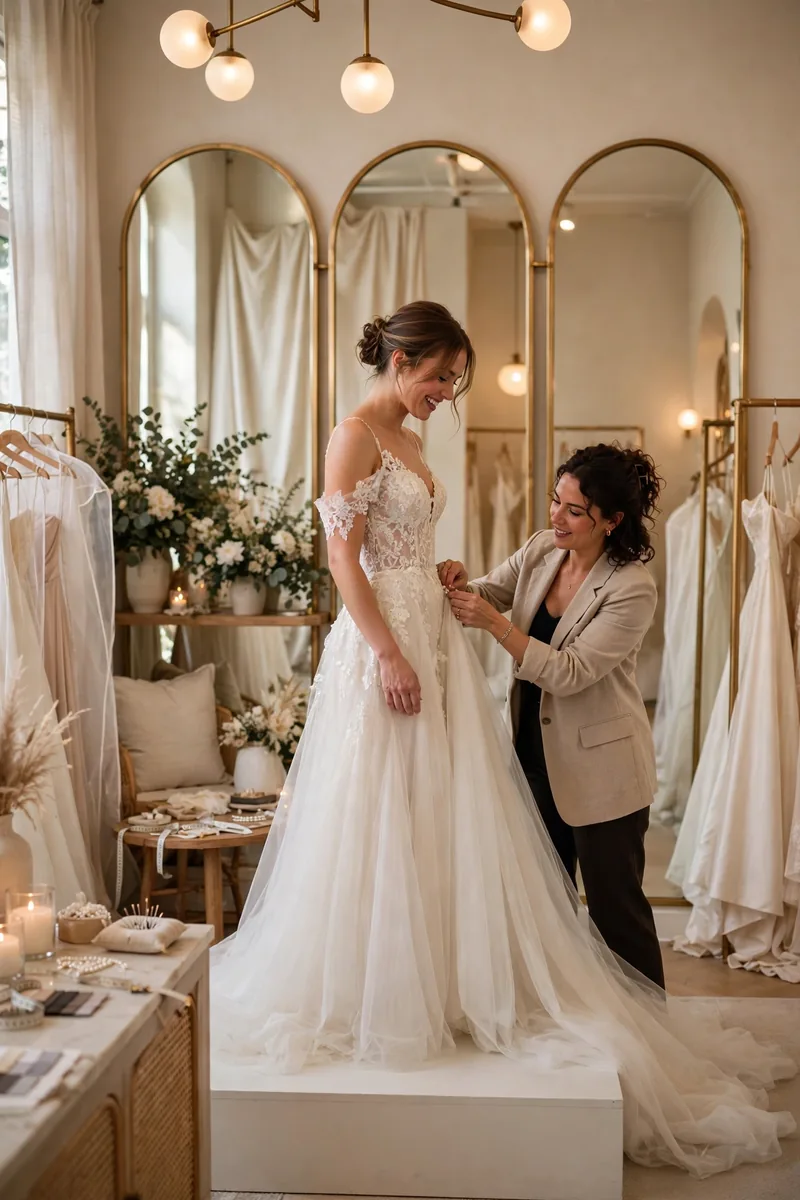
Made-to-order gowns need 4–6 months for production plus 2–3 months for alterations. That means month 8 is your sweet spot — order later and you’re paying rush fees ($200–$500+) or settling for off-the-rack. Visit 3–5 salons, and bring the shoes and undergarments you plan to wear. Budget $300–$700 for alterations on top of the dress price; almost every gown needs them.
Bridesmaid dresses and groom attire
Order bridesmaid dresses now — they need 3–4 months to arrive. For the groom: buying a suit ($500–$1,500) usually beats renting ($150–$300) if he’ll wear it again; for tuxedos, renting is fine. Groomsmen should be measured 2–3 months out. Our groom’s wedding day checklist covers his parallel timeline in detail.
Rentals, cake, and honeymoon
If your venue isn’t all-inclusive, book rentals now: tent, tables, chairs, linens, lighting, dance floor. Do cake tastings and place your order ($400–$800 for a standard three-tier serving 100). And book the honeymoon — international trips need the longest lead for flights and passports, which can take 8–12 weeks to process or renew.
7–8 months checklist: dress ordered · bridesmaid dresses ordered · groom attire decided · rentals booked · cake ordered · honeymoon booked
5–6 Months Out: Paper, Transport, and Rehearsal Plans
Order invitations
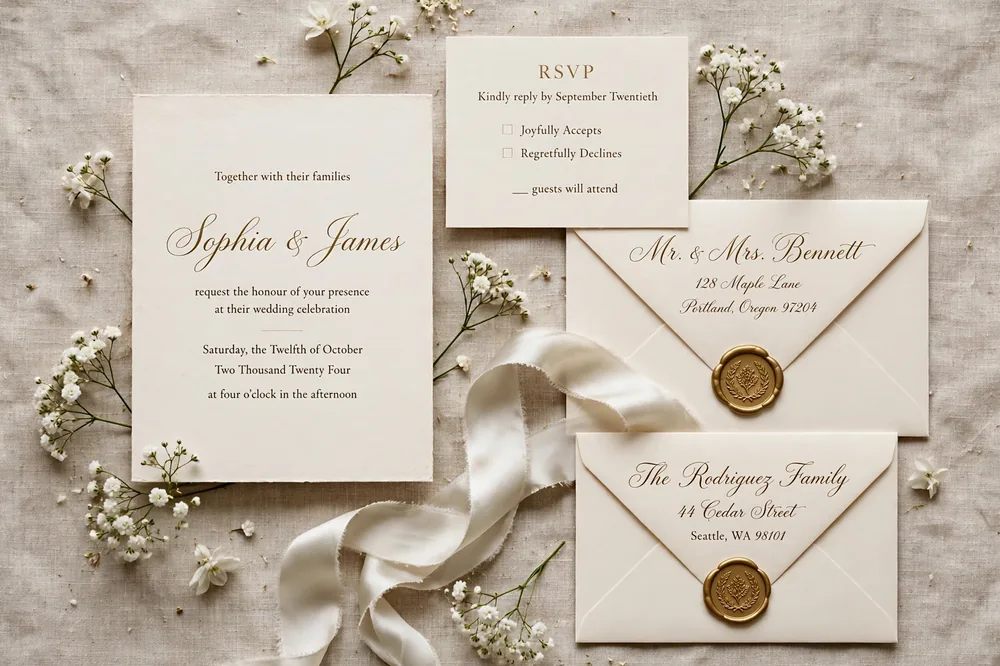
Order your invitation suite now — printing takes 2–4 weeks, and you’ll mail them at the 6–8 week mark. Budget for postage carefully: square envelopes, wax seals, and bulky suites often need extra postage ($1+ per invite). Weigh one complete suite at the post office before buying stamps in bulk. Our invitation timing guide covers every piece of stationery and its deadline.
Transportation and rehearsal dinner
Book transportation (shuttle for guests is the single most-appreciated logistics spend), and reserve your rehearsal dinner venue. Rehearsal dinners typically include the wedding party, immediate family, and officiant — 20–40 people. Traditionally the groom’s family hosts, but modern couples split it however makes sense.
Wedding bands and menu tasting
Buy wedding bands — custom sizing takes 4–6 weeks. Schedule your menu tasting and finalize the menu, including a plan for dietary restrictions (ask about them on the RSVP card so you have real numbers).
Start the day-of timeline
Draft a rough wedding-day timeline now and share it with your photographer and planner. They’ll refine it, but starting early surfaces conflicts — like a 30-minute drive between ceremony and reception venues you forgot about.
5–6 months checklist: invitations ordered · transportation booked · rehearsal dinner venue reserved · wedding bands purchased · menu tasting done · day-of timeline drafted
3–4 Months Out: Lock In the Details
The vendor team is set. Now it’s about the details that make the wedding feel like yours.
- First dress fitting: bring your shoes, undergarments, and accessories. Plan for 2–3 fittings total.
- Hair and makeup trial: schedule it now, and wear it for a full day to test longevity. Take photos in natural light.
- Finalize ceremony details: readings, music selections, processional order, vow structure. If you’re writing personal vows, start drafting now — not the week of.
- Playlists: give your DJ a must-play list (10–15 songs) and a do-not-play list. Discuss first dance, parent dances, and cake-cutting songs.
- Order favors and programs: favors are optional — if you do them, make them edible or useful. Order ceremony programs and menus.
- Start the seating chart: begin grouping guests by table now; you’ll finalize after RSVPs. Digital seating tools beat poster board.
- Pre-wedding parties: bachelor/bachelorette parties and bridal showers usually happen 1–3 months out. Share the guest list with hosts and stay out of the planning — that’s the gift.
- Confirm wedding party logistics: make sure every attendant has ordered their attire, knows the rehearsal time, and understands their day-of duties. Buy attendant gifts now (budget $50–$150 per person) so it’s not a last-minute scramble — personalized, useful beats expensive and generic.
3–4 months checklist: first fitting done · HMUA trial done · ceremony details finalized · playlists submitted · favors ordered · seating chart started · vows drafted
2 Months Out: Confirm Everything
This is confirmation season. Assume nothing — get everything in writing.
Mail the invitations
Send invitations 6–8 weeks before the wedding (8–12 for destination weddings). Set the RSVP deadline 2–4 weeks before the wedding date — you need final numbers for the caterer and seating chart. Expect to chase 10–15% of guests; build a simple tracking spreadsheet and assign the follow-up calls to your wedding party.
How to actually get RSVPs back
The RSVP chase is where timelines die. Make it easy to say yes:
- Offer online RSVPs. A wedding website form or even a simple Google Form gets 2–3x the response rate of mail-back cards alone — and it’s free.
- Put the deadline on everything — invitation, website, and save-the-date follow-ups. One mention isn’t enough.
- Start chasing one week after the deadline, not one week before the wedding. A quick text (“Hey! Need your RSVP by Friday for the caterer”) works better than a formal email.
- Ask about meals and plus-ones explicitly. Vague RSVPs create seating-chart chaos. Your form should capture: attending yes/no, meal choice, dietary restrictions, and plus-one name.
Final headcount and seating chart
Give your caterer and venue the final headcount by their deadline (usually 7–14 days before). Finalize the seating chart, order place cards and escort cards, and confirm the floor plan with your venue.
Confirm every vendor in writing
Email every vendor a confirmation with date, arrival time, location address, contact numbers, and balance due. This single email thread prevents the vast majority of day-of disasters. Confirm: photographer, videographer, florist (delivery times), DJ/band (load-in), caterer, HMUA (start time), transportation, and officiant.
Research your marriage license
Look up your state’s rules now: most US marriage licenses are valid for 30–90 days after issuance, some states have a 1–3 day waiting period, and both partners typically must appear in person with ID. Plan to pick it up 2–4 weeks before the wedding — early enough to fix paperwork issues, late enough that it won’t expire.
2 months checklist: invitations mailed · RSVP tracking active · seating chart finalized · all vendors confirmed in writing · marriage license requirements researched
1 Month Out: The Final Countdown
No new decisions this month. Just execution.
- Pick up your marriage license and store it somewhere safe — designate one person to bring it on the wedding day.
- Final dress fitting and suit pickup. Break in your wedding shoes by wearing them around the house (with socks to stretch them).
- Pack the emergency kit: fashion tape, safety pins, stain remover pen, pain relievers, blister pads, deodorant, breath mints, tissues, phone charger, and snacks. See our full wedding day emergency kit checklist — 40 items, none of them optional-feeling at 2pm on the day.
- Prepare vendor payments: put final balances and tips in labeled envelopes now. You’ll thank yourself later.
- Delegate everything: assign a point person (not you, not your partner) for day-of questions. Give vendors that person’s number.
- Final venue walkthrough: confirm layout, power access for vendors, and the rain plan — in writing.
- Pack for the honeymoon and confirm travel documents.
- Write thank-you notes for any gifts already received.
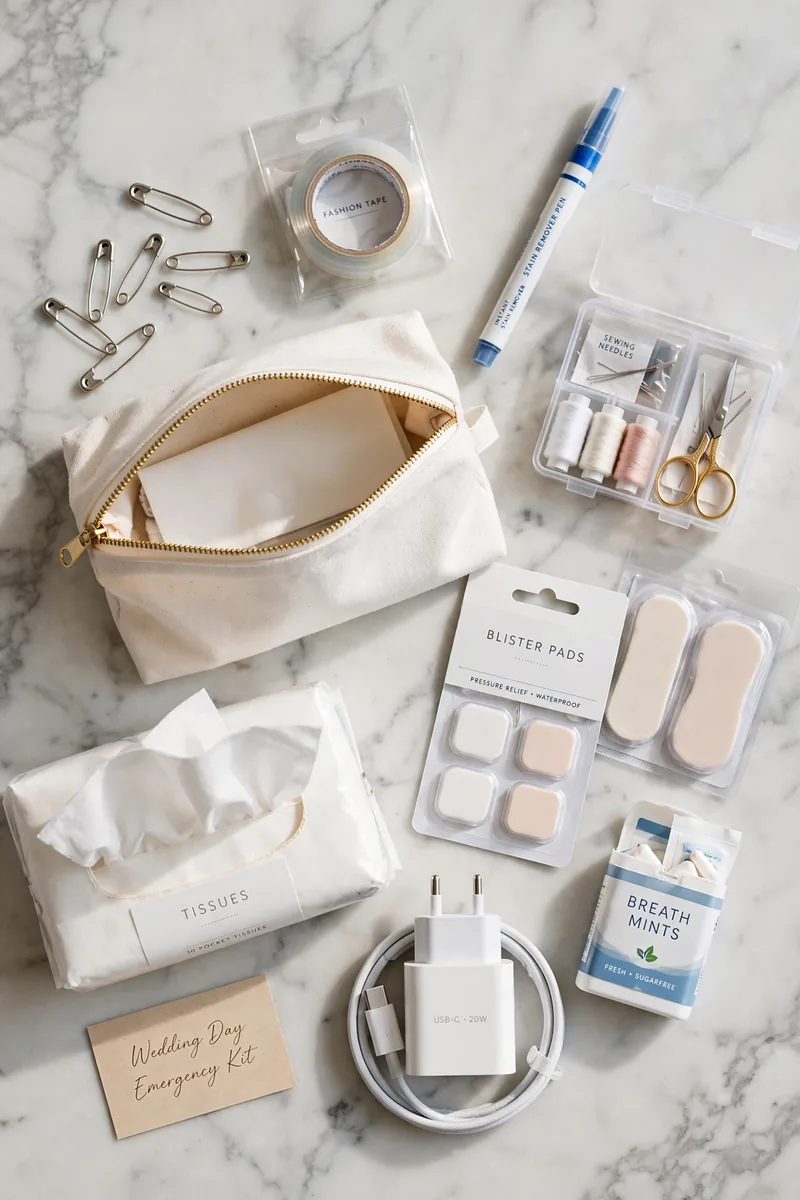
1 month checklist: license in hand · final fitting done · shoes broken in · emergency kit packed · vendor payments prepared · point person assigned · honeymoon packed
The Final Week: Day by Day
The final week is about confirmation, not creation. If a decision wasn’t made by now, the answer is the simplest option available. Protect your sleep, eat real meals, and let your vendors do their jobs — you’ve spent a year hiring professionals precisely so you don’t have to manage them this week.
- 7 days out: confirm final headcount with caterer. Reconfirm vendor arrival times. Get a manicure/pedicure.
- 5 days out: pick up the dress. Confirm the rehearsal dinner headcount. Charge all cameras and phones.
- 3 days out: drop off decor, place cards, and welcome bags at the venue if allowed. Finalize tip envelopes.
- 2 days out: rehearsal and rehearsal dinner. Hand out wedding party gifts. Get to bed early.
- 1 day out: lay out everything for the morning: attire, rings, license, emergency kit, vows. Eat a real dinner. Sleep.
Assign day-of roles (so nobody asks you anything)
The goal of the final week is making yourself unreachable for logistics. Assign these roles explicitly:
- The point person: one decisive friend or family member who fields all vendor questions. Give every vendor their number.
- The keeper of things: someone responsible for the rings, marriage license, tip envelopes, and emergency kit.
- The timeline enforcer: usually your coordinator or maid of honor — keeps hair/makeup on schedule and gets people where they need to be.
- The guest herder: a loud, beloved family member who can round up relatives for photos without drama.
- The social buffer: someone who can politely extract you from 20-minute conversations with distant relatives.
Wedding Day: A Sample Hour-by-Hour Timeline
Every timeline is different, but here’s a realistic template for a 4:30pm ceremony. Work backward from your ceremony time and give every step 15 extra minutes — weddings run late, and buffers are what keep them feeling calm.
| Time | What’s happening |
|---|---|
| 9:00 AM | Hair and makeup begins (allow 45–60 min per person) |
| 12:30 PM | Lunch for the wedding party — non-negotiable, you’ll forget to eat otherwise |
| 1:30 PM | Photographer arrives; detail shots (rings, invitations, dress) |
| 2:30 PM | Getting-dressed photos; first look if you’re doing one |
| 3:30 PM | Wedding party and family portraits |
| 4:00 PM | Guests seated; vendors in final positions |
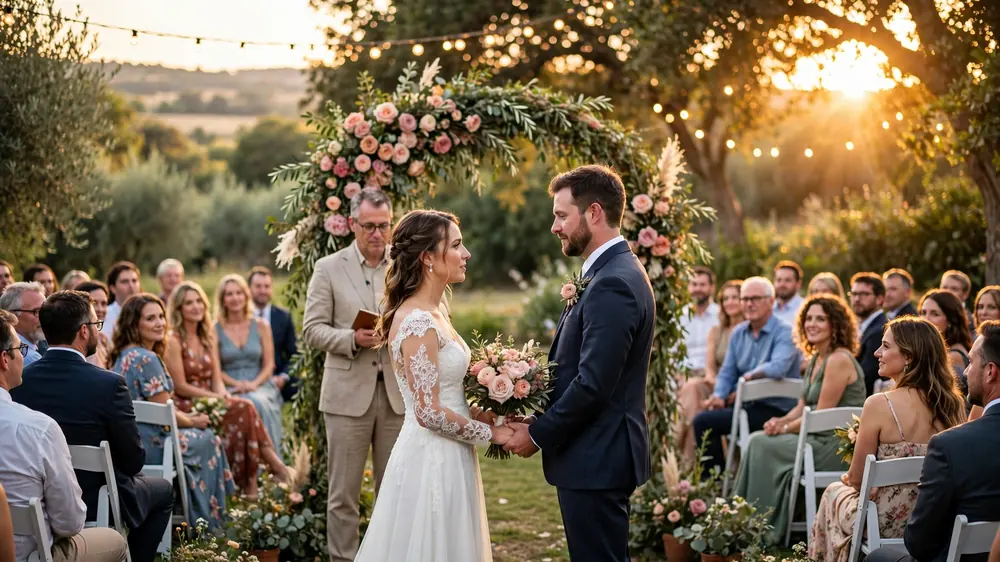
| 4:30 PM | Ceremony begins (20–30 minutes typical) |
| 5:00 PM | Cocktail hour; couple takes portraits; guests enjoy drinks |
| 6:00 PM | Grand entrance, first dance, welcome toast |
| 6:30 PM | Dinner service; toasts during courses |
| 7:45 PM | Parent dances, cake cutting |
| 8:00 PM | Open dancing |
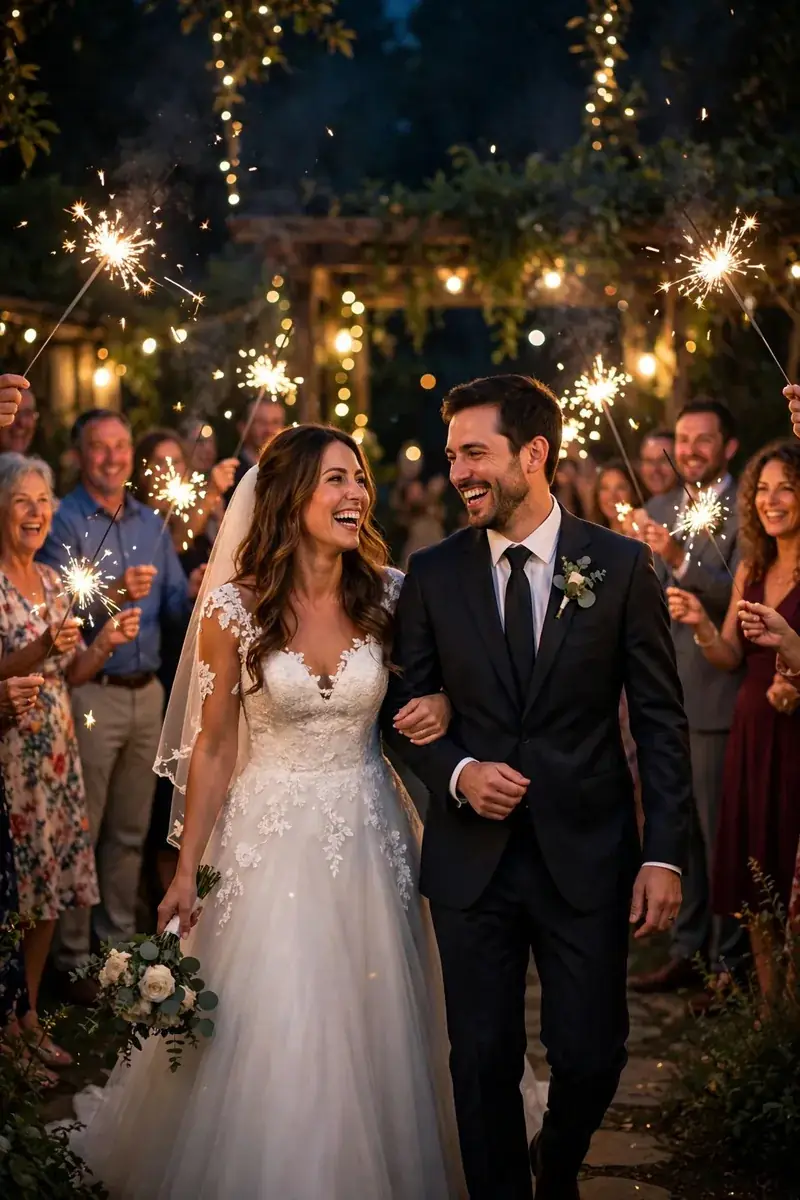
| 10:30 PM | Last dance, sparkler send-off, exit |
The Payment Calendar Most Checklists Skip
Here’s what the standard timelines leave out: weddings aren’t just a task list, they’re a cash-flow plan. Most vendors require a 20–50% non-refundable retainer to book, with the balance due 1–4 weeks before the wedding. That means months 2 and 1 can bring $5,000–$10,000 in lump-sum payments landing all at once — the number one budget surprise couples report.
Build a simple payment tracker with four columns: vendor, total, deposit paid, balance due date. Typical balance deadlines:
- Venue: balance often due 30 days before; some split into 2–3 installments
- Photographer/videographer: balance due 1–2 weeks before, or day-of
- Caterer: final headcount locks the total; balance due 7–14 days before
- Florist, DJ, HMUA: balances typically due 1–2 weeks before
- Officiant, transportation: often due week-of or day-of
Read every contract’s cancellation and payment terms before signing — not after. And keep a 10–15% buffer above your budget for the costs nobody lists upfront: vendor meals, gratuities (15–20% for catering staff if not included), alterations, postage, and overtime fees. Our hidden wedding costs guide lists 23 of them with real dollar figures.
Who to tip (and how much): the quick reference
Gratuities confuse everyone. Rules of thumb for US weddings:
| Vendor | Typical gratuity |
|---|---|
| Catering staff / bartenders | 15–20% of food & beverage (if not already in contract) |
| Photographer / videographer | $100–$300 per lead shooter (optional but appreciated) |
| DJ / band | $100–$200 for DJ; $25–$50 per band member |
| Officiant | $100–$300 (or a donation for religious officiants) |
| Hair & makeup | 15–20%, same as a salon visit |
| Florist, cake baker | Not expected; $50–$100 for exceptional service |
| Transportation drivers | 15–20% if not included in the quote |
| Planner / coordinator | $200–$500 or a glowing review + referral |
Check every contract first — many caterers and venues already include a service charge, and double-tipping is an expensive mistake. Put cash tips in labeled envelopes and hand them to your coordinator or point person to distribute on the day.
After the Wedding: The Checklist Continues
Almost every planning timeline ends at “say I do.” But the paperwork doesn’t. Give yourself two relaxed weeks, then handle:
- File the marriage license: your officiant usually files it with the county within days — confirm they did. Order 2–3 certified copies ($10–$25 each); you’ll need them for every name-change step.
- Name change (if applicable): the order matters — Social Security first, then driver’s license/DMV, then passport, then banks and everything else. Budget 4–8 weeks total.
- Vendor reviews and final payments: settle any remaining balances, then leave honest reviews while details are fresh. Vendors live on reviews.
- Thank-you notes: etiquette says within 3 months. Do 5 a night and it’s painless.
- Preserve the dress: get it professionally cleaned and preserved within weeks — stains set permanently over time ($200–$400).
- Returns and registry: return duplicates, use gift cards, and complete your registry discount (most stores offer 10–20% off remaining items).
- Preserve the memories: back up all photos in two places, and order an album within the year — digital galleries get forgotten.
- Deal with the decor: sell or donate reusable decor within a month while it’s still in good shape. Wedding resale groups recoup 30–50% of decor costs easily.
- Update your paperwork: beyond the name change — update beneficiaries on insurance and retirement accounts, emergency contacts, and your address everywhere if you moved.
Planning in Less Than 12 Months? Your Compressed Plan
Short engagement? You can absolutely pull this off — you just compress ruthlessly. Here’s the priority order when time is tight:
- Week 1: set budget, estimate guest count, book venue, book photographer. These four decisions unlock everything else.
- Weeks 2–4: book caterer (if separate), DJ/band, florist, videographer, officiant. Order the dress immediately — with under 6 months, you’ll likely buy off-the-rack or pay rush fees.
- Months 4–5 (of 6): send save-the-dates digitally, order invitations, book HMUA, rentals, transportation, honeymoon.
- Final 2 months: follow the standard 2-month, 1-month, and final-week sections above — they don’t change.
What to skip when time is short: engagement party, elaborate favors, custom anything with long production times, and second-guessing. What never to skip: contracts in writing, the marriage license research, and vendor confirmations. For the full condensed version, see planning a wedding in 6 months.
7 Planning Mistakes That Cost Couples Money and Sanity
- Booking vendors in the wrong order. The venue determines your date, capacity, and sometimes your caterer and rental needs. Booking a photographer before you have a date is backwards — always venue first.
- Inviting before checking capacity. Finalize the guest count before booking the venue, not after. A 180-person list and a 120-person venue is a $5,000 problem.
- Signing contracts without reading payment terms. Know every balance due date, the cancellation policy, and what’s non-refundable before you sign. Photograph or scan every signed contract into one folder.
- Ordering the dress too late. This is the single most common timeline casualty. Made-to-order gowns need 6–9 months total. When in doubt, order earlier than you think.
- Skipping wedding insurance. A few hundred dollars protects tens of thousands in deposits. If your venue requires liability coverage, you need it regardless.
- No day-of point person. If vendors text you with questions on the wedding day, the system failed. One trusted person — coordinator, wedding party member, responsible cousin — fields everything.
- Forgetting the unglamorous line items. Vendor meals, gratuities, postage, alterations, marriage license fees, and overtime charges routinely add 10–15% to the “real” total. Budget for them from day one.
Wedding Planning Checklist FAQs
When should I start planning my wedding?
Start the foundation work (budget, guest count, date window) as soon as you’re engaged, even if the wedding is 18 months out. Begin active booking 12 months before — venues and photographers reward early birds with actual availability.
What do I book first when planning a wedding?
Your venue, always. It locks your date, determines your guest capacity, and shapes every other decision. Photographer and caterer come next, since the best ones book nearly as far out.
Is 12 months enough time to plan a wedding?
Yes — it’s the most common planning window in the US. With focused effort, even 6–9 months works if you prioritize venue, photographer, and attire first and stay flexible on details.
How much does the average US wedding cost?
Recent industry surveys put the national average in the mid-$30,000s, but location swings it wildly — major metros run 40–60% higher than small towns. Guest count is the biggest lever you control. See our wedding budget breakdown for where every dollar goes.
Do I really need a wedding planner?
Not necessarily. A full-service planner is worth it for large or complex weddings, but most couples do fine with a month-of coordinator ($1,000–$2,500) plus a solid checklist. For weddings under 50 guests, see how to plan a small wedding — the whole process gets simpler.
What’s the biggest mistake couples make with the timeline?
Booking things in the wrong order — specifically, falling in love with vendors before securing the venue and date. The venue decision constrains everything downstream, so it always comes first. The second-biggest mistake is ordering the wedding dress late; production plus alterations need 6–9 months.
How do we handle divorced parents or family drama in the planning?
Address it in the seating chart and the timeline, not on the wedding day. Seat sensitive parties at different tables, brief your photographer on which family groupings to prioritize, and give your point person a heads-up. Most drama is preventable with 10 minutes of planning.
Should we do a first look?
It’s a logistics decision as much as an emotional one. A first look lets you finish most portraits before the ceremony, which means you actually attend your cocktail hour and the timeline breathes easier. If you prefer the traditional aisle reveal, just build in 45–60 extra minutes of portrait time after the ceremony and trim cocktail hour accordingly. Either way, decide by month 3 so your photographer can build the timeline around it.