How to Plan a Small Wedding: Guest List & Budget Guide
A small wedding is not a backup plan. For a growing number of American couples, it is the deliberate first choice: fewer guests, more of the budget spent on the people who matter, and a day that actually feels like yours. If you are planning a wedding with 50 guests or fewer, this guide covers the two things that make or break it — the guest list and the budget math — plus the venues, timeline, and day-of details that work best at small scale.
First, Define What “Small” Means for You
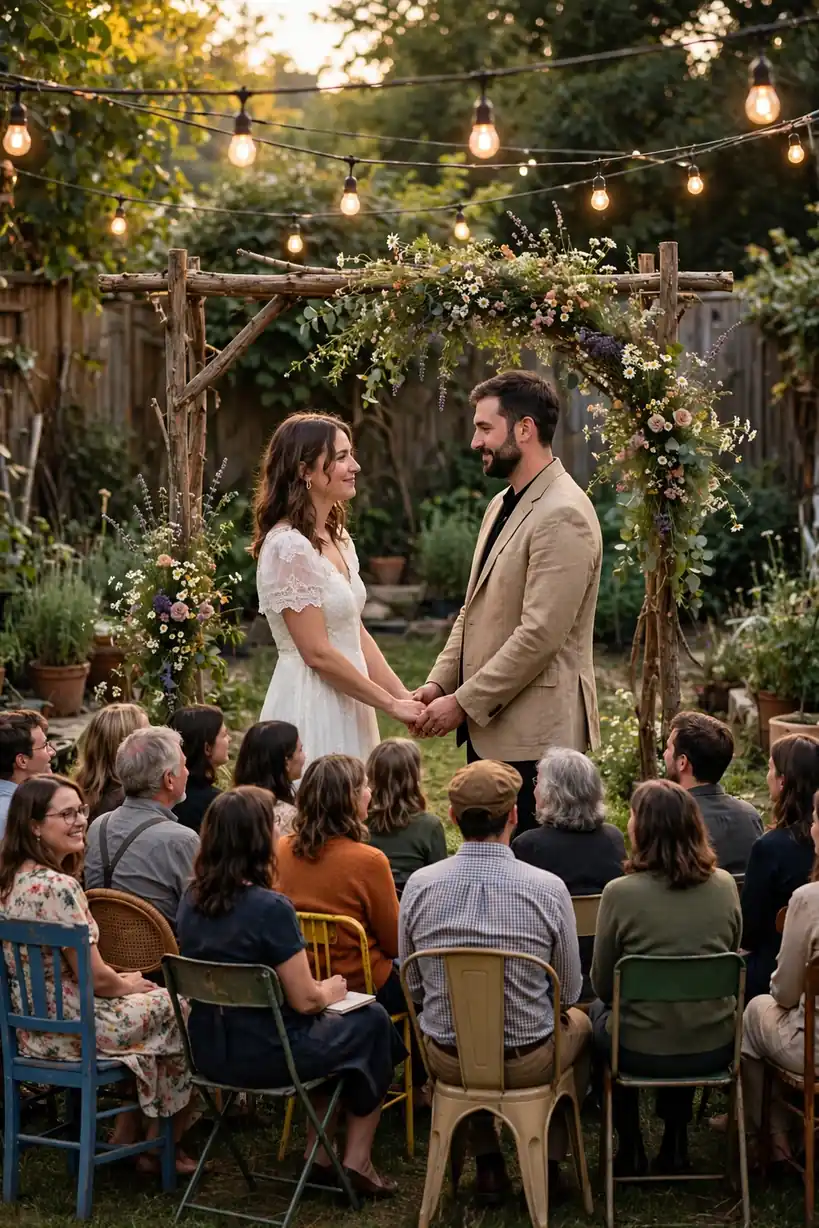
Most US planners draw the lines like this: under 20 guests is a micro-wedding, 20 to 50 guests is a small or intimate wedding, and anything over 50 starts behaving like a traditional wedding. Pick your number early, because venue, catering format, and even which vendors will take your booking all flow from it.
Small Wedding vs. Big Wedding: The Real Budget Math
Here is the comparison almost no planning guide gives you: the same wedding, priced at two guest counts. The numbers below reflect typical 2025–2026 US pricing for a Saturday wedding in a mid-cost metro area.
| Line item | 30 guests | 120 guests |
|---|---|---|
| Venue (ceremony + reception) | $2,500–$5,000 | $8,000–$15,000 |
| Catering + bar ($90–$180/plate) | $2,700–$5,400 | $10,800–$21,600 |
| Photography (full day) | $2,500–$4,000 | $3,500–$6,000 |
| Flowers + decor | $800–$1,500 | $2,500–$5,000 |
| Attire, hair + makeup | $1,500–$3,000 | $1,500–$3,000 |
| Music (DJ or small band) | $800–$1,500 | $1,500–$3,000 |
| Invitations + stationery | $150–$300 | $400–$800 |
| Cake/dessert | $200–$400 | $500–$900 |
| Misc (rentals, tips, license) | $1,000–$2,000 | $2,000–$4,000 |
| Realistic total | $12,000–$23,000 | $31,000–$59,000 |
The key insight: every guest you add costs roughly $150–$300 in variable costs (their plate, drinks, rentals, favors, stationery). Cutting from 120 to 30 guests removes 90 × ~$200 = about $18,000 before you change a single other decision. What does not shrink much: photography, attire, and music are mostly fixed costs. That is why small weddings free up money to upgrade quality — a $4,000 photographer on an $18,000 wedding is a very different experience from the same photographer on a $55,000 one.
For the full category-by-category breakdown, see our wedding budget breakdown.
The Guest List: How to Cut Without the Drama
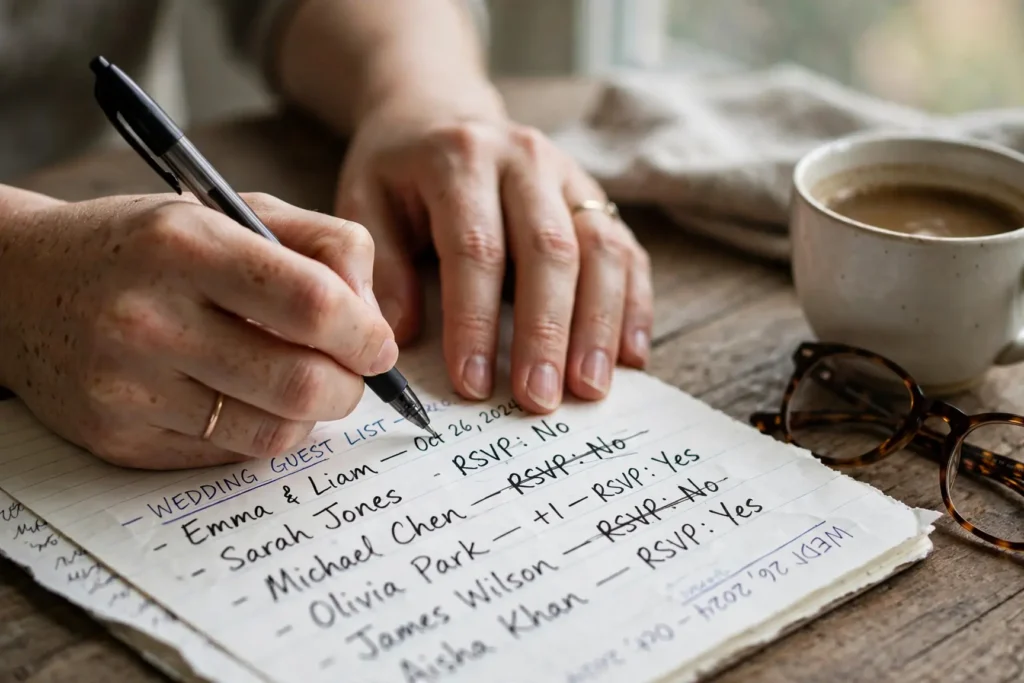
This is the hardest part of planning a small wedding, and the part most guides gloss over with “just invite close family and friends.” Here is an actual method.
Use the A/B/C list system
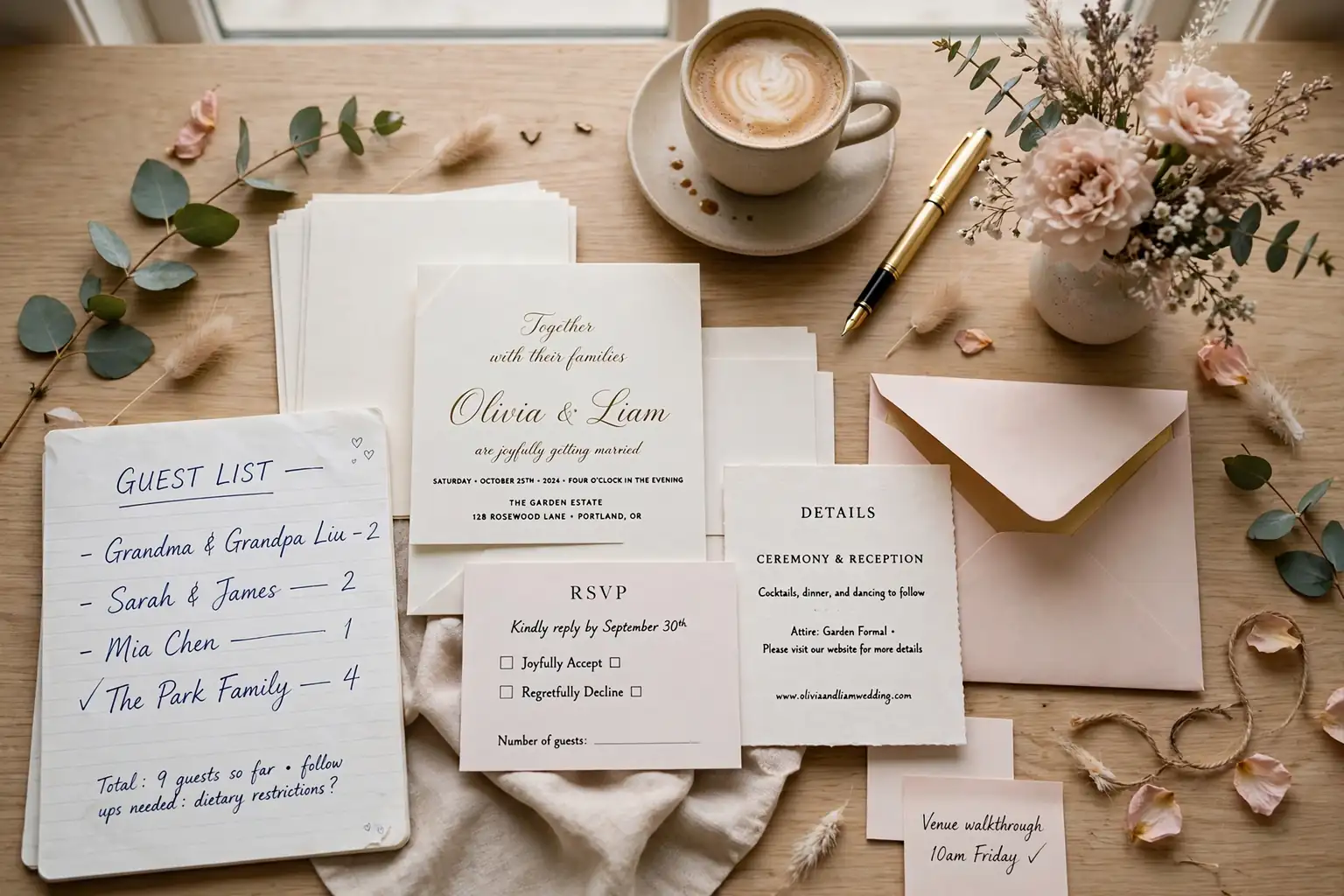
Write down every name, then sort into three lists:
- A list — non-negotiable. People you would move the wedding date for. Usually immediate family and a handful of closest friends.
- B list — genuinely wanted. Friends you see a few times a year and would cross state lines for. Invite if the numbers allow.
- C list — obligation invites. Your mom’s coworkers, distant cousins, plus-ones of plus-ones. These are the first cuts, and cutting them is the whole point.
Set your cap first (say, 40), fill from A down, and stop when you hit the number. Do not negotiate with the C list.
Handle the parents early
Most guest-list drama comes from parents, not friends. Give each set of parents a fixed number of discretionary invites — say, 5 each — and let them choose. A cap turns “you have to invite Aunt Linda” into “is Aunt Linda one of your five?” It moves the argument from your guest list to their allocation, which is much easier to survive.
Scripts that actually work
When someone asks why they were not invited, you do not owe a detailed defense. Use one line, warmly, and do not elaborate:
- “We’re keeping it to immediate family and our closest circle — we hope you understand.”
- “Our venue literally only holds 30 people, so we had to make some really tough calls.”
- For plus-ones: “We’re not able to extend plus-ones, but we’d love to celebrate with you another time.”
Do not apologize repeatedly and do not promise a future invitation you do not mean. One clear sentence beats a week of anxious texting.
Give the cut list somewhere to go
The kindest move for everyone you could not invite: host a casual post-wedding celebration — a backyard barbecue or a dinner at your favorite restaurant a month later. It costs a fraction of adding them to the wedding, it ends the guilt, and it gives people a genuine way to celebrate you. Our backyard wedding guide doubles as a playbook for exactly this kind of party.
The Small-Wedding Budget Traps Nobody Warns You About
Small does not automatically mean cheap. Watch for these:
- Vendor minimums. Many photographers sell 8-hour packages minimum, DJs quote 4-hour minimums, and venues require Saturday minimum spends of $5,000–$10,000 even for 25 guests. Always ask: “What is your minimum for a guest count under 40?” before falling in love with a vendor.
- Per-head catering minimums. Some caterers will not fire up a kitchen for fewer than 50 guests — or they charge a small-party fee of $500–$1,500. Restaurants with private dining rooms are often cheaper than traditional caterers at this size.
- The “small venue premium.” Boutique venues that specialize in intimate weddings know their market and price accordingly. A 30-person venue at $4,000 is not automatically a better deal than a 150-person venue’s off-peak $3,500 package.
- Upgrading everything. The most common small-wedding budget blowout is spending the savings three times over: the $300/plate dinner, the designer dress, the live string quartet. Upgrades are the reward for going small — just budget them deliberately instead of letting each one feel “free.”
Pick a Venue Built for 30, Not 300
The number-one venue mistake for small weddings is booking a room designed for 200 and putting 35 people in it. It will feel empty no matter how you decorate. Look for spaces where your guest count is the sweet spot, not the minimum:
- Restaurants with private dining rooms — built-in food, staff, and atmosphere; often just a food-and-beverage minimum instead of a rental fee.
- Boutique hotels and B&Bs — buy out 10–15 rooms and the event space often comes discounted or free.
- Private estates and vacation rentals — verify the listing allows events; many do not, and fines are real.
- Breweries, wineries, and distilleries — character-rich, usually with in-house drinks programs.
- Public gardens, parks, and historic homes — low rental fees, but confirm outside-vendor and alcohol policies.
Ask every venue two questions before anything else: “What is your food-and-beverage or rental minimum for a group our size?” and “Can we see photos from a wedding our size?” See our affordable small wedding venues guide for the full hunting playbook.
Your Small Wedding Planning Timeline
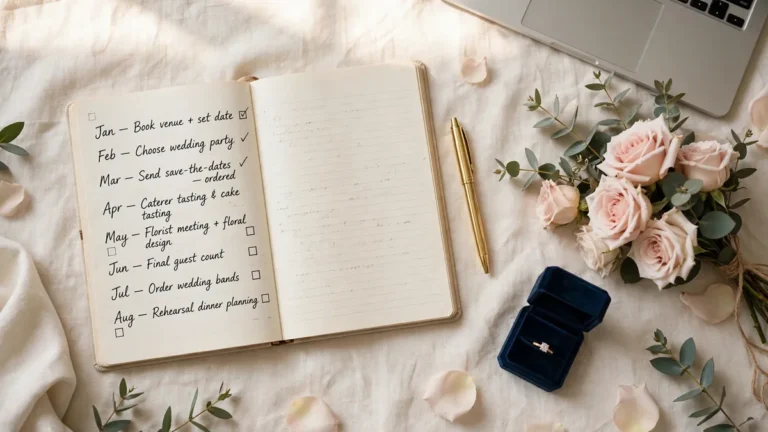
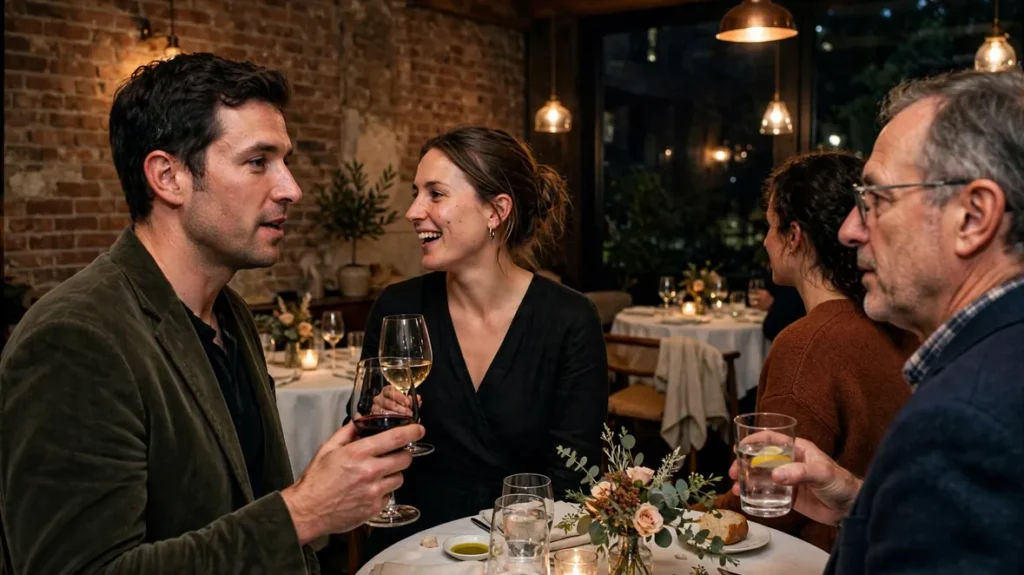
Small weddings need less lead time — most vendors for under-50-guest events book out 4–6 months ahead, not 12. Here is a condensed timeline that works:
- 6+ months out: Set budget and guest count. Book venue and photographer — these two go first because the best small-friendly vendors are scarce.
- 4–5 months out: Book caterer (or reserve the restaurant), officiant, and music. Order attire — alterations still take 6–8 weeks.
- 2–3 months out: Send invitations (small lists mean faster RSVPs; set the deadline 4 weeks out). Plan ceremony details, book florist, arrange rentals.
- 1 month out: Final headcount, seating plan, vendor confirmations, marriage license appointment.
- Week of: Pack an emergency kit, confirm day-of timeline with every vendor, and stop planning. You are done.
Design the Day Around Intimacy
A small guest count unlocks formats that do not work at 150 people. Use them.
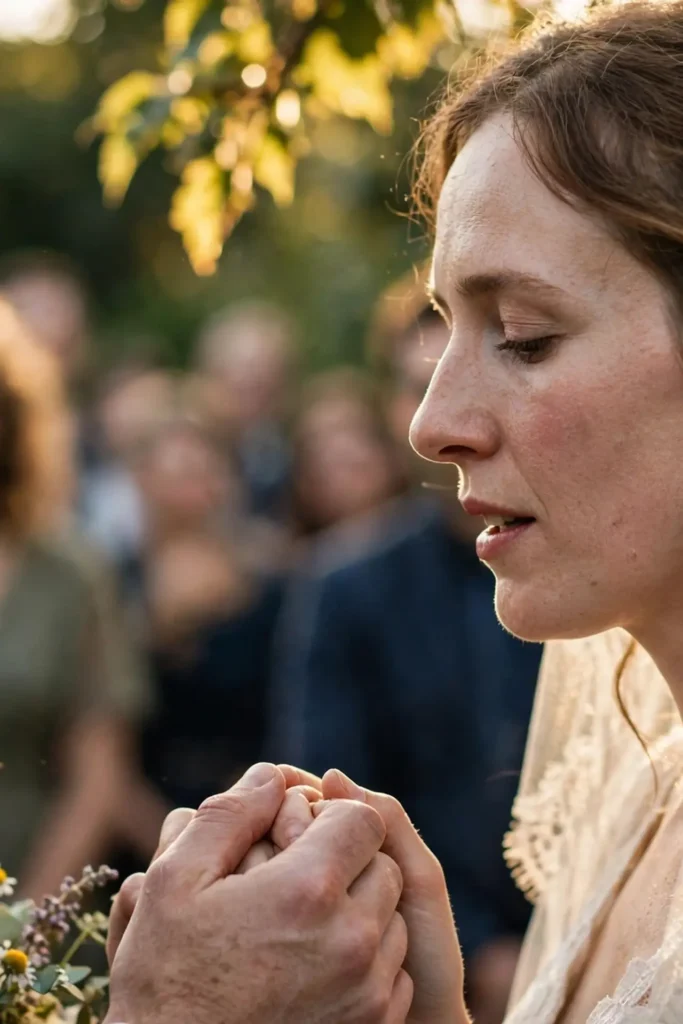
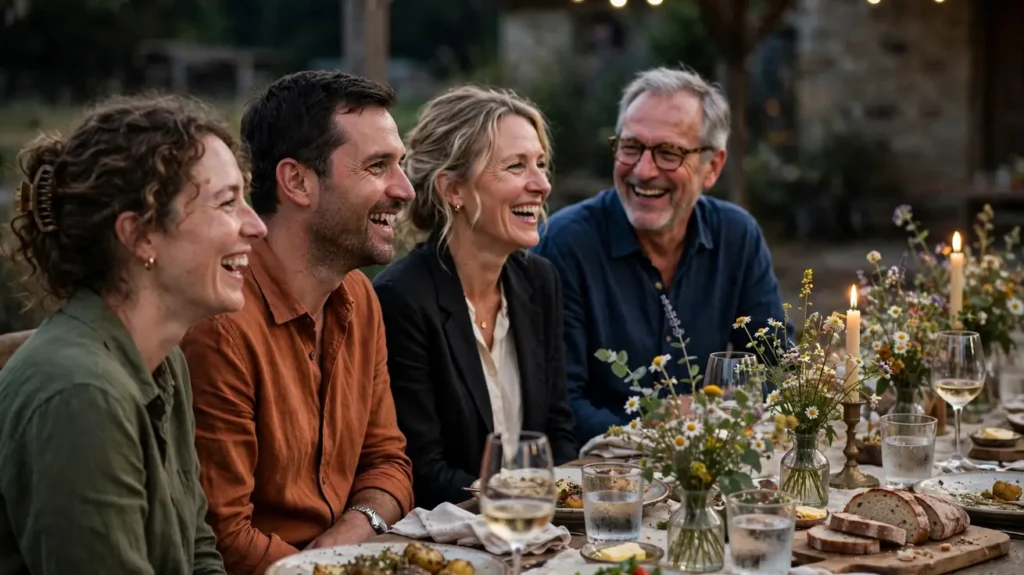
- One long table. Seat everyone together, family-style, instead of splitting into round tables of eight. It is the single most effective way to make 30 people feel like one celebration instead of three separate dinners.
- A 20-minute ceremony. Personal vows, one meaningful reading, done. Guests stay engaged, and you get to the party faster.
- Serve the good stuff. A plated three-course dinner or a chef’s tasting menu is realistic at 30 guests and impossible at 150. Food is where small weddings shine brightest.
- Scale the entertainment down, not out. A jazz trio, an acoustic guitarist, or a great playlist beats a DJ playing to a half-empty dance floor. If you want dancing, keep the dance floor small — a big empty floor kills the vibe.
- Talk to everyone. The quiet superpower of a small wedding: you can have a real conversation with every single guest. Build unhurried cocktail time into the schedule and protect it.
What You Can Skip (and What You Shouldn’t)
Safe to skip: the receiving line (you will see everyone anyway), bouquet and garter toss, a wedding party larger than two people each, favors (a heartfelt thank-you note beats a trinket), and a formal cake-cutting (serve dessert, skip the sword).
Do not skip: a professional photographer — small weddings produce the most emotional photos of any wedding size. A day-of coordinator or a take-charge friend with a timeline, because even 30 guests need someone running the schedule. And a weather backup plan for anything outdoors.
The Paperwork Corner
Small wedding, same legal requirements. In every US state you need a marriage license from the county clerk (typically $30–$100, valid for 30–90 days depending on the state), an officiant authorized in that state, and witnesses if your state requires them — most do, usually one or two. Apply for the license 2–4 weeks before the wedding, not the week of. If a friend is officiating, confirm they are legally authorized — many states accept online ordination, but a few do not.
A Sample Day-Of Timeline for 30 Guests
- 2:00 PM — Getting ready, photographer arrives for detail shots
- 4:00 PM — Ceremony (20 minutes)
- 4:30 PM — Cocktail hour + group photos
- 5:30 PM — Guests seated, welcome toast
- 5:45 PM — Dinner service, toasts between courses
- 7:15 PM — First dance, open dancing or live music set
- 8:30 PM — Dessert, final thank-yous
- 9:00 PM — Send-off
Notice what is missing: no hour-long photo gap where guests stand around, no receiving line, no filler. At this size, the day flows.
Frequently Asked Questions
How many guests is considered a small wedding?
Generally 50 or fewer. Under 20 is usually called a micro-wedding. The practical test: if you can have a real conversation with every guest, it is a small wedding.
How much does a small wedding cost?
For 20–40 guests in the US, most couples spend $12,000–$25,000 all-in. Under $10,000 is very doable with a restaurant reception or backyard venue; under $5,000 usually means a courthouse ceremony plus a nice dinner — see our courthouse wedding cost breakdown.
How do I tell people they’re not invited without ruining the relationship?
Be warm, brief, and final: “We’re keeping it tiny — just immediate family and our closest circle.” Say it once and do not relitigate. Most people understand.
Should I allow kids at a small wedding?
Your call, and small weddings make it easier either way. If no kids, put “adults-only celebration” on the invitation and tell parents directly. If kids are welcome, you only need to plan for a handful, not thirty.
Is a wedding planner worth it for a small wedding?
Full-service planning is usually overkill under 50 guests, but a month-of or day-of coordinator ($800–$2,000) is money well spent. You should be a guest at your own wedding, not the stage manager.
Ready to keep going? Start with the 12-month wedding planning checklist and adapt it to your condensed timeline — or jump straight to the numbers with our wedding budget breakdown.