Ceremony vs Reception: What Is the Difference?
Every wedding has two main parts, and guests mix them up all the time. So what is the difference between a ceremony vs reception? The ceremony is where you actually get married: the vows, the rings, the officiant, and the legal paperwork, usually in 20 to 45 minutes. The reception is the party that follows: dinner, toasts, dancing, and cake, usually lasting 4 to 6 hours. One makes the marriage official. The other celebrates it.
Understanding the difference matters for planning, because the two parts have different purposes, different guest lists, different costs, and different timelines. This guide explains what happens at each one, compares them side by side, breaks down what each costs, shows a full sample timeline for the day, and answers the questions couples ask most: can you have one without the other, who gets invited to which, and what happens in between.
Ceremony vs Reception: The Difference at a Glance
Here is the whole comparison in one table, then each part explained in detail below.
| Aspect | Wedding ceremony | Wedding reception |
|---|---|---|
| Purpose | To legally and spiritually unite the couple | To celebrate the marriage and thank the guests |
| What happens | Processional, vows, ring exchange, pronouncement | Dinner, toasts, first dance, cake cutting, dancing |
| Typical length | 20 to 45 minutes | 4 to 6 hours |
| Atmosphere | Solemn, emotional, formal, quiet | Festive, relaxed, social, high energy |
| Focus | The couple and their vows | The guests and hospitality |
| Guest count | Often smaller and more intimate | Usually larger and more inclusive |
| Legal function | Yes, this is where the marriage becomes legal | None, the reception is purely a celebration |
| Cost share | Small, often a fee or included in the venue | Almost all of the wedding budget |
The simplest way to remember it: the ceremony is where you get married, and the reception is where you celebrate it. Both matter, but they do completely different jobs on the day.
What Is a Wedding Ceremony?
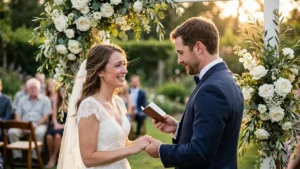
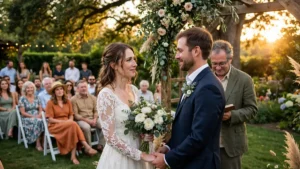
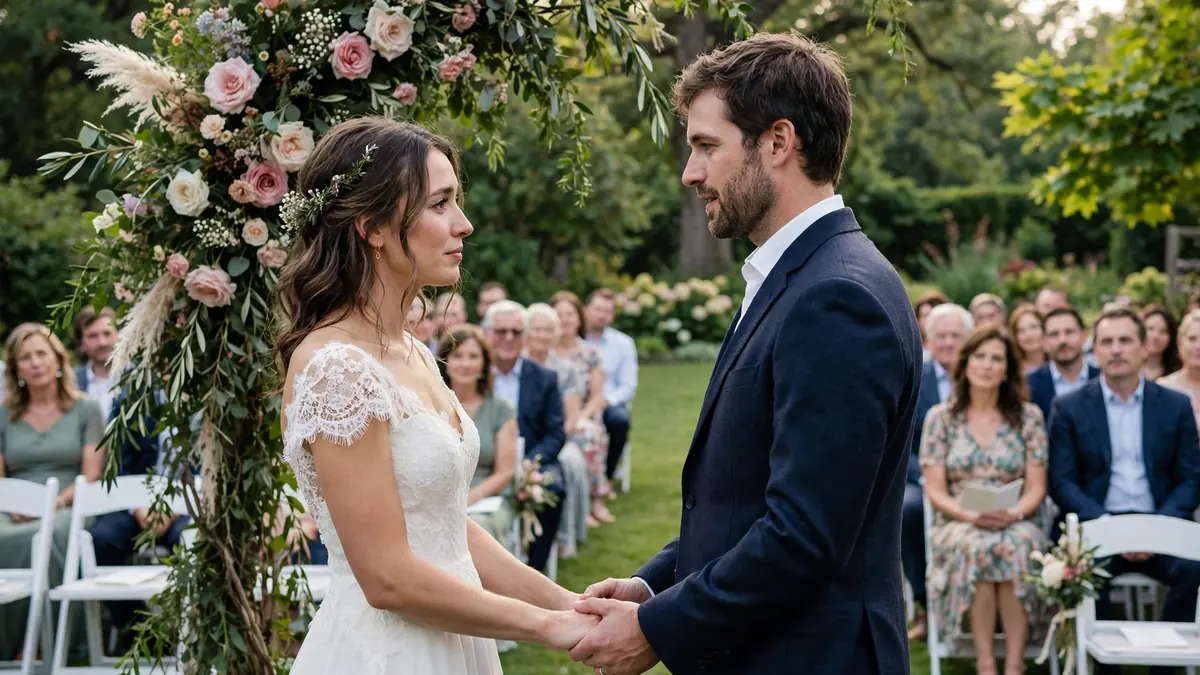
The wedding ceremony is the formal part of the day, the moment when two people officially become married in front of their loved ones. An officiant presides over a civil or religious ceremony, the couple exchanges vows and rings, and the marriage is pronounced. In the United States, the ceremony is also the legal event: the officiant and the witnesses sign the marriage license, and that signature is what makes the marriage recognized by the state.

Most ceremonies follow the same basic order. Guests are seated, the wedding party walks down the aisle, the couple enters, there is a welcome and sometimes a reading or a song, the vows are exchanged, the rings go on, the officiant pronounces the couple married, and everyone walks back out. A typical civil ceremony runs 20 to 30 minutes. A religious ceremony with hymns, readings, and rituals usually runs 45 minutes to an hour, and some traditions run longer.
The tone is the thing guests notice most. The ceremony is quiet, emotional, and formal. Phones are away, people are seated, and all eyes are on the couple. It is the part of the day that most couples remember most clearly, even though it is the shortest part. If you are still working out the order of the whole day, our wedding planning checklist puts the ceremony and reception in sequence with everything else that needs booking.
What Is a Wedding Reception?
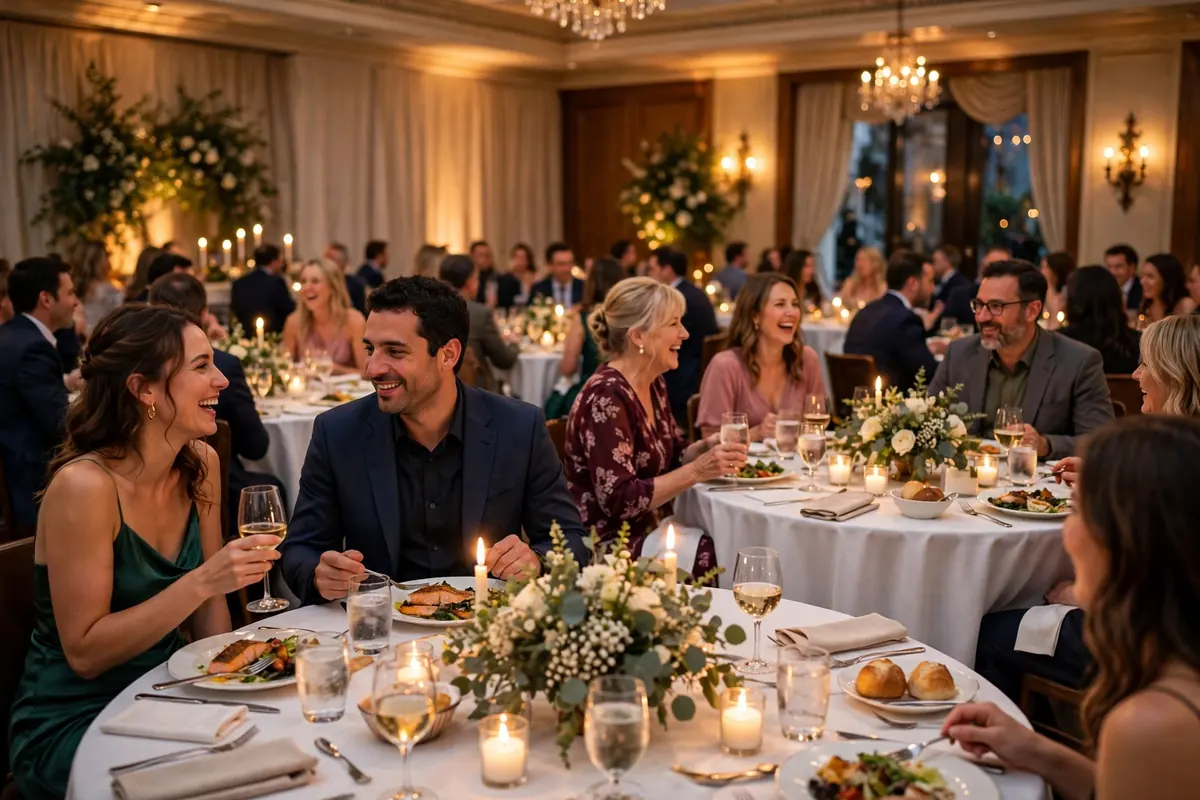
The wedding reception is the celebration that follows the ceremony, the party the newly married couple hosts to thank their guests and celebrate the new marriage together. It usually lasts 4 to 5 hours, and it follows a familiar order: cocktail hour, grand entrance, first dance, dinner, toasts, cake cutting, open dancing, and the send-off.
Unlike the ceremony, the reception is built around the guests. The food, the drinks, the music, and the seating are all hospitality: the couple feeding and entertaining the people who came to witness their marriage. The atmosphere is the opposite of the ceremony. It is loud, social, and relaxed, and it is the part of the day where guests actually get to talk to the couple and to each other.
The reception is also where almost all of the money goes. The venue, the catering, the bar, the music, and the flowers are all reception costs. The ceremony itself usually costs very little by comparison: a ceremony fee at the venue, the officiant, and the flowers for the aisle. Our wedding catering cost guide breaks down the biggest reception expense so you can see exactly where the money goes.
Ceremony vs Reception Cost: Where the Money Actually Goes
Couples are often surprised by how lopsided the cost split is. The ceremony is short and simple, and the reception is long and fed. Here is a realistic split for a 100-guest wedding in the United States.
| Expense | Ceremony share | Reception share |
|---|---|---|
| Venue | $500 to $2,000 ceremony fee, or included | $8,000 to $15,000 for the reception space |
| Food and drinks | Nothing, or light refreshments | $7,000 to $15,000 catering and bar |
| Music | $200 to $500 for a ceremony musician | $1,000 to $2,500 for a DJ or band |
| Flowers and decor | $300 to $800 for the aisle and arch | $1,500 to $4,000 for tables and the room |
| Officiant | $300 to $800 | Nothing |
| Photography | Included in the day rate | Included in the day rate |
Put together, the ceremony usually accounts for less than 10 percent of the total wedding spend, and the reception accounts for more than 90 percent. That is why the venue decision is really a reception decision: the ceremony fee is small, but the reception package sets the budget. If you are comparing venues, our guide to how much a wedding venue costs shows the 2026 numbers by venue type, guest count, and state.
What Happens Between the Ceremony and the Reception?
There is almost always a gap between the ceremony and the reception, and it has a name: cocktail hour. It usually lasts about an hour, and it does three jobs at once.
First, it gives the couple time for formal photos. While guests are drinking and eating appetizers, the photographer takes the family portraits and the wedding party photos that cannot be done during the ceremony. Second, it moves the guests. The ceremony space is flipped into the reception space, or the guests walk to a different room, garden, or terrace. Third, it sets the tone. The music loosens up, the drinks come out, and the formal part of the day hands over to the celebration.

A common schedule looks like this: first look around 2 PM, ceremony at 4:30 PM, cocktail hour from 5 to 6 PM, and reception from 6 to 10 PM. Some venues build the cocktail hour into the package; others charge for it separately, so ask. If the ceremony and reception are at different locations, the gap is longer, and couples usually arrange transport or give guests clear directions and a meeting time.
A Sample Wedding Day Timeline: Ceremony to Send-Off
Here is how a typical Saturday wedding flows from the ceremony through the end of the reception, so you can see where each part sits in the day.
| Time | What happens | Ceremony or reception |
|---|---|---|
| 2:00 PM | First look and couple portraits | Before both |
| 4:00 PM | Guests arrive and are seated | Ceremony |
| 4:30 PM | Ceremony: processional, vows, rings, pronouncement | Ceremony |
| 5:00 PM | Recessional, congratulations, family photos | Between the two |
| 5:00 to 6:00 PM | Cocktail hour with drinks and appetizers | Between the two |
| 6:00 PM | Grand entrance and first dance | Reception |
| 6:30 PM | Dinner service | Reception |
| 7:30 PM | Toasts and speeches | Reception |
| 8:00 PM | Cake cutting and parent dances | Reception |
| 8:30 to 10:00 PM | Open dancing | Reception |
| 10:00 PM | Send-off and sparkler exit | Reception |

Most venue packages include about five hours for the reception, so a 6 PM to 11 PM reception is standard. Anything past the contracted end time is overtime, usually $500 to $1,500 per extra hour, so agree the end time before the day and plan the send-off inside it.
Who Is Invited to the Ceremony vs the Reception?
For most weddings, the guest list is the same for both parts: everyone invited to the ceremony is invited to the reception, and everyone at the reception was at the ceremony. But there are two common exceptions, and both need handling with care.
Small ceremony, big reception
Some couples hold a small, intimate ceremony with close family and the wedding party only, then host a larger reception for all their friends and extended family. This works well when the ceremony space is small, when the couple wants privacy for the vows, or when the budget only stretches to feeding a big crowd for dinner. The key is to be clear on the invitation: the reception invitation should say plainly that the ceremony is private, so nobody shows up at the wrong time expecting a seat.
Reception-only guests
The reverse happens too: a couple elopes or marries at the courthouse, then throws a reception weeks later for everyone who could not be there. This is increasingly common, and guests understand it, as long as the invitation makes the situation clear and nobody is asked to bring a gift to a party for a wedding they did not witness. The reception in this case is a celebration of a marriage that already happened, and the wording on the invitation should say so.

What you should not do is invite people to the ceremony and not the reception, or the other way around without explanation. Guests who are invited to watch the vows and then sent home before dinner will feel slighted, and guests who arrive at a reception without knowing the couple are already married will feel confused. Either exception is fine when it is communicated clearly and early.
Can You Have a Reception Without a Ceremony, or a Ceremony Without a Reception?
Yes, both are possible, and both are more common than they used to be. The couple is free to do one without the other, though family expectations and cultural or religious traditions sometimes push back.
A ceremony without a reception is the simplest option. The couple marries at the courthouse, a church, or a garden, with a handful of witnesses, and then goes to dinner with their closest family. Some couples skip the party entirely and spend the money on a honeymoon instead. Others plan the reception for a later date, which leads to the second option.
A reception without a ceremony on the same day is also common. The couple elopes, or marries at the courthouse on a weekday, and hosts the big celebration weeks or months later, when family can travel and the venue they want is available. The reception then becomes a party with no legal business attached, which takes the pressure off the day and lets the couple enjoy it. Some couples even hold the ceremony and the reception in different seasons, marrying in winter and celebrating in summer.
The one thing to keep in mind is the marriage license. In the United States, the legal marriage happens at the ceremony, with an officiant and witnesses signing the license. A reception alone does not make anyone married. If you elope first and celebrate later, make sure the license and the legal ceremony are done properly before the party, so the celebration is for a real marriage.
Ceremony vs Reception: Guest Etiquette for Each Part
Guests often wonder what is expected of them at each part. The rules are simple, and they are different for the ceremony and the reception.
At the ceremony
Arrive 15 to 30 minutes early and be seated before the processional starts. Phones go away and stay away, unless the couple has announced an unplugged ceremony, in which case they definitely stay away. Stay quiet during the vows, stand when the couple enters if the officiant asks, and do not leave early: walking out during the vows is the one thing guests remember for years. If you bring children, keep them close and be ready to step out if they get loud.
At the reception
Be on time for the grand entrance, because that is when the party starts. Toasts are for listening, not for talking over. The first dance belongs to the couple, so give them the floor. If there is a seating plan, sit where you are placed. And stay for the cake cutting and the send-off if you can: the couple planned the whole evening around those moments, and an empty room at the end is the saddest sight of the day.

One more guest rule that applies to both parts: do not wear white, cream, or ivory. That color belongs to the couple on their wedding day, at the ceremony and at the reception alike.
Do the Ceremony and Reception Have to Be in the Same Place?
No, they do not, and traditionally they often were not. The ceremony happened in a church and the reception in a hall, a restaurant, or a family home. Today, most couples book one venue for both, because it saves a second fee, a second setup, and an hour of guest travel between locations.
There are still good reasons to split them. A church ceremony with a ballroom reception is a classic combination. A garden ceremony with a restaurant reception works when the garden has no kitchen. A courthouse ceremony followed by a backyard party is the budget version of the same idea. The trade-off is time: guests need transport, directions, and a clear gap between the two, and the couple needs to pay for two spaces and two setups. When you compare a single venue against two venues, add both fees and the transport cost before you decide which is cheaper.
Ceremony vs Reception: Final Thoughts
Ceremony vs reception comes down to this: the ceremony is the marriage, and the reception is the celebration of it. The ceremony is short, formal, and legal, with vows and rings at its center. The reception is long, festive, and social, with dinner, dancing, and toasts at its center. One takes 20 to 45 minutes and costs very little. The other takes 4 to 6 hours and carries almost the entire budget.
Most couples will have both, on the same day, at the same venue, with the same guests, and a cocktail hour bridging the two. That is the classic American wedding for a reason: it works. But the parts are separable, and knowing what each one does lets you plan them properly, spend on the right one, and enjoy both. The ceremony is the part you will remember forever. The reception is the part your guests will remember forever. Plan them both like they matter, because they do.