Wedding Budget Breakdown: Where Every Dollar Goes (2026)
If you search “wedding budget breakdown,” you’ll find the same percentage chart recycled across a dozen websites. This guide goes further — real dollar ranges per category based on 2026 US data, what $15,000, $30,000, and $60,000 actually buy line by line, plus the steps nobody else covers: the family money conversation, the payment timeline, and per-guest math.
Start with the honest numbers. Per The Knot’s 2026 Real Weddings Study (10,474 US couples married in 2025), the average US wedding costs $34,200 — but a Manhattan ballroom at $90,000 and a backyard wedding in Ohio at $12,000 both feed that average. The median sits closer to $18,000, and most real weddings land between $15,000 and $45,000.
Wedding Budget Breakdown at a Glance
If you want the 30-second version before we go deep, here’s how a typical US wedding budget divides up. Treat these as guardrails — your priorities decide where you land in each range.
| Category | % of Budget | What It Covers |
|---|---|---|
| Venue + rentals | 28–35% | Ceremony and reception space, tables, chairs, linens |
| Catering + bar | 22–28% | Food, cake, open bar, service staff |
| Photography + videography | 10–15% | Full-day coverage, edited gallery, highlight film |
| Flowers + decor | 6–10% | Bouquets, centerpieces, ceremony arch, rentals |
| Music + entertainment | 5–8% | DJ or live band, ceremony musicians |
| Attire + beauty | 5–8% | Dress, suit, alterations, hair and makeup |
| Wedding planner | 4–8% | Full planning or day-of coordination |
| Stationery | 2–3% | Save-the-dates, invitations, day-of paper |
| Transportation + officiant | 2–4% | Shuttles, getaway car, ceremony officiant |
| Contingency buffer | 8–10% | Tips, taxes, overtime, surprises |
The one number to burn into memory: venue, catering, and bar together consume roughly 55–60% of most budgets. Plan those three first, then divide what’s left.
Step One: Find Your Real Number Before You Spend a Dime
Every budget guide says “set a total,” then skips the awkward part: figuring out where that total comes from. Browsing $8,000 venues before knowing your number leads to emotional anchoring on things you can’t afford — do this first.
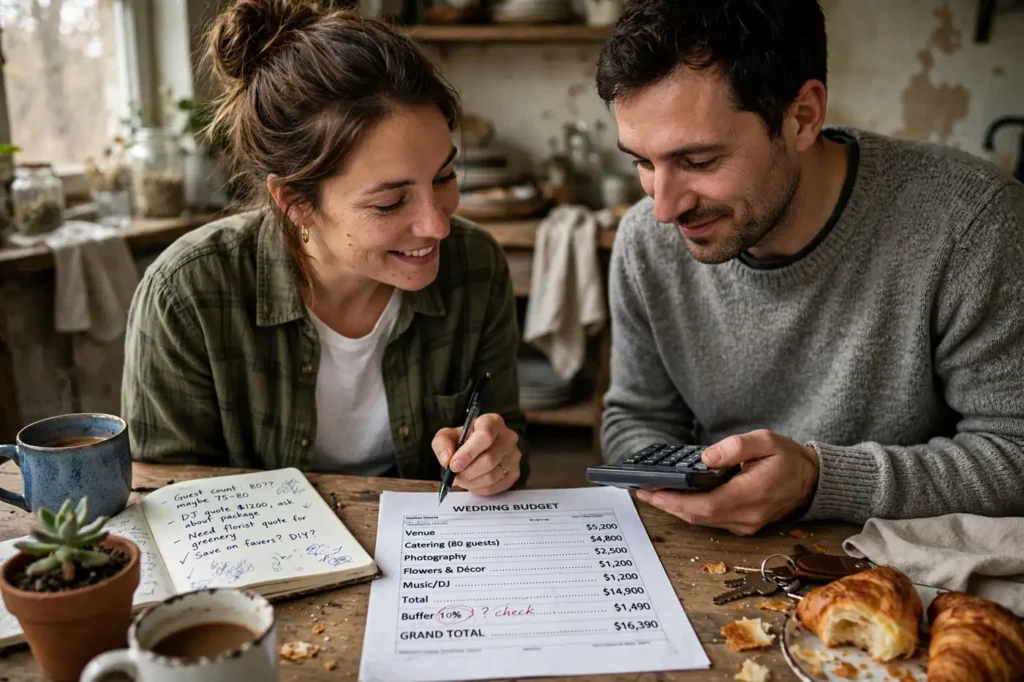
Have the money conversation early
About half of US couples get financial help from family, per The Knot’s study. If that’s your situation, talk numbers before you book anything: ask for a specific contribution amount (not a vague promise), confirm it in writing, clarify whether it comes with guest-list expectations, and park all contributions in one dedicated account so you always know what’s actually available.
Pick your three priorities
You can’t max out every category — the percentages won’t allow it. Each pick your top three. If photography and food are non-negotiable, those get the top of their ranges and something else (favors, transportation, stationery) gets trimmed. Every budget decision after this gets easier because you have a rule to apply.
The Full Category-by-Category Breakdown
What each category actually costs in 2026. Ranges reflect a 100–150 guest wedding in a mid-cost US market — adjust up for New York, Los Angeles, or Chicago, down for smaller markets.
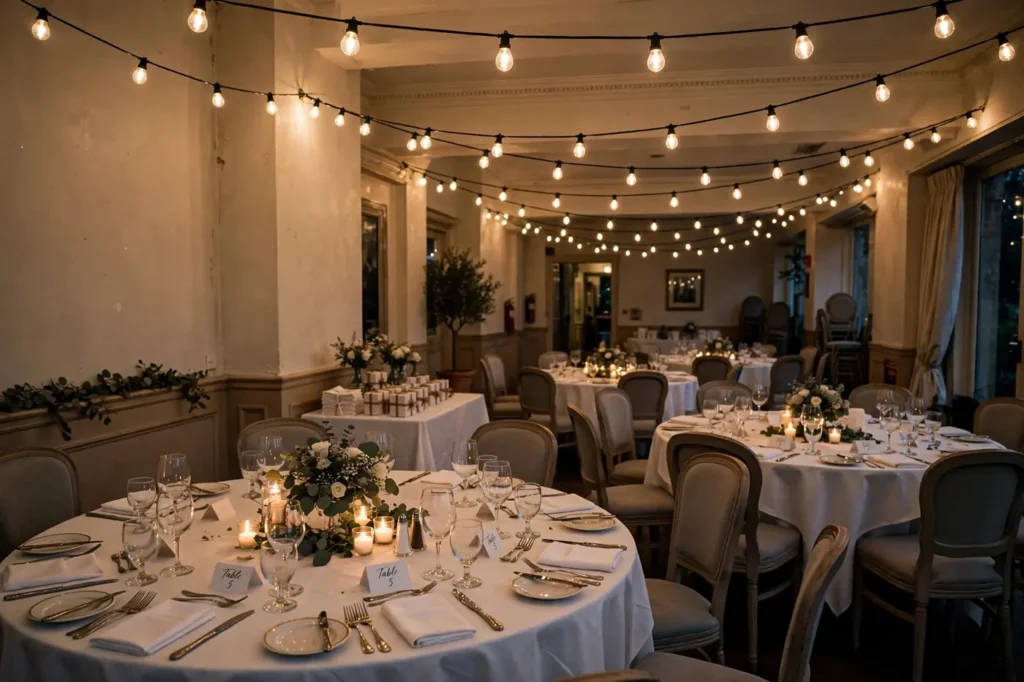
Venue and rentals: 28–35% ($8,500–$12,000)
The venue is almost always the biggest single line item, and it locks in other costs at the same time — preferred caterers, rental companies, and the vibe that shapes every decor decision.
- Hotel ballroom: $5,000–$15,000, often with food and beverage minimums of $20,000+
- Dedicated event venue: $3,500–$10,000, usually more flexible on catering
- Barn or farm: $2,500–$7,000 — but add tent, restroom, and power rentals
- Restaurant buyout: $2,000–$6,000 with built-in catering; ideal under 80 guests
- Public park or outdoor space: $500–$2,000 permit, plus all vendors separately
Compare venues apples-to-apples. A $4,000 space needing $6,000 in rentals costs more than a $9,000 all-inclusive venue. List everything you’d rent or hire externally for each option before deciding.
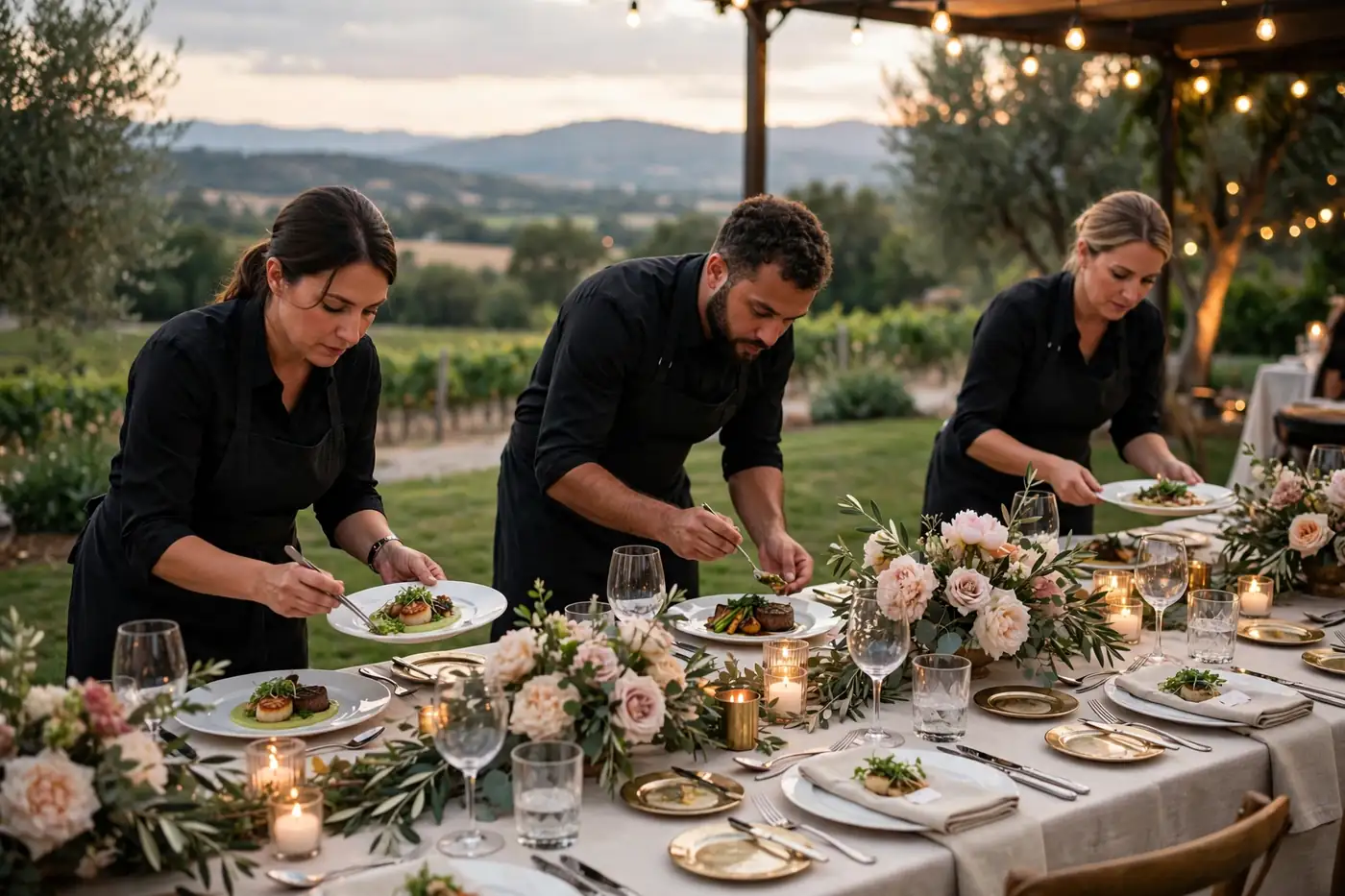
Catering and bar: 22–28% ($6,500–$13,000)
Food and beverage is where weddings most commonly blow the budget — per-person costs scale directly with guest count, and bar tabs are hard to predict. Mid-range US catering in 2026 runs roughly:
- Buffet or heavy appetizers: $60–$80 per head
- Plated dinner, 3–4 courses: $90–$120 per head
- Premium plated service: $130–$200+ per head
- Bar package: $15–$30 per person on top of food — plus bartender fees, setup, and 15–20% gratuity
Guest count is catering’s biggest lever. A 150-guest wedding at $100 per head is $15,000 before the bar; at 75 guests it’s $7,500. That single decision saves more than any negotiation.
Photography and videography: 10–15% ($3,000–$5,500)
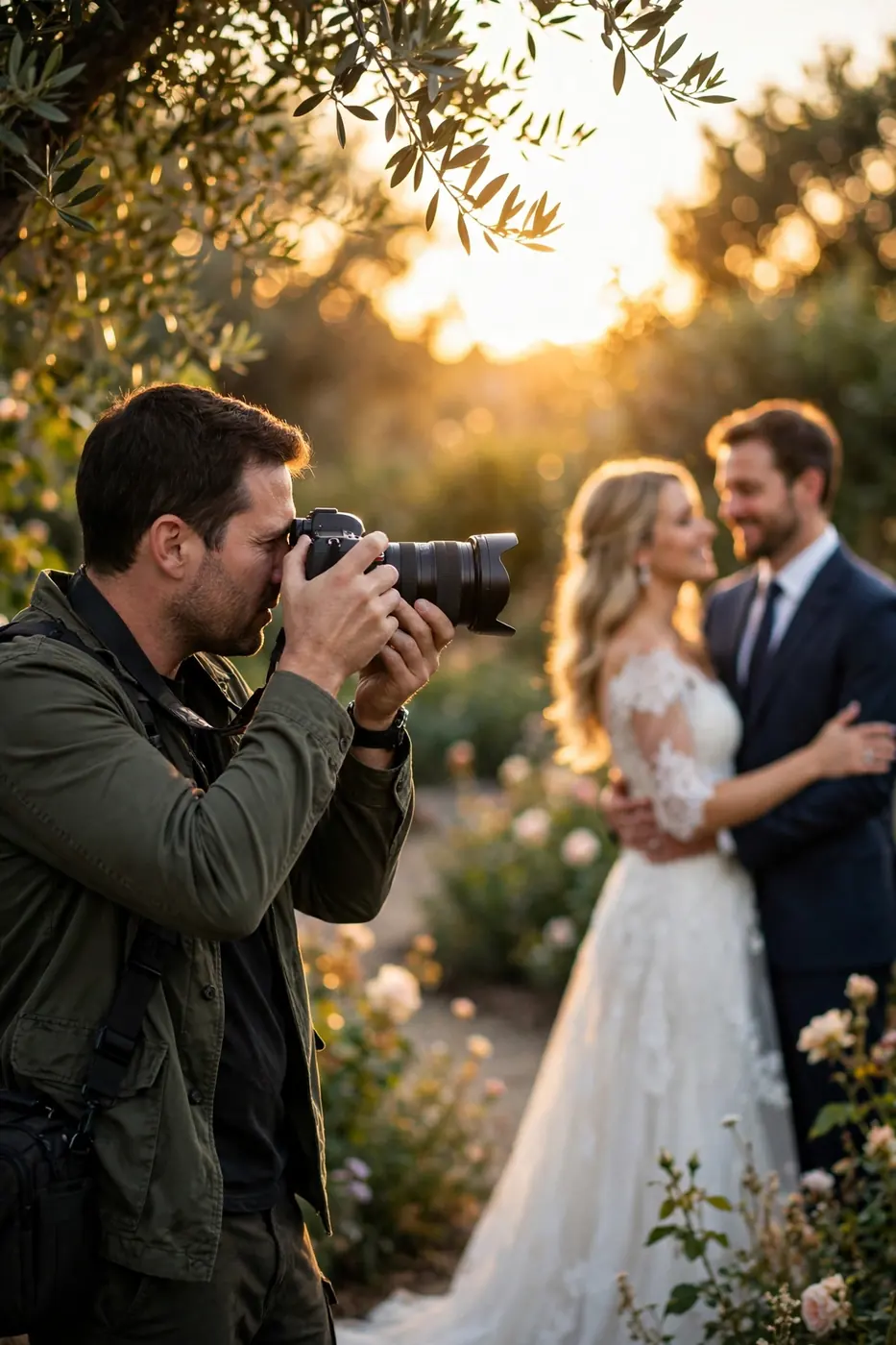
Photos are what you carry for the next 50 years. Couples consistently say this is the category they wish they’d spent more on.
- Photography: $2,500–$4,000 is the sweet spot for most US markets — full-day coverage, 600–900 edited images. Under $1,500 means a newer photographer; $7,000+ buys sought-after names booked 18–24 months out.
- Videography: $2,000–$5,000 for a full film; a $800–$1,500 highlight reel serves tight budgets better than skipping video entirely.
A combined photo + video package from one vendor typically runs 10–20% cheaper than hiring separately.
Flowers and decor: 6–10% ($2,000–$5,000)
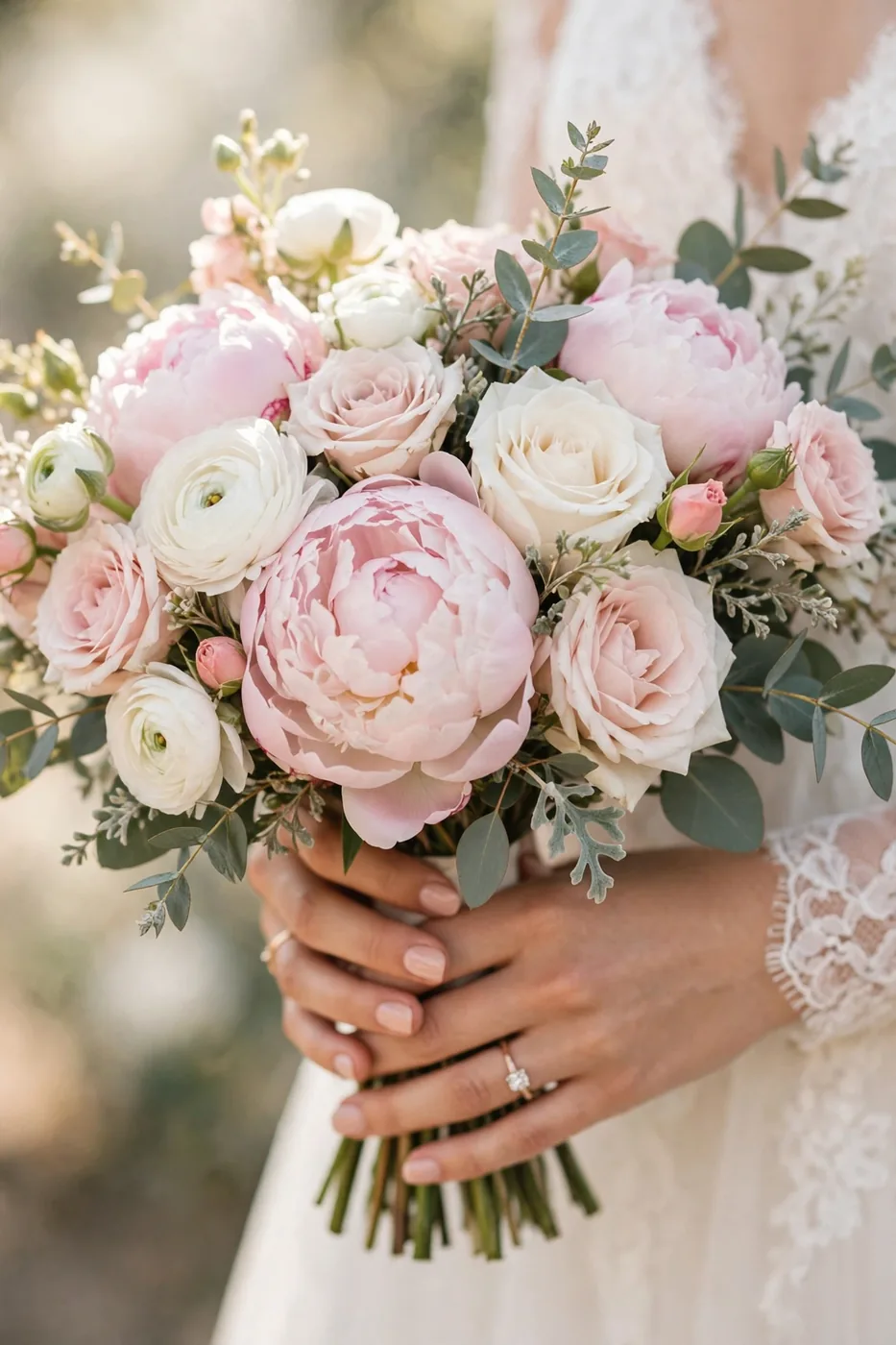
Florals are the most volatile line item in a wedding budget. A full setup for 100 guests — bouquets, ceremony arch, centerpieces — runs $1,500–$2,500 budget (greenery-heavy, in-season), $3,000–$5,000 mid-range, and $6,000–$15,000+ premium. The three most effective savings: in-season flowers, greenery for volume, and repurposing ceremony arrangements at the reception. And get exactly what your venue provides in writing before pricing decor — an all-inclusive space can remove $1,500–$3,000 from this column.
Music and entertainment: 5–8% ($1,200–$3,500)
A DJ runs $1,000–$2,500 for a 4–6 hour reception; a live band $2,500–$7,000 depending on size; ceremony musicians add $300–$800. If music is a top-three priority, budget the band and trim florals — priorities decide.
Attire and beauty: 5–8% ($1,500–$3,500)
More than the dress: alterations, veil, shoes, jewelry, hair and makeup trials, the groom’s suit, and wedding-party attire if you’re covering it.
- Dress: $300–$800 off-the-rack or sample sale; $1,200–$2,500 mid-range boutique; $3,000–$8,000+ designer
- Alterations: $200–$600 — the most common attire oversight. Budget at least $300 wherever the dress comes from.
- Hair and makeup: $300–$600 for the bride; $80–$150 per additional person
- Groom: $150 rental to $800+ purchased and tailored
Stationery: 2–3% ($400–$1,000)
Save-the-dates ($80–$200 plus postage), invitation suites ($200–$500; letterpress or foil adds 30–60%), day-of items like menus and place cards ($150–$400), and thank-you cards ($80–$200). Digital printing on premium stock keeps a 100-guest suite under $700; digital-only invitations save 80–90% versus print.
Planner, transport, and the small stuff: 8–12% combined
A day-of coordinator runs $1,500–$2,500; partial or full planning $4,000–$10,000. Transportation ($500–$1,500 for shuttles), officiant ($200–$800), cake ($400–$1,000), wedding bands ($500–$3,000), and favors ($200–$600) are individually small but collectively a real slice.
What $15K, $30K, and $60K Actually Look Like
Percentages are abstract. These three complete allocations — every dollar assigned — show what real weddings look like at three common budgets (~100 guests unless noted).
The $15,000 wedding (intimate, smart trade-offs)
| Category | Amount | Notes |
|---|---|---|
| Venue + rentals | $3,000 | Restaurant buyout or Friday booking |
| Catering + bar | $5,500 | Buffet ~$65/head, 75 guests; beer + wine only |
| Photography | $2,200 | Experienced part-timer, no video |
| Attire + beauty | $1,200 | Off-the-rack dress, rental suit |
| Flowers + decor | $900 | Bouquets + greenery centerpieces |
| Music | $800 | DJ, reception only |
| Stationery | $250 | Digital invites + printed day-of items |
| Officiant + cake + transport | $750 | Friend officiant, small bakery cake |
| Contingency | $1,400 | Non-negotiable, even here |
The $30,000 wedding (the classic mid-range)
| Category | Amount | Notes |
|---|---|---|
| Venue + rentals | $7,500 | Event venue, Saturday |
| Catering + bar | $10,000 | Plated ~$95/head, 100 guests + open bar |
| Photography + video | $4,000 | Full-day photo + highlight reel |
| Flowers + decor | $2,500 | Full florals, repurposed ceremony pieces |
| Attire + beauty | $2,000 | Boutique dress + alterations, pro glam |
| Music | $1,500 | Professional DJ, full reception |
| Planner | $0–$1,500 | Day-of coordinator if venue is hands-off |
| Stationery | $600 | Printed suite, digital RSVPs |
| Officiant + cake + transport | $1,400 | Pro officiant, bakery cake, shuttle |
| Contingency | $2,500 | ~8% buffer |
The $60,000 wedding (premium, but still planned)
| Category | Amount | Notes |
|---|---|---|
| Venue + rentals | $16,000 | Premium venue, peak-season Saturday |
| Catering + bar | $20,000 | $130+/head, 130 guests, premium bar |
| Photography + video | $8,000 | Editorial photo + cinematic film |
| Flowers + decor | $6,000 | Lush florals, installations |
| Attire + beauty | $4,000 | Designer dress, full glam squad |
| Music | $3,500 | Live band |
| Planner | $4,000 | Partial or full-service planning |
| Stationery | $1,000 | Foil/letterpress suite |
| Officiant + cake + transport | $2,500 | Designer cake, multi-car transport |
| Contingency | $5,000 | ~8% buffer |
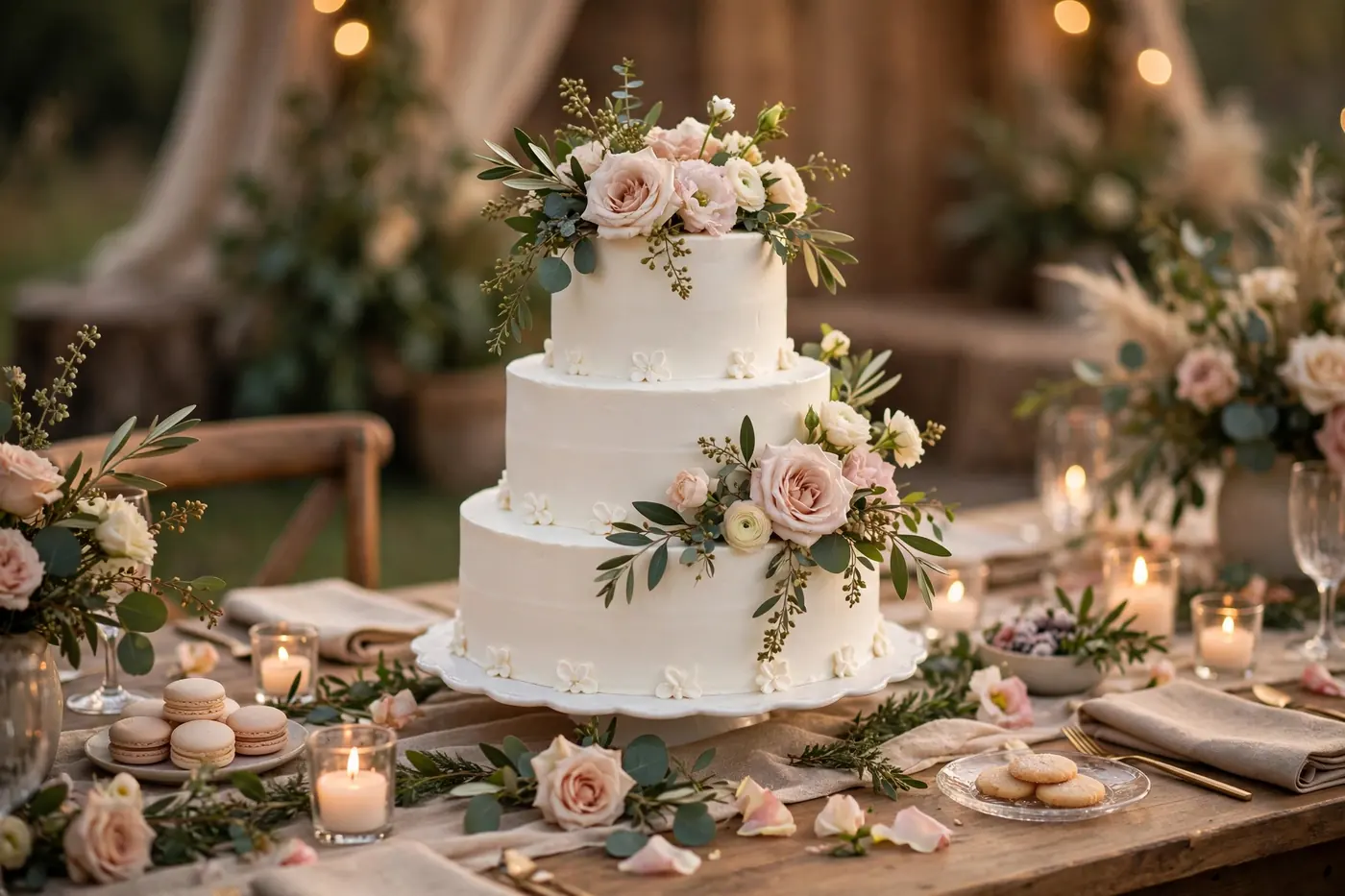
Notice what shifts between tiers: at $15K, photography takes a bigger share because good vendors have price floors. At $60K, new categories appear — full planners, live bands, installations. Percentages aren’t fixed rules; they’re what happens when real vendors meet real guest counts.
The Per-Guest Math Nobody Teaches You
Here’s the fastest sanity check in wedding budgeting: divide your total budget by your guest count. That per-guest number tells you instantly whether your plans are realistic.
- $30,000 ÷ 150 guests = $200/guest. Feasible: ~$95 food, ~$25 bar, ~$40 venue share, $40 everything else.
- $30,000 ÷ 75 guests = $400/guest. Comfortable — room for premium vendors.
- $15,000 ÷ 150 guests = $100/guest. Extremely tight — catering alone can eat this. Cut the list or raise the budget.
Use this math before every big decision. Adding 25 guests to a $30,000 wedding at $120/head all-in costs $3,000 — 10% of your budget in one RSVP wave.
When the Money Is Actually Due
Budgets fail on cash flow, not totals. Typical payment calendar for a 12-month engagement:
- 12–10 months out: Venue deposit (25–50% of the fee — usually the biggest single check). Planner retainer.
- 9–7 months out: Photographer/videographer deposits (25–30%), caterer deposit, dress deposit (order 8–10 months out).
- 6–4 months out: Florist, DJ/band, and stationery deposits. Alterations begin.
- 3–1 month out: Final headcount locks catering. Most balances are due 2–4 weeks before the wedding.
- Week of: Cash tips in labeled envelopes, vendor meal count finalized, overtime pre-authorized.
The cash-flow rule: keep a calendar of every deposit and balance due date. If two big payments land in the same month, call the later vendor — most will shift a due date by two weeks if you ask before it’s late.
The 5 Biggest Wedding Budget Mistakes
1. Skipping the contingency buffer
The #1 budget killer. Overtime fees, weather-plan rentals, last-minute additions, and price increases between booking and the wedding hit nearly every couple. Reserve 8–10% before allocating a dollar anywhere else.
2. Comparing quotes without the fine print
A $5,000 catering quote becomes $6,500 after 20% service charge and tax. Always ask for the all-in price — charges, taxes, gratuities, setup, teardown — before signing.
3. Booking before setting the total
Touring venues with no budget is how couples fall for a $12,000 space on a $25,000 budget, then resent every decision after. Set the number first. Then shop.
4. Ignoring the small purchases
Alterations, accessories, beauty trials, wedding-party gifts, postage, license fees, vendor meals — none is large, but together they routinely total $1,500–$3,000. Log everything, even charges under $50.
5. Treating the guest list as fixed
Every guest costs $100–$200+ all-in. “Just add the cousins” can quietly add $5,000. Finalize the list before booking the venue and caterer, and treat additions like the budget decisions they are.
Three Quick Wins Worth $1,000+ Each
Move the date. Friday or Sunday weddings run 10–30% cheaper than Saturday, and January–March pricing can be 20–40% below peak season. On a $10,000 venue, that’s $2,000–$4,000 for changing the day.
Negotiate the bar, not the food. Caterers rarely discount per-head food, but bar packages have margin. Ask about beer-and-wine-only tiers or a signature cocktail plus beer — cutting a full open bar this way saves $1,500–$2,500 on a 100-guest wedding.
Bundle photo and video. One studio for both typically saves 10–20% versus two vendors — $500–$1,000 on a $5,000 combined package — and simplifies day-of coordination.
Frequently Asked Questions
What percentage of a wedding budget goes to the venue?
The venue alone typically takes 18–22% of the total budget. Combined with catering and bar (20–28%), the “big three” consume roughly 55–60% of what most couples spend.
How much should we budget for wedding photography?
Plan 10–12% of your total for photo and video combined — around $3,000–$4,000 on a $30,000 budget. Photography alone averages about $3,000 nationally, per The Knot’s 2026 study.
Is a 5% contingency buffer enough?
Five percent is the bare minimum — aim for 8–10% on a tight budget. Overtime fees, last-minute floral substitutions, and surprise charges appear at almost every wedding.
Should the honeymoon be part of the wedding budget?
No — keep it separate. The wedding budget covers the event itself. Lumping in the honeymoon, engagement ring, and pre-wedding parties inflates the number and muddies every category decision. Budget those as their own line items.
A wedding budget isn’t about restriction — it’s about intention. Decide what matters, assign every dollar a job, and protect your buffer.