
Wedding Door Entrance Ideas That Wow Guests

Your guests form their first real impression of your wedding before they ever see the ceremony space, the centerpieces, or your dress up close. They form it at the door. A thoughtful wedding door entrance tells them they are in the right place, that this day was planned with care, and that something beautiful is waiting on the other side. A bare doorway with a taped-up paper sign tells them the opposite, even if the reception room inside looks incredible.
The good news is that a wedding door entrance does not need a huge budget or a professional design team to look stunning. It needs one clear focal point, a style that matches the rest of your wedding, and a plan that respects your venue’s rules. This guide covers the best ideas grouped by style, real US costs for DIY and professional options, the venue restrictions most couples discover too late, and the simple tricks that make an entrance feel expensive without the price tag.
Why Your Wedding Door Entrance Matters More Than You Think
Think about your own experience as a wedding guest. You drive to an unfamiliar venue, you look for parking, you walk toward a building you have never entered, and for a few minutes you quietly wonder if you are in the right place. Then you see it: flowers framing the door, a welcome sign with the couple’s names, warm light spilling onto the steps. Instantly you relax. You know you have arrived, and you know this is going to be a good evening.
That is the job of the entrance. It answers three questions in about five seconds. Am I in the right place? Is this going to be beautiful? Should I be excited? A wedding door entrance that answers all three makes the whole event feel more polished, because guests carry that first feeling with them into the ceremony and the reception.
The entrance is also one of the most photographed spots of the day. Guests take photos as they arrive, the wedding party gathers there, and your photographer will almost certainly use it for portraits. A plain door shows up in those photos as a plain door. A dressed doorway becomes a backdrop people actually want in their pictures, and it costs far less to decorate than a full reception room.
How to Choose an Entrance Style by Theme and Venue Type

Start with your theme and your venue, not with a photo you saved online. The prettiest arch in the world looks wrong if it fights the building it stands in front of. A rustic wooden sign looks out of place at a glass-and-marble ballroom, and a sleek acrylic sign looks lost on a weathered barn door. Match the entrance to the setting and everything else gets easier.
Use this simple framework. A ballroom or hotel wedding calls for symmetry and polish: matching urns or tall arrangements on both sides of the door, a classic welcome sign, and warm uplighting. A barn or farmhouse wedding suits wood, greenery, lanterns, and a loose, garden-gathered floral style. A garden wedding wants the entrance to feel like part of the landscape, so think arches, garlands, and flowers that echo what is already growing nearby. A church wedding needs restraint: a pair of arrangements, a simple sign, and nothing attached to historic doors or stonework without permission. A modern loft pairs well with a geometric metal arch, a few bold stems, and clean acrylic signage.
Color matters just as much as style. Pick two or three dominant colors from your wedding palette and repeat them at the entrance so guests recognize the theme the moment they arrive. If you have not locked your colors yet, start with a palette guide and build the entrance around it. For inspiration on pairing shades that photograph well together, see our guide to wedding color palettes before you order a single flower.
Floral Arches and Flower-Framed Doorways

A floral arch is the classic wedding door entrance for a reason. It frames the doorway, photographs beautifully from every angle, and instantly signals celebration. The most popular version is a full arch that curves over the top of the door, built on a metal frame and covered in greenery with clusters of roses, hydrangeas, or seasonal blooms.
If a full arch feels like too much, try a half arch that sweeps up one side of the door and across the top, leaving the other side open and airy. This asymmetrical look is modern, uses fewer flowers, and costs noticeably less than a full arch. Another strong option is a pair of tall pedestal arrangements flanking the door. They give you the lush floral feeling without any frame at all, and they can be moved to the ceremony or the reception head table later in the day.
Choose flowers that hold up outdoors. Roses, hydrangeas, carnations, and hardy greenery survive hours outside far better than delicate blooms such as gardenias or sweet peas. In-season and local flowers also cost far less than out-of-season imports, so a July wedding with local dahlias will stretch your budget much further than peonies flown in during winter.
Welcome Signs That Greet Guests by Name
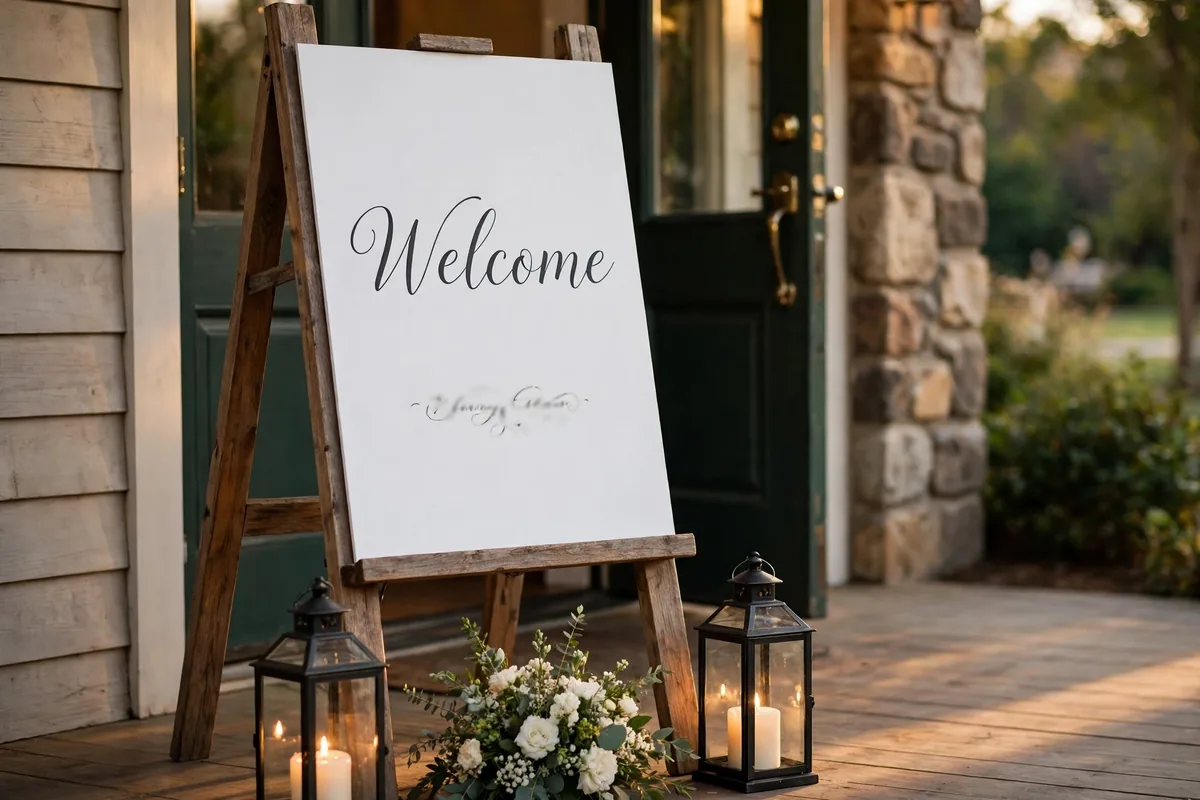
A welcome sign is the single most useful piece of a wedding door entrance. It tells guests they are in the right place, it shows the couple’s names and the date, and it gives people a natural spot to pause for a photo. Even a very simple entrance feels finished once a good sign is in place.
Match the sign material to your theme. Acrylic signs look sleek and modern, especially with white or gold lettering on a clear panel. Wood signs suit rustic, barn, and garden weddings and look wonderful leaning against a door or mounted on an easel. Framed paper or foam board signs are the classic choice and the easiest to customize with your colors and fonts. Mirrored signs photograph beautifully but can be hard to read in bright sunlight, so save them for shaded or indoor entrances.
Keep the wording short: the couple’s first names, the date, and a simple “Welcome to our wedding” is all you need. Some couples add a line such as “We’re so glad you’re here” or a favorite short quote, and that personal touch makes the sign feel like yours instead of a template. Place the sign where guests naturally look, usually just to the right of the door at eye level, and pair it with a small arrangement or a lantern at its base so it looks styled rather than stranded.
Fabric, Draping, and Soft Backdrops
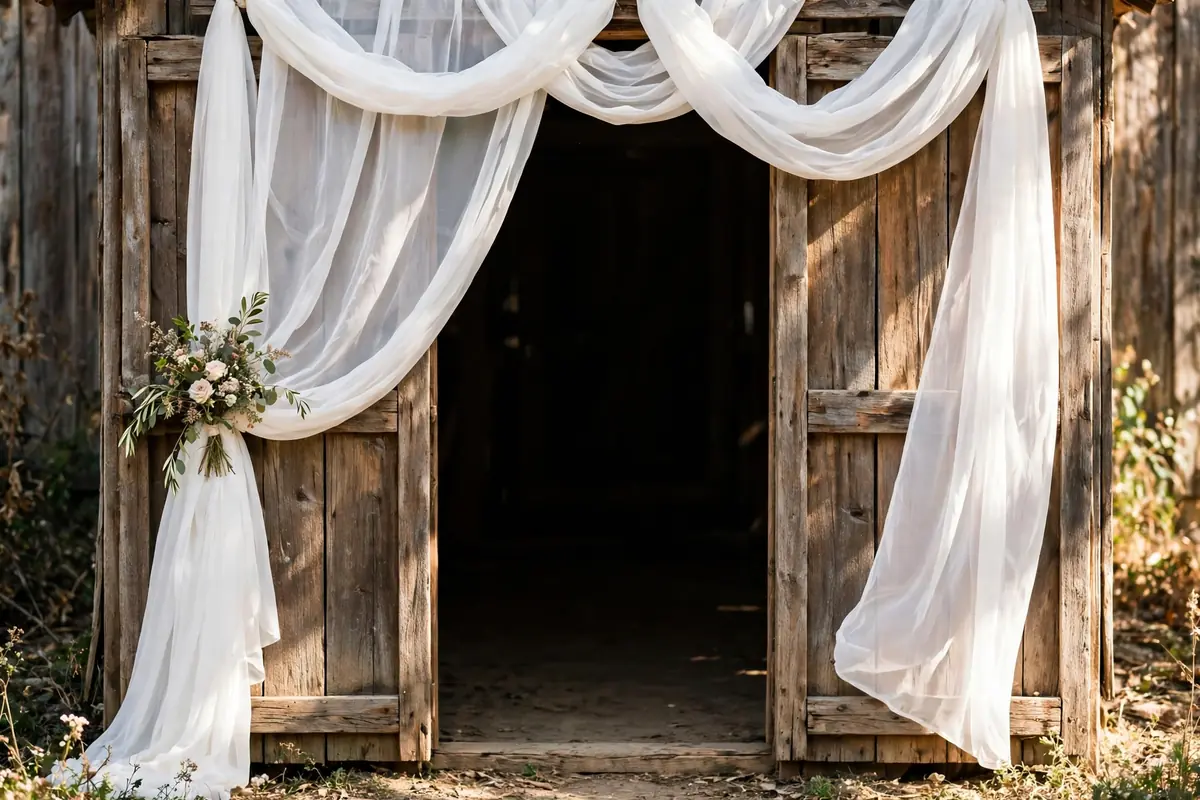
Fabric is the secret weapon of wedding entrance decor. A few yards of chiffon or tulle can turn a plain doorway into something soft, romantic, and expensive-looking for very little money. Drape fabric from the top of the doorframe so it falls in loose swags on both sides, or gather it to one side and tie it with a floral cluster for an asymmetrical look.
Sheer fabric works best outdoors because it moves in the breeze and catches the light. Heavier fabrics such as velvet or satin suit formal indoor entrances and winter weddings, where the weight and texture add warmth. A fabric-draped frame or a simple wooden arch wrapped in fabric also creates a freestanding entrance where you cannot attach anything to the building, which is a smart solution for historic venues, churches, and hotels with strict rules. Add a floral spray at the top corner and a lantern at each base, and the frame looks complete.
One practical warning: fabric and wind do not always get along. On a breezy day, loose drapes can blow across the doorway and block the path. Secure fabric at several points, use heavier fabric outdoors, and have your coordinator check it again right before guests arrive.
Lighting That Makes the Entrance Glow
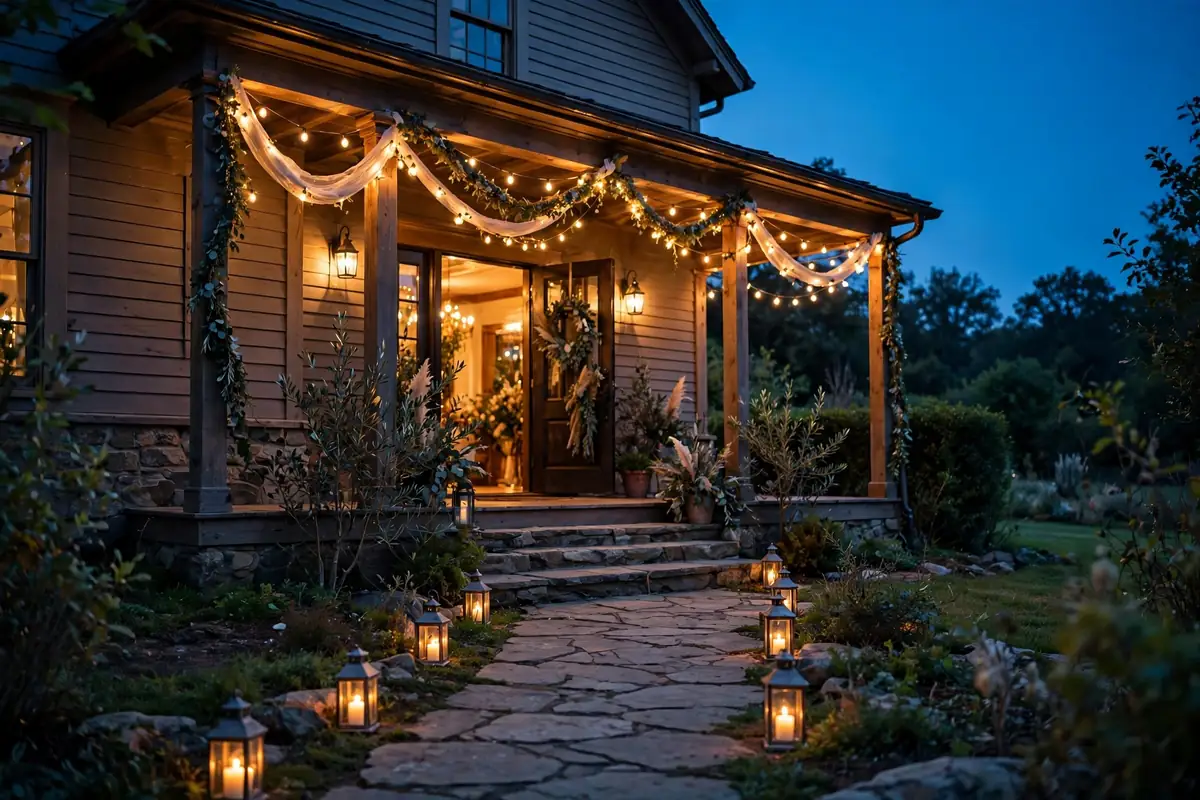
Lighting changes everything about a wedding door entrance, especially for evening weddings. A doorway that looks pleasant in daylight can look magical after dark with the right lights, and lighting is often the cheapest way to make a big visual impact.
Start with lanterns. A pair of large lanterns flanking the door, or a row of smaller lanterns lining the steps, creates a warm, welcoming glow and guides guests exactly where to walk. Battery-operated candles inside the lanterns give you the flicker of real candlelight without the fire risk, and most venues that ban open flame allow them without any argument.
String lights and fairy lights work beautifully when they have something to hang from, such as a porch, a pergola, or a freestanding arch. Drape them along the top of the doorframe or wrap them through a garland so the whole entrance sparkles. Uplights placed at the base of the doorway wash the wall with warm color and make the entrance visible from the parking area. For a truly memorable touch, consider a monogram projection, which casts the couple’s initials onto the wall or the ground in front of the door for a few hundred dollars from a lighting vendor.
Pathways, Steps, and the Guest Journey
The best wedding door entrance design thinks about the whole arrival, not just the door itself. Guests experience the entrance as a sequence: the parking area, the walkway, the steps, the door, and then the welcome table inside. When each step in that sequence is considered, the arrival feels smooth and intentional.
Start at the parking area. A simple sign pointing toward the entrance, or a few lanterns along the path, saves guests from wandering around an unfamiliar venue. If the walk is long, add small touches along the way, such as shepherd’s hooks with hanging lanterns or potted plants marking the route. Steps deserve attention too, because they are both a photo opportunity and a safety issue. Line the edges of the steps with lanterns or small potted flowers, but keep the center of each step completely clear. Never place decor where a guest in heels or a guest using a cane has to step around it.
Inside the door, the welcome table is part of the entrance experience. A small arrangement that echoes the doorway flowers, a guest book, and a framed photo or two continue the feeling guests just walked through. Keep the table close enough to the door that guests see it immediately, but far enough back that it does not block the entryway when a group arrives at once.
Unexpected Details Guests Remember
Once the focal point, the sign, and the lighting are in place, one unexpected detail is what turns a pretty entrance into a memorable one. Pick a single idea that reflects you as a couple and let it be the thing guests talk about later.
A family photo display is a lovely choice: a few framed photos of parents and grandparents on their own wedding days, set on a small table near the door. An escort card wall near the entrance doubles as decor and as a practical tool, since guests find their table assignment before they even sit down. Other ideas that work well include a favorite quote painted on a small board, a basket of paper fans for a hot day, cozy shawls for a cool evening, or a small chalkboard with the wedding hashtag. Whatever you choose, keep it to one idea. Two or three novelty details compete with each other and with the flowers, and the entrance starts to look cluttered.
How Much Does a Wedding Door Entrance Cost in the US?
Entrance decor costs vary widely by region, season, and style, but the ranges below reflect typical US pricing in 2026. A simple DIY entrance can cost under $200, while a professional floral arch in a major city can cost $2,500 or more. Most couples land somewhere in between, spending $300 to $900 on the entrance when they mix a few professional pieces with DIY details.
| Entrance style | DIY cost | Florist cost | Full-service design cost |
|---|---|---|---|
| Greenery garland around the doorframe | $75 to $150 | $250 to $500 | $500 to $900 |
| Half floral arch (one side and top) | $150 to $300 | $500 to $1,200 | $1,000 to $2,000 |
| Full floral arch over the doorway | $250 to $500 | $800 to $2,500 | $1,500 to $4,000 |
| Welcome sign on an easel with florals | $60 to $150 | $200 to $450 | $400 to $800 |
| Fabric draping with floral accents | $50 to $120 | $300 to $700 | $600 to $1,200 |
| Lanterns and lighting only | $80 to $200 | Not usually a florist item | $300 to $900 |
| Pedestal pair with tall arrangements | $120 to $250 | $400 to $900 | $700 to $1,500 |
Florist prices climb with flower choice, size, and labor. Roses and hydrangeas are mid-range, while peonies, orchids, and garden roses cost more, especially out of season. A large arch takes a florist team several hours to build on site, and that labor is a big part of the price. In cities such as New York, San Francisco, and Los Angeles, expect prices at the top of each range. In smaller towns, the same work often costs 20 to 40 percent less. To keep costs down, mix real flowers with high-quality greenery such as eucalyptus and ruscus, which is far cheaper than blooms and makes an arch look full. Renting the arch frame, easel, lanterns, and urns instead of buying them also saves money. Before you set a budget, read our guide to planning a wedding decor budget so the entrance gets a fair share without eating the money you need for the reception.
Venue Rules and Restrictions to Check First
This is the section most couples wish they had read earlier. US venues have rules about what can be attached to their buildings, and those rules can force a last-minute redesign if you discover them the week of the wedding. Ask these questions when you book the venue, and get the answers in writing.
Most venues ban nails, screws, staples, and adhesive tape on doors, trim, and painted walls. Many historic venues and churches also ban anything attached to stonework or woodwork. Hotels and ballrooms commonly ban open flame, which means real candles are out, and some also ban confetti, loose petals indoors, and glitter. None of these bans is a problem if you know about it early, because every one of them has a workaround.
Use freestanding structures such as arch frames, easels, and pedestals that do not touch the building. Use battery candles and LED lights instead of real flame. Use removable hooks only if the venue explicitly allows them. Keep petals and confetti outside, and always keep fire exits, accessible paths, and doorways clear, because a blocked exit is a safety issue and a venue will remove your decor without asking. Ask your venue coordinator three specific questions: what cannot be attached to the building, what the fire rules are for candles and lights, and what time you can access the entrance to set up. That last question matters more than most couples expect. If you only get 30 minutes before the ceremony, a complex arch is not realistic unless your florist sets it up. Your venue type shapes all of this, so compare the typical rules for different settings in our guide to wedding venue types before your venue walkthrough.
Reusing Ceremony Flowers at the Entrance
Here is one of the smartest budget moves in wedding decor: use the same flowers twice. The pedestal arrangements that flank the entrance during guest arrival can move to the ceremony aisle afterward. The arch that frames the door can become the backdrop for the ceremony or the photo booth at the reception. When flowers do double duty, you get two looks for the price of one.
Plan the reuse in advance with your florist or your day-of coordinator. Decide exactly what moves, when it moves, and who moves it. The window is usually the 30 to 45 minutes while guests are seated for the ceremony, or the cocktail hour while the room is flipped. Label each piece with a small tag that says where it goes next, so a helper does not have to guess. Choose arrangements that travel well: pedestal pieces, potted plants, and lanterns move easily, while a garland attached to a doorframe does not. Keep a small spray bottle and a few extra stems on hand for quick touch-ups after the move.
Outdoor Entrances and Weather Backup Plans
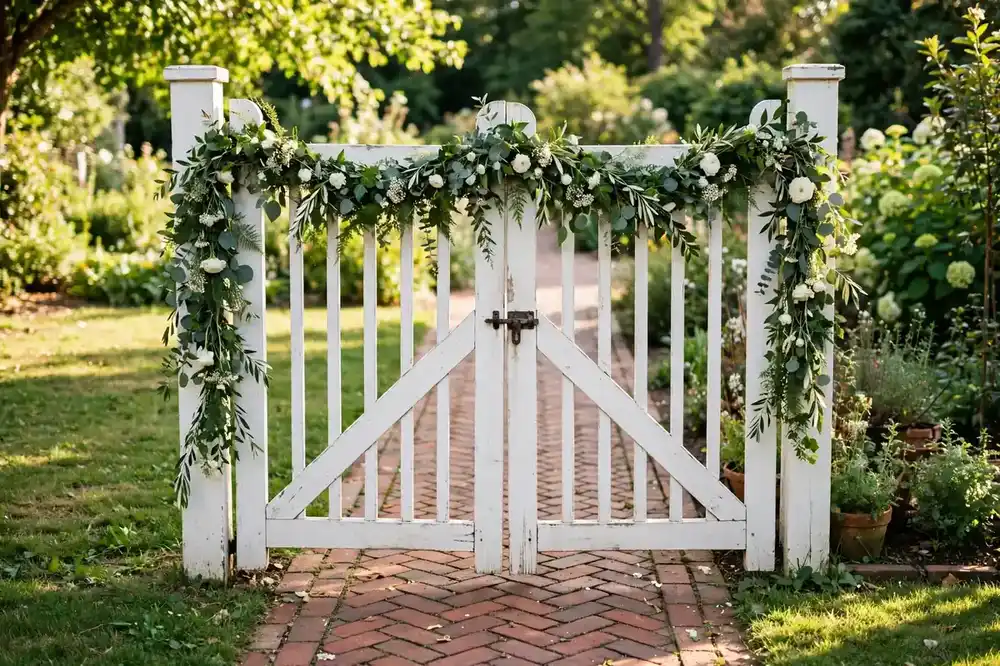
Outdoor entrances photograph beautifully, but they need a weather plan. Wind is the biggest problem. It blows fabric across the doorway, knocks over lightweight signs, and scatters petals. Weight down every freestanding piece, secure fabric at several points, and choose a heavy easel or a weighted base for your welcome sign. If the forecast shows gusts above 20 miles per hour, simplify the design on the day rather than fighting the weather.
Rain is the second problem. Paper signs, foam board, and untreated wood do not survive a downpour. If rain is possible, use acrylic or laminated signs and keep paper elements under cover. Battery candles and LED lights handle damp weather far better than real candles. Heat is the third problem, and it is the one that kills flowers fastest. On a hot day, keep arrangements in water and shade until the last possible moment. Hydrangeas wilt quickly in heat, while roses, carnations, and tropical flowers hold up much better.
Small-Space Entrances That Still Feel Grand
Not every wedding has a grand double doorway. Many couples marry in restaurants, small hotels, or family homes where the entrance is a single door off a narrow hallway. A small entrance can still feel special, and in some ways it is easier, because a few good pieces fill the space completely.
In a small space, choose one focal point and skip the rest. A single tall arrangement beside the door, a beautiful welcome sign, and two lanterns can be enough. Avoid a full arch in a narrow hallway, because it will crowd the path and make guests feel squeezed. Instead, use vertical decor that draws the eye up: a tall vase, a slender pedestal, or a garland that runs up one side of the door. Use the wall space you have. A framed sign, a small wreath on the door itself, or a hanging arrangement can decorate a doorway without taking up any floor space. A few stems of fresh eucalyptus or lavender near the door also give guests a lovely first breath as they enter, for almost no cost at all.
Mistakes to Avoid at Your Wedding Door Entrance
First, do not block the doorway. Decor that narrows the path creates a bottleneck, frustrates guests, and creates a safety problem. Always leave a clear, wide path through the door, and check it with a chair or a stroller in mind, not just a single person walking through.
Second, do not use five focal points. An arch, a sign, a fabric backdrop, a photo display, and an escort card wall all fighting for attention looks cluttered, not luxurious. Pick one hero piece, support it with one or two smaller pieces, and stop.
Third, do not forget the lighting. Couples often plan the entrance for daylight and forget that guests arrive in the late afternoon or evening. If your wedding starts after 4 p.m., lighting is not optional. Add lanterns or uplights even if the entrance looked perfect in your daytime photos.
Fourth, do not skip the venue questions. Finding out on the wedding day that your arch cannot be attached to the door, or that your candles are banned, is a stressful and expensive surprise. Confirm the rules in writing months ahead. Fifth, do not let the entrance clash with the rest of the wedding. If the reception is modern and minimal, a heavy rustic arch at the door confuses guests. Match the entrance to the party inside and the whole day feels like one story.
Your wedding door entrance is the first chapter of your wedding day. Give it one strong focal point, a style that matches your theme, lighting that works after dark, and a plan that respects your venue. Do that, and your guests will walk through the door already smiling, already taking photos, and already excited for everything that comes next.


