2027 Wedding Decor Trends: What Is In and What Is Out

Wedding decor trends 2027 are already taking shape, and if you are planning a 2027 wedding in the US, you have an advantage: you can see where things are heading instead of reacting after the fact. One important note before we dive in: this guide separates reported data from informed projection. The hard numbers come from The Knot 2027 Wedding Trends Report, built on search, save, and spend data from 1.7 million US couples. The projections come from planner consensus (Wezoree’s 2027 forecast and The Wedding Notebook’s planner survey). We label which is which, so you can tell a measured trend from an editorial hunch.
The headline shift in wedding decor trends 2027 is that weddings are getting more personal, more textured, and more intentional. Couples are acting as creative directors of their day, borrowing from fine art and high-end interiors, and spending their decor budget on fewer, bigger-impact moments rather than scattering it across every surface. Here are the nine wedding decor trends defining 2027, three that are fading out, and how to ride the trends without your photos looking dated by 2030.
The 9 Wedding Decor Trends Defining 2027
1. Sculptural Floral Installations
What it looks like: Flowers are leaving the vase behind. Instead of tall centerpieces in glassware, 2027 couples are commissioning immersive floral landscapes: hanging gardens suspended over the dance floor, dense flower mounds rising straight from the table surface, and ceremony backdrops that look like they grew there. The arrangements are organic, asymmetric, and built in clusters rather than balanced bouquets.
Why it is rising: Planner consensus is strong here. Wezoree’s 2027 forecast calls immersive floral landscapes one of the year’s defining moves, and their advice is telling: a room needs one real showstopper, and installations deliver it better than centerpieces ever could. Guests remember walking through flowers far longer than they remember looking at them.
How to style it: Pick one moment for the statement: the ceremony backdrop that later moves behind the sweetheart table, or a single hanging installation over the dance floor. Mix one premium bloom (garden roses, orchids) with lots of texture (amaranthus, smilax, dried elements) to keep it from becoming a budget crater. Avoid pairing a massive install with projection mapping or another showstopper in the same room; one hero per space is the rule.
What it costs: A statement installation typically runs $2,500 to $8,000 depending on market and bloom choice, while a hanging garden over the dance floor lands between $3,500 and $10,000. Reusing the ceremony structure at the reception is the single best way to cut that in half. To see how this fits a full budget, our wedding decor budget breakdown shows where US couples actually spend.
Who it suits: Couples with a venue that has height, couples with a large guest count where one installation anchors a big room, and anyone whose priority is drama in the photos.

2. Atmosphere-First Lighting
What it looks like: Lighting is now a decor category, not an afterthought. Layered candlelight in the hundreds, lighting designers who shift the color temperature from ceremony to dinner to dancing, and in some ballrooms, full-room projection mapping that turns a blank wall into art.
Why it is rising: This is planner projection backed by a solid argument: lighting reshapes a standard room faster than anything else. The Wedding Notebook’s 2027 planner survey points to layered lighting and candles that change through the evening, and Wezoree lists atmosphere-first lighting as a core 2027 direction. One strong lighting scheme can carry a large guest list better than filling every surface with decor.
How to style it: Build light in three layers: functional (so guests can see dinner), warm (candles at every table), and dramatic (a lighting designer or pin spots for the dance floor). Hundreds of mixed-height candles along banquet tables are the budget-friendly entry point; full projection mapping is the splurge end. Check your venue’s candle policy first: many require enclosed flames or LED candles.
What it costs: A lighting designer runs $1,500 to $4,000 for a full evening program in most US markets. Candle clusters cost $400 to $1,500 per table including rentals and labor. LED taper sets you buy yourself cost $2 to $5 per candle, though designers will tell you the flicker quality matters.
Who it suits: Hotel ballroom and blank-venue couples, evening weddings, and anyone who wants a room that transforms between ceremony and party.
3. Bold Color Stories and Colored Glassware
What it looks like: Layered, emotional palettes instead of rigid two-color schemes. Think the Italian terrace palette: terracotta, rust, burnt sienna, fig, and citrus, carried through colored glassware in amber, smoky green, and cobalt, patterned linens, and tinted taper candles. The color arrives at the table in objects, not just flowers.
Why it is rising: This one has hard data. The Knot’s 2027 report shows searches for coastal Italian beach club weddings up 315 percent year over year, with Italian-themed suites up 167 percent. CHI thee WED’s color analysis confirms couples are moving from curated neutrals to expressive palettes. Butter yellow is blending into these warmer sunset palettes as the fresh accent.
How to style it: Choose a color story with three to four related shades rather than a strict palette, then let glassware and linens do the heavy lifting. Colored coupe glasses mixed on the table read as collected rather than matchy. If brights intimidate you, anchor with a saturated color in the linens and keep glassware in one tone. For exact palettes by season, see our wedding color palettes guide.
What it costs: Colored glassware rents for $4 to $8 per stem; mixed vintage coupes run $3 to $6. A full colored-glassware tablescape for 100 guests typically adds $800 to $1,600 to the rental bill, which is modest compared to what the same visual impact would cost in flowers.
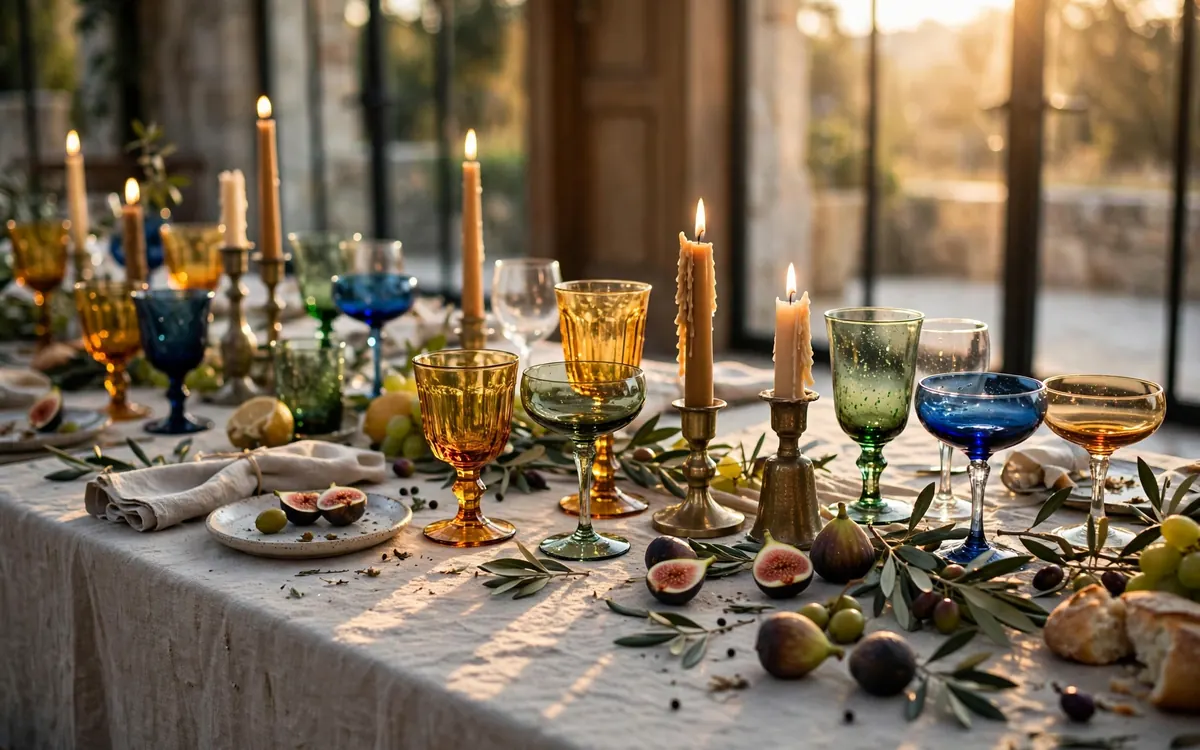
Who it suits: Couples who love color but fear commitment (glassware is rented, not permanent), Mediterranean and garden venues, and golden hour ceremonies where glass catches the light.
4. Serpentine and Organic Table Layouts
What it looks like: Banquet tables that curve, snake, and pool through the room instead of lining up in identical rows. Long communal tables with an organic wave, mixed with intimate lounge groupings and conversation corners away from the dance floor. The layout itself becomes part of the design.
Why it is rising: Planner projection with strong consensus. Wezoree’s forecast identifies designed-for-connection spaces as a major 2027 shift: unconventional layouts and sculptural seating plans make a wedding feel customized without adding more decoration. Industry experts note that table shape and position create movement and visual interest on their own.
How to style it: Ask your planner or venue about serpentine or curved table configurations before you assume you are stuck with rounds. Snake the tables through the space so guests face each other across the curve, and break up the dining zone with a lounge area for cocktail hour overflow. Note that curved tables make seating charts trickier, so budget extra planning time.
What it costs: Serpentine table rentals run $500 to $1,200 per section depending on your rental company. Many full-service planners will redesign your floor plan at no extra charge if you are already booking them; standalone layout design starts around $500.
Who it suits: Social couples who want guests mingling, venues with long rooms or gardens, and anyone bored of the standard round-table grid.

5. Fine-Art Inspiration
What it looks like: Mood boards pulled from art history: Monet water-lily color washes on stationery and linens, Klimt gold-leaf patterns on escort cards, stained-glass-inspired ceremony backdrops that glow when the sun hits them, and Swan Lake balletcore touches like tulle runners and soft stage lighting.
Why it is rising: This is measured data, not a guess. The Knot’s 2027 report shows fine-art references (Monet, Klimt, stained glass) climbing 195 percent year over year, with balletcore and Swan Lake styling up 106 percent. Couples are art-directing their weddings with unusual specificity, and art history gives them a ready visual language.
How to style it: Pick one artwork as your anchor and translate it into three places: the invitation suite, the ceremony backdrop, and the cake. A stained-glass-look backdrop behind the ceremony reads spectacularly in photos and costs far less than a floral equivalent. Keep the reference elegant and loose; you want a wedding inspired by Monet, not a Monet costume party.
What it costs: Printed backdrops or mural-style stationery suites run $300 to $900. Stained-glass-look panel rentals cost $200 to $500 per panel. A watercolor stationery artist typically charges $800 to $2,000 for a full suite for 100 guests.
Who it suits: Art lovers, gallery and museum venues, and couples who want a design story with depth beyond “garden romantic.”
6. The Silver Age
What it looks like: Silver flatware, platinum-toned jewelry details, mercury glass candle holders, and cool-toned decor in pewter, steel, and ice. The warm golds that dominated the 2020s are stepping back; 2027 is cooler, moodier, and more reflective.
Why it is rising: Hard data again. The Knot reports searches for silver flatware, platinum jewelry, and cool-toned decor up 133 percent year over year, explicitly signaling that gold’s reign is ending. This pairs naturally with candlelight maximalism: silver and candlelight were made for each other.
How to style it: Rent silver or silver-plated flatware instead of gold for an instant update, then echo the metal in mercury glass votives and a steel-gray linen. Pair silver with deep tones (navy, emerald, charcoal) for a moody evening look, or with ice blue and white for a crisp winter wedding. One metallic per wedding remains the safe rule; mixing silver and gold only works when one clearly dominates.
What it costs: Silver flatware rentals run $8 to $15 per place setting versus $1.50 to $3 for standard stainless, so for 120 guests expect $1,000 to $1,800 just for flatware. Mercury glass votives rent for $1 to $3 each.
Who it suits: Formal and black-tie couples, evening and winter weddings, and anyone tired of the warm gold default.

7. Fruit-Forward Styling and the Aperitivo Hour
What it looks like: Bowls of lemons, kumquats, figs, and grapes as centerpieces; olive branches instead of eucalyptus; terracotta ceramics; and cocktail hours styled like an Italian aperitivo with handwritten menus, spritz carts, and linen napkins stamped with the couple’s crest.
Why it is rising: This is our projection, but it is built on solid ground. The Knot’s 315 percent surge in coastal Italian beach club searches points directly at the aesthetic, and interactive food and beverage is up 66 percent. Fruit is the affordable bridge: it looks expensive, photographs beautifully, and ties straight into the aperitivo concept guests actually enjoy.
How to style it: Build a fruit-forward cocktail station or bar rather than putting fruit on every table; one abundant display has more impact. Citrus pairs best with terracotta and olive green; figs and grapes pair with deep jewel tones. Everything should be real and edible; fake fruit is the fastest way to cheapen the look. The DIY wedding centerpieces guide includes fruit-based arrangements you can assemble yourself.
What it costs: Whole fruit runs $2 to $6 per piece at wholesale, so a lush bar display costs $300 to $800 including vessels. That is a fraction of the equivalent floral volume, which makes this one of the best value trends on this list.
Who it suits: Food-loving couples, summer and vineyard weddings, and budget-conscious pairs who want a high-end look without a florist’s invoice.
8. Lived-In Residential Details
What it looks like: Weddings styled like a beautifully kept home: small brass table lamps glowing along the tables, tasseled napkins and throws, a coffee-table-style guestbook guests actually flip through, collected objects and statement furniture in the lounge, and candlelight at human height instead of only overhead.
Why it is rising: This is the most validated trend on the list. The Knot’s Trends Vendor Council unanimously agreed that residential design details, from table lamps to coffee table guestbooks to tasseled linens, are shaping 2027 weddings nationwide. The through line is intimacy: spaces that feel curated and lived-in rather than staged for photos.
How to style it: Start with table lamps, which are the signature piece: line banquet tables with small cordless lamps for pools of warm light. Add tasseled edges to napkins or throws, and style a real lounge corner with a rug, books, and framed photos instead of a generic seating area. Shop estate sales and antique stores for collected pieces that tell your story; the imperfection is the point.
What it costs: Cordless table lamp rentals run $15 to $35 each; twenty lamps for a long table costs $300 to $700. Tasseled napkins add $5 to $12 per napkin over standard rentals. Estate-sale furniture is often cheaper than renting lounge sets from an event company.
Who it suits: Intimate and mid-size weddings, couples who love interior design, and anyone whose venue feels cavernous and needs warmth.

9. The Wedding Brand
What it looks like: A custom crest or monogram that appears everywhere with intention: the invitation suite, the dance floor decal, embroidered napkins, the cocktail menu, the welcome sign, and the favor tags. The wedding has a visual identity the way a brand does, repeated until it becomes unmistakably yours.
Why it is rising: Measured data: The Knot reports searches for custom crests, monograms, and weekend-long storytelling up 100 percent year over year. With nearly one in three weddings now spanning three days or more, couples need a design thread that ties the welcome dinner, ceremony, and brunch together. The brand is that thread.
How to style it: Commission the crest first, ideally when you order stationery, then apply it in three to five places max. Overuse turns a brand into wallpaper. High-impact placements: dance floor decal, cocktail napkins, and the menu. Keep the design simple enough to read at two inches wide; intricate crests get muddy on napkins.
What it costs: A custom crest and monogram suite from a stationer costs $300 to $1,200. A vinyl dance floor decal runs $150 to $400. Embroidered napkins are the splurge at $8 to $20 each.
Who it suits: Multi-day wedding weekends, formal couples, and anyone who wants the decor to feel cohesive across several events.

2027 Trends at a Glance: Cost vs. Effort
| Trend | Cost level | Effort level | Biggest impact for |
|---|---|---|---|
| Sculptural floral installations | High | High (florist + install crew) | Big rooms, drama in photos |
| Atmosphere-first lighting | Medium to high | Medium (designer) to low (candles) | Ballrooms, evening weddings |
| Bold color stories, colored glassware | Low to medium | Low (rental order) | Maximum look per dollar |
| Serpentine table layouts | Medium | Medium (floor plan logistics) | Social, mingling crowds |
| Fine-art inspiration | Low to medium | Medium (one anchor artwork) | Design-story depth |
| The silver age | Medium | Low (rental swap) | Formal, evening weddings |
| Fruit-forward aperitivo styling | Low | Low | Food lovers, summer weddings |
| Lived-in residential details | Low to medium | Medium (sourcing) | Intimacy, venue warmth |
| The wedding brand | Low to medium | Medium (design first) | Multi-day weekends |
3 Wedding Decor Trends Fading Out in 2027
Trends do not die overnight; they fade as the center of gravity moves. Here is what planners and data suggest is on its way out.
1. The Generic Rustic Barn Default
The burlap-and-mason-jar barn wedding has been declining for years, and 2027 accelerates it. Couples who want a rural setting are booking botanical greenhouses and conservatories, which deliver the natural feel with built-in beauty, or modern farmhouse venues with clean white walls and black metal accents instead of farm tools and lace. If you already booked a barn, modernize it: skip the burlap, keep the palette restrained, and invest in lighting.
2. Flat All-Neutral Greige Weddings
The all-beige wedding, greenery garlands with no other color, and pampas grass on every surface are giving way to the color stories above. This is editorial projection, but the direction is unmistakable: The Knot’s data shows saturated, emotional palettes surging, and planners are unanimous that flat neutrals now photograph as forgettable. Neutrals are not gone; they are the backdrop for one or two saturated colors instead of the whole story.
3. Gold-Everything and Rose Gold Overload
This one has the data behind it. With silver, platinum, and cool-toned decor up 133 percent, the era of gold chargers, gold flatware, gold-rimmed glassware, and rose gold signage in the same room is over. Gold is not banned; it is demoted from default to accent. One warm metal moment, like gold taper holders on an otherwise silver table, looks intentional. A room full of gold now reads 2019.
How to Use Trends Without Dating Your Photos
Trends are fun, but wedding photos are forever, so spend your trend budget strategically. The rule that never fails: make about 80 percent of your decor timeless and 20 percent of-the-moment. Timeless means good bones: beautiful light, real flowers, honest materials, a layout that lets people talk. Those never date.
Choose structural trends over cosmetic ones. A serpentine table layout or a beautiful lighting design will look considered in any decade; a hyper-specific color fad will timestamp your album. Rent the trendy items (colored glassware, silver flatware, lamps) and buy the timeless ones (candles, linens in neutral tones) so nothing trendy lives in your home afterward.
Finally, filter every trend through your actual taste. If you genuinely love blush and gold, a silver-age wedding will feel like a costume. The 2027 couples who look best in their photos are not the ones who followed the most trends; they are the ones who picked two or three and made them personal. Your wedding should look like your wedding, not like the year you got married.
Planning a 2027 wedding means planning ahead of the curve, and that is exactly where you want to be. Pick the trends that fit your venue and your personality, price them honestly with the cost signals above, and keep the rest timeless. Do that, and your decor will feel current on the day and beautiful in the album for decades.