
Courthouse Wedding Checklist: Everything You Need (2026)
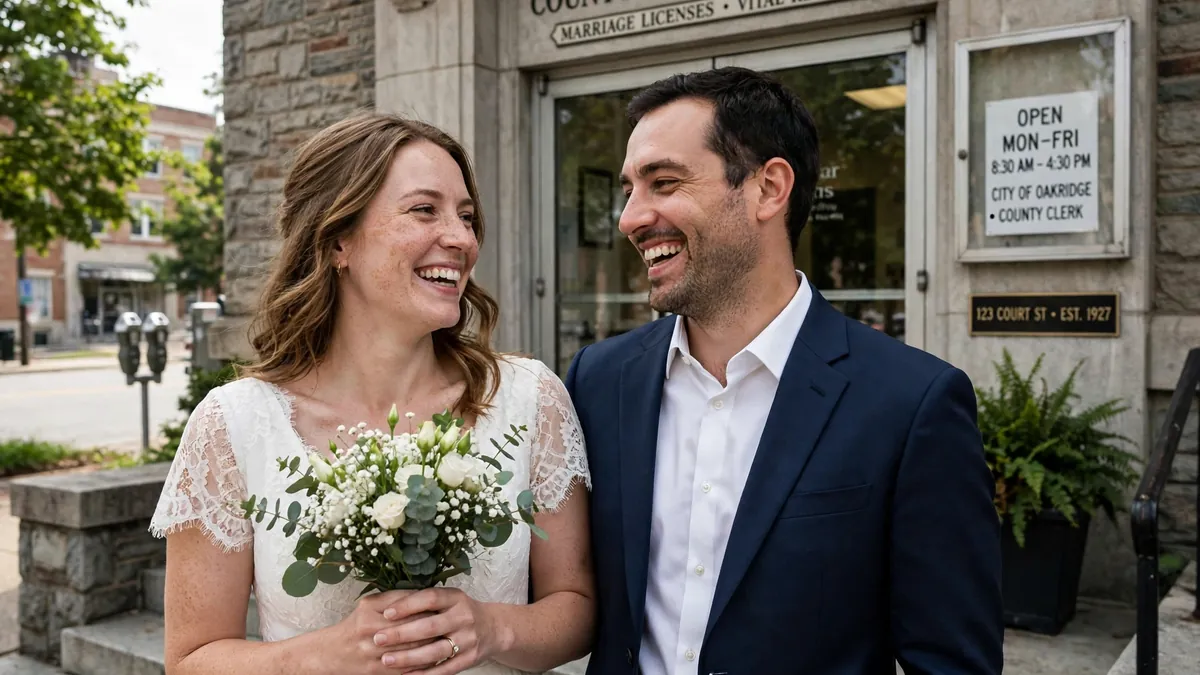
A courthouse wedding is the simplest legal way to get married in the United States. No venue contract, no seating chart, no catering tasting. But simple does not mean effortless. Every year, couples arrive missing one document, past a waiting period they never checked, or without the witness their state requires, and they leave unmarried with a wasted trip. This checklist walks it in order: paperwork, license, ceremony booking, day-of bag, and the admin after. For the money side, see our full courthouse wedding cost breakdown, with real numbers on every fee.
Step 0: Confirm Your County’s Rules First
Marriage law is state law, but the daily details are set at the county level. Before anything else, check your county clerk’s website for six things: office hours, appointment vs. walk-in ceremonies, accepted IDs, exact license and ceremony fees, the waiting period, and the witness requirement. Courthouse schedules surprise people most. New York City’s City Hall weddings run weekdays only, release appointment slots Monday mornings at 9 a.m., and cap your party at the couple plus a few guests. Other counties take walk-ins all day. One phone call settles it all.
Step 1: Get Your Marriage License
The marriage license is the legal permission to get married. You get it before the ceremony from the county clerk’s office (in some states, the register of deeds or probate court). Both partners must appear in person in nearly every jurisdiction. The clerk verifies your documents, you pay the fee, and you walk out with a license valid for a limited window.
Documents to bring
| Document | Who needs it | Notes |
|---|---|---|
| Government-issued photo ID | Both partners | Driver’s license, passport, state ID, or military ID. Names must match your application. |
| Social Security number | Both partners | Required by law in most states. Some counties want the card. |
| Birth certificate (certified copy) | Both partners | Required in many counties. Order from your birth state ahead if needed. |
| Divorce decree or death certificate | Anyone previously married | Must be a certified, court-issued copy. Photocopies are never accepted. |
If either of you was married before, the certified divorce decree is often the slowest step. Requesting one from another state’s court can take weeks, so make it your first errand, not your last.
Waiting periods and expiration dates
Two timing rules govern every license: the waiting period (mandatory gap between receiving the license and using it) and the validity window (how long it stays usable). Miss either and the ceremony cannot legally happen.
| State | License fee (approx.) | Waiting period | Validity |
|---|---|---|---|
| New York (NYC) | $35 | 24 hours | 60 days |
| Texas | $60-$80 | 72 hours | 90 days |
| California | $75-$100+ | None | 90 days |
| Florida | ~$93.50 | 3 days (nonresidents) | 60 days |
| Kansas | ~$85 | None | 6 months |
| Arkansas | $60 | None | 60 days |
| Colorado | $30 | None | 35 days |
| New Jersey | $28 | 72 hours | 6 months |
| Nevada (Las Vegas) | $102 | None | 1 year |
Texas and Florida discount the fee for couples who complete an approved premarital course. Colorado allows self-solemnization: no officiant needed. Time your license visit two to three weeks before the ceremony: late enough that it cannot expire, early enough to clear any waiting period.
Step 2: Book the Ceremony
This is the part couples get wrong most often, because the process differs by county:
- Appointment vs. walk-in: Some are appointment-only (NYC, many large urban counties); others take walk-ins but expect a wait, especially at lunch and on Fridays.
- Ceremony fee: Usually $25 to $75, paid to the judge, clerk, or justice of the peace; some counties fold it in or waive it.
- Payment method: Call ahead. Some take cards; others are cash or check only.
- Guest limits: Ceremony rooms are small. Confirm the maximum guest count and give guests the arrival time plus security requirements.
- Who officiates: Confirm whether a judge, clerk, or justice of the peace performs your ceremony, and whether you can request a specific time of day.
If your county does not perform ceremonies on site, ask the clerk which nearby office does, or hire an officiant and marry anywhere with your valid license.
Step 3: Line Up Your Witnesses
Most states require at least one witness, who signs the license afterward. This is a legal role:

- How many: New York requires at least one; Florida requires two; most states require one or two. Colorado, with self-solemnization, requires none.
- Age: Witnesses must generally be 18 or older. New York State sets no formal minimum age, but the witness should be competent to testify about what they saw.
- ID: Witnesses should bring their own photo ID. Confirm with your clerk whether it must be presented.
- Backup: Some courthouses can supply a staff witness, but never count on it. Keep a backup person.
Confirm a week out and remind them the morning of. A missing witness can stop a courthouse wedding cold on the day.
Step 4: What to Wear and What to Bring
There is no dress code at most courthouses. Wear the suit, the white midi dress, or the nice blazer. You will pass through a metal detector, so comfortable shoes and minimal metal jewelry save hassle, and one personal touch like a boutonniere makes the photos feel intentional.
Photography rules are set per courthouse. Some allow a photographer during the ceremony; others restrict photos to before and after or ban flash. Check when you book, and confirm the flowers policy.

Day-of bag checklist
| Item | Why |
|---|---|
| Marriage license | No license, no ceremony. Keep it in a folder. |
| Photo ID for both partners | Some offices re-verify ID. |
| Appointment confirmation | Printed or on your phone. |
| Payment method | In the form the office accepts. |
| Witnesses (with their IDs) | Confirm the night before and the morning of. |
| Rings and vows | Optional. Short personal vows fit the format well. |
| Bouquet or boutonniere | Optional. Check the flowers policy first. |
| Mini emergency kit | Safety pins, tissues, lipstick, stain pen. Our wedding emergency kit list works for courthouse weddings too. |
Step 5: The Ceremony Itself
Arrive early, clear security, and check in with the clerk. The ceremony is short, typically 10 to 20 minutes: a few words about marriage, your vows, the ring exchange if you brought rings, and the pronouncement. Then you, your partner, the officiant, and your witnesses sign the marriage license. That signature is the legal act.
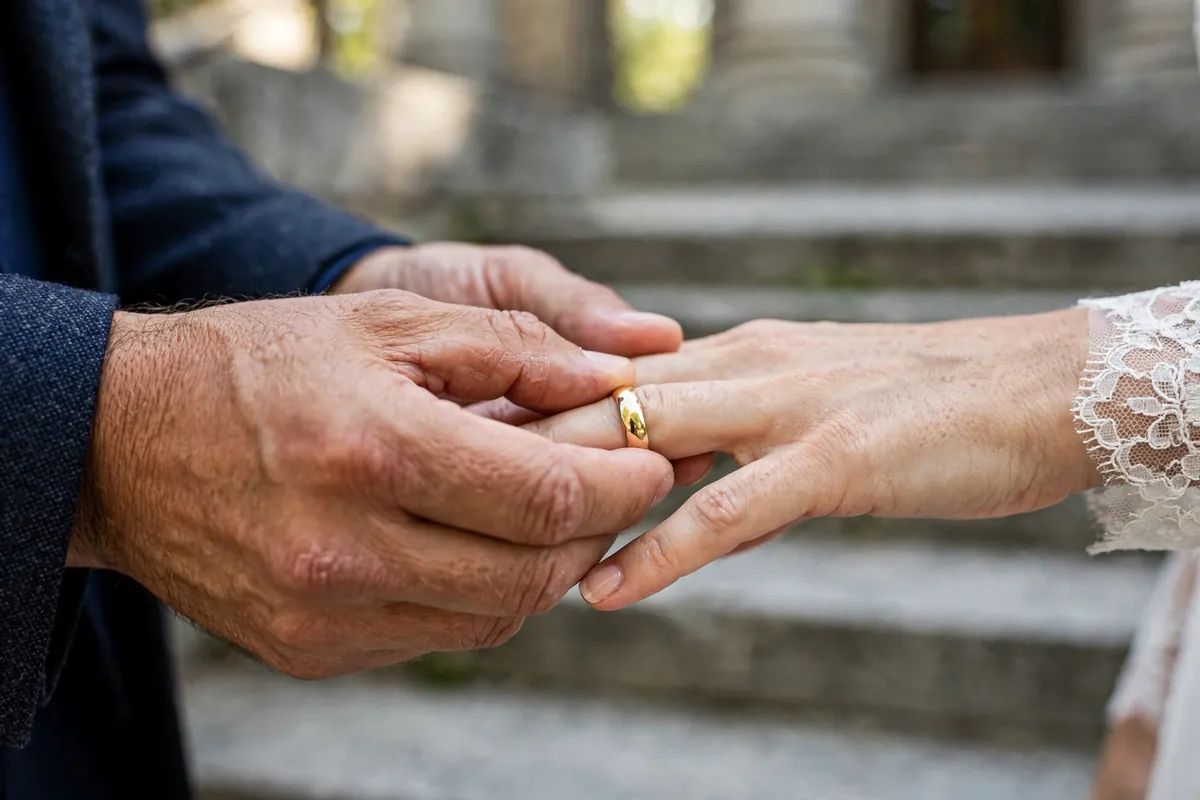
The signed license goes back to the clerk’s office. The officiant files it in many counties; in others you hand-carry it to the counter. Ask who is responsible before you leave, because an unfiled license is an unrecorded marriage.
Step 6: After the Ceremony

Order certified copies
After filing, you will want certified copies of the marriage certificate, your legal proof of marriage. Most couples need two to four: one for the name change, one for insurance or benefits, and spares for banks. They cost roughly $15 to $30 each (Clark County, Nevada charges $20). Some offices print them on the spot; others mail them weeks later. Order before you leave if you can.
The name-change process
If either of you is changing your name, the order matters: Social Security first (every other agency checks this record), then driver’s license at the DMV, then passport, then banks, employer, insurance, and voter registration. Allow four to eight weeks and start the week after the ceremony. It is the longest part of a courthouse wedding, and almost no checklist mentions it.
5 Mistakes That Derail Courthouse Weddings
- Letting the license expire. Got it two months early, the ceremony slid, and now you pay the full fee again. Two to three weeks ahead is the sweet spot.
- Booking before the waiting period clears. Do not lock in a photographer, dinner, or time off until the waiting period is satisfied and the ceremony is confirmed.
- Assuming walk-ins. Plenty of courthouses are appointment-only, and slots at popular ones go fast. Book before you announce the date.
- Forgetting the witness. Confirm a week out, remind them the morning of, and keep a backup.
- Assuming the photo rules. Flash bans and no-photographer-during-ceremony policies are common. Ask when you book, not when you arrive.
Your Courthouse Wedding Checklist, All in One Place
- Confirm county rules: hours, appointments, fees, waiting period, witness count
- Request certified divorce decree or death certificate first if previously married
- Both partners visit the clerk’s office with IDs, SSNs, and birth certificates
- Pay the license fee; note the waiting period and expiration date
- Book the ceremony; confirm payment method, guest limit, and photo rules
- Line up one or two witnesses (18+, with ID); keep a backup
- Choose outfits; check courthouse flower and photography policies
- Pack the day-of bag: license, IDs, confirmation, payment, rings, vows
- Arrive early, clear security, marry, sign the license with witnesses
- Confirm the signed license is filed; order 2-4 certified copies
- Start the name-change process at the Social Security office within the week
A courthouse wedding strips marriage down to what matters: two people, a legal promise, and the people who witness it. Get the paperwork right and the day itself is the easy part. Many couples add an intimate gathering later; our guide to how to plan a small wedding is the natural next read, and our full wedding planning checklist covers the bigger timeline.