
Engagement Party Planning: Checklist, Budget & Timeline

The proposal happened, the ring is on, and now everyone is asking the same question: when is the party? An engagement party is the first official celebration of your wedding journey, and planning it well sets the tone for everything that follows. This guide covers the full engagement party planning process: when to hold it after the proposal, who hosts and who pays, how to build the guest list, real budget scenarios from $500 to $8,000, five theme ideas, a week-by-week planning timeline, invitation and gift etiquette, what to wear, and toast tips that keep speeches short and sweet.
The Quick Answer: Engagement Party Planning at a Glance
Short on time? Here are the essentials of engagement party planning in one place. Hold the party one to three months after the proposal, before wedding planning gets serious. The host pays: traditionally the bride’s parents, but today it is just as often the couple, the groom’s parents, or close friends. Keep the guest list smaller than the wedding and invite only people who will also be invited to the wedding. Budget realistically: $500 to $2,500 covers most parties, with casual at-home gatherings starting near $200 and formal venue events climbing past $8,000. Send invitations four to six weeks out. Gifts are optional, never print registry details on the invitation, and keep toasts under two minutes.

When to Throw the Engagement Party
Timing is the first real decision, and it matters more than couples expect. Throw the party too soon and you will be planning through the fog of post-proposal adrenaline. Wait too long and the news is old, the save-the-dates are already out, and the party feels like an afterthought.
The sweet spot: 1 to 3 months after the proposal
The standard guidance from etiquette experts and wedding planners alike is to hold the engagement party one to three months after the proposal. This window gives you a few weeks to enjoy being newly engaged, then enough breathing room to plan without panic. It also keeps the celebration ahead of the heavy wedding planning: venue tours, vendor bookings, and budget spreadsheets.
The other constraint is the wedding date itself. Ideally the engagement party happens at least six months before the wedding, so it feels like its own milestone rather than a warm-up act for the wedding weekend. If your engagement is shorter than six months, consider folding the celebration into a welcome dinner the night before the wedding instead of asking guests to travel twice.
Work backward from your engagement length
| Engagement length | Recommended party window |
|---|---|
| 6 to 12 months | 4 to 8 weeks after the proposal |
| 12 to 18 months | 1 to 3 months after the proposal |
| 18 months or longer | 2 to 4 months after the proposal |
| Under 6 months | Skip the separate party or combine it with a welcome dinner |
Pick the right day and time
Saturday evening is the classic choice: formal enough to feel celebratory, late enough that guests do not feel rushed. Sunday afternoon brunches have surged in popularity, especially when guests have young kids or long drives, and brunch parties are typically cheaper since there is no full bar and the food is lighter. Friday evening works well for at-home parties or private rooms; people are off work and ready to celebrate, though the night tends to end earlier. Avoid major holidays unless the engagement party is the reason everyone is already gathering, like announcing the news at a Thanksgiving dinner that is already on the calendar.
Who Hosts and Who Pays
Engagement party hosting rules have changed more than almost any other wedding tradition. The old rule said the bride’s parents host. The new rule is simpler: whoever offers to host, pays.
Modern hosting arrangements
| Host | When it makes sense |
|---|---|
| Both sets of parents jointly | Strong relationship between families, balanced involvement, shared cost |
| One set of parents (either side) | One family is closer, more local, or more eager to host |
| The couple themselves | Independence, living far from parents, financially ready |
| A close friend or sibling | Wedding party members or siblings stepping up as a gift to the couple |
| A combination | Friends provide the venue, parents cover food and drinks |
The unbreakable rule: the host pays for everything the guests are offered. Inviting people to a restaurant and expecting them to cover their own meals is a serious etiquette breach, even at a casual party. If the budget cannot stretch, scale the party down (fewer guests, a home instead of a venue, brunch instead of dinner) rather than passing costs to guests.
Co-hosting without conflict
When two or more parties share hosting, most tension comes from unspoken assumptions about who decides what. Have one 30-minute alignment conversation before any money is spent, and cover these five points:
- Total budget and how it splits: 50/50, proportional to guest count, or fixed dollar amounts per side
- Decision authority: who has the final word on venue, menu, and guest list
- Guest list quotas: how many invites each side gets
- Communication with the couple: one point of contact, not scattered group texts
- Tie-breaker: what happens when opinions diverge (the couple decides, the bigger contributor decides, or a coin flip on small stuff)
Write the answers down in a shared note. It feels formal for a party, but it prevents weeks of friction later.
Building the Guest List
The guest list is where engagement parties go wrong most often, so get this right and half the planning is done.
The golden rule
Everyone invited to the engagement party must also be invited to the wedding. This is not a soft suggestion. Inviting someone to celebrate the engagement and then quietly cutting them from the wedding list damages relationships for years. If you are not certain someone will make the wedding list, leave them off the engagement party list. The corollary: the engagement party list should be a strict subset of the wedding list.
How big should it be?
| Party style | Typical guest count |
|---|---|
| Intimate at-home dinner | 10 to 25 |
| Private room at a restaurant | 25 to 50 |
| Backyard or small venue | 50 to 80 |
| Large formal celebration | 80 to 120+ |
Most engagement parties land in the 20 to 50 range. If your list creeps past the venue capacity, that is a sign to cut, not to upgrade the venue.
Build the list in concentric circles
Start at the center and work outward, stopping when you hit your number:
- Innermost circle (always invited): parents, siblings, grandparents, and each partner’s five to ten closest friends.
- Wedding party (always invited): bridesmaids, groomsmen, and anyone already asked to stand with you.
- Extended family (usually invited): aunts, uncles, first cousins, and family friends who feel like family.
- Close social circle (often invited): longtime friends, mentors, roommates.
- Outer circle (wedding only): distant cousins, coworkers, neighbors, friends’ plus-ones you have never met.
Plus-one rules
Plus-one etiquette is looser at engagement parties than at weddings. Married, engaged, or cohabiting partners should always be named on the invitation. Long-term partners you have met get named too. For casual dating relationships, it is fine to skip the plus-one at an intimate party. Do not feel pressured to offer open plus-ones; the smaller the party, the easier it is to keep the list tight. If you are keeping the wedding small as well, our guide to planning a small wedding covers guest-list strategy in more depth.
Setting the Budget
Engagement party costs span an enormous range, and the biggest driver is guest count, not decor. Industry data for 2026 puts the landscape like this:
| Party size | Style | Typical cost range |
|---|---|---|
| 10 to 25 guests | At-home, DIY food, BYOB | $200 to $800 |
| 20 to 50 guests | Restaurant private room or small venue | $800 to $4,000 |
| 50 to 120 guests | Catered medium event | $2,000 to $8,000 |
| 120+ guests | Formal venue, full bar | $5,000 to $15,000+ |
How the budget typically breaks down
The totals vary wildly, but the shape of the budget stays consistent:
| Category | Share of budget |
|---|---|
| Venue or rental fees | 25 to 35% |
| Food | 25 to 30% |
| Drinks | 15 to 25% |
| Decor and florals | 8 to 12% |
| Music or entertainment | 5 to 10% |
| Invitations and stationery | 2 to 5% |
| Buffer for surprises | 5 to 10% |
If the budget is tight, the venue is the biggest lever: a backyard, a home, or a free park pavilion zeroes out the venue line and lets you spend on food and atmosphere instead.
Three real budget scenarios
Ranges are abstract. Here is what the money actually buys at three spending levels, line by line.
The $500 backyard party (25 guests)
| Line item | Cost |
|---|---|
| Venue (your backyard) | $0 |
| DIY taco bar ingredients (25 guests) | $180 |
| Beer, wine, and lemonade (BYOB encouraged) | $120 |
| Paper goods, string lights, wildflowers | $90 |
| Digital invitations (Paperless Post or Evite) | $25 |
| Bluetooth speaker playlist (your own) | $0 |
| Sheet cake from a grocery bakery | $45 |
| Buffer | $40 |
| Total | $500 |
The $2,500 restaurant celebration (40 guests)
| Line item | Cost |
|---|---|
| Private room rental (often waived with food minimum) | $300 |
| Family-style dinner ($35 per head) | $1,400 |
| Beer and wine package + champagne toast | $450 |
| Printed invitations | $80 |
| Simple florals and table decor | $150 |
| Small cake or dessert table | $90 |
| Buffer | $30 |
| Total | $2,500 |
The $8,000 catered event (80 guests)
| Line item | Cost |
|---|---|
| Venue rental (event space, 4 hours) | $2,000 |
| Passed appetizers and stations ($45 per head) | $3,600 |
| Open bar, beer and wine plus signature cocktail | $1,200 |
| Florals and full decor | $600 |
| DJ or acoustic duo (3 hours) | $400 |
| Printed invitations and signage | $120 |
| Buffer | $80 |
| Total | $8,000 |
Where hosts consistently overspend
Open bars at large parties. A 100-person full open bar can run $3,000 to $5,000 alone. Beer and wine plus one signature cocktail delivers nearly the same experience for a fraction of the cost.
Florals. Big arrangements photograph beautifully and lose most of their value the next day. Potted plants, fruit centerpieces, and candles photograph just as well at a fraction of the price.
The wedding fund raid. This is the quiet killer. With the average US wedding now costing well into five figures, every dollar spent on the engagement party is a dollar not available for the wedding. Set the engagement party budget as a fixed line item inside your total celebration budget, not on top of it. Our wedding budget breakdown shows how to allocate across the whole journey so the party never eats the wedding.
Choosing a Venue and Format
The venue decision drives almost everything else: guest count, budget, formality, food format, and dress code. Pick it early.
| Format | Formality | Best for | Watch out for |
|---|---|---|---|
| Backyard or home party | Casual | Under 40 guests, tight budgets, personal vibe | Weather, parking, cleanup, bathroom capacity |
| Restaurant private room | Medium | 25 to 60 guests, zero logistics stress | Food minimums, limited decor freedom, time caps |
| Cocktail party at a bar or lounge | Medium | Evening energy, mingling, 40 to 80 guests | Noise levels, drink minimums, no seating for all |
| Rented event space | Medium to formal | 60+ guests, custom themes, dancing | Rental fees, vendor restrictions, setup time |
| Brunch at home or a cafe | Casual to medium | Daytime, families with kids, lower cost | Ends early, limited bar options |
| Park pavilion or picnic | Casual | Tiny budgets, relaxed crowds | Permits, weather, no kitchen access |
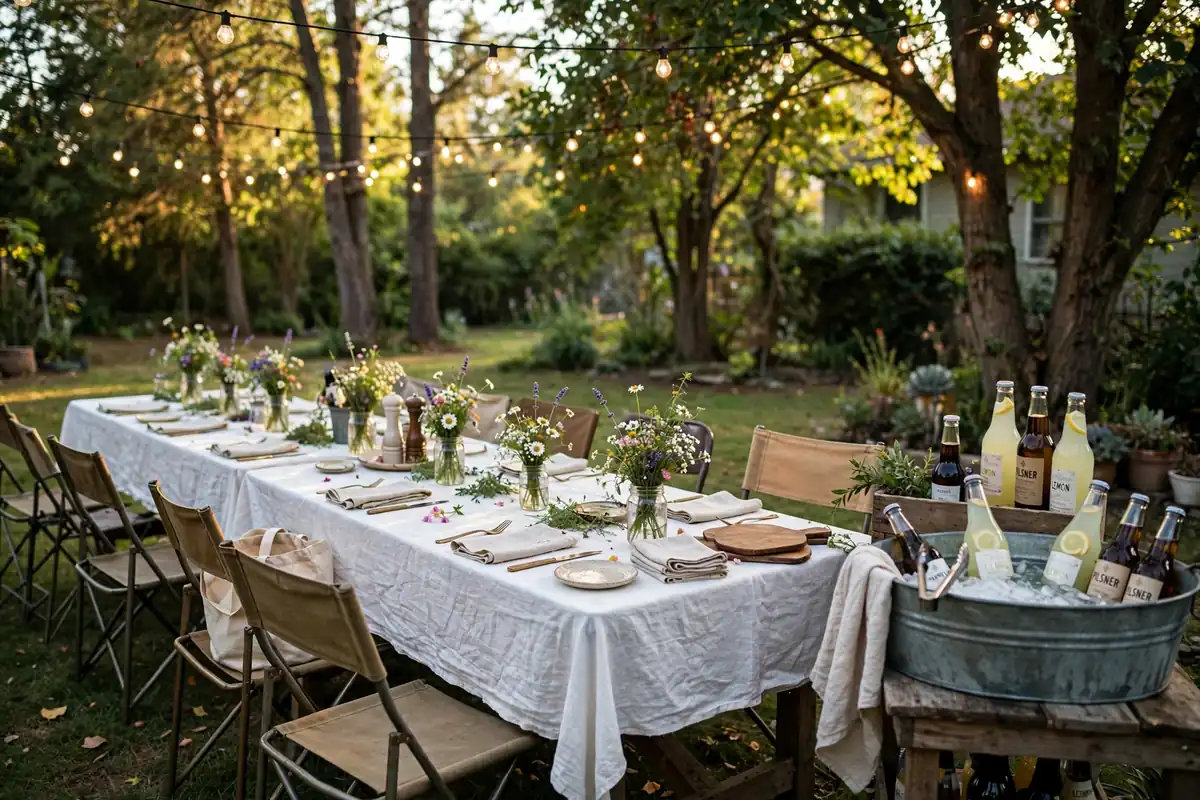
When touring venues, ask four questions: what is the food and beverage minimum, what are the setup and breakdown windows, what decor restrictions apply (open flame, confetti, outside vendors), and what happens if it rains (for anything outdoors). Get the answers in writing before you sign.
5 Engagement Party Theme Ideas
A theme is not mandatory, but it makes every later decision easier: the invitations, the menu, the dress code, and the decor all follow from it. Here are five themes that work at different budgets, each with the specifics you need to pull it off.
1. Garden party
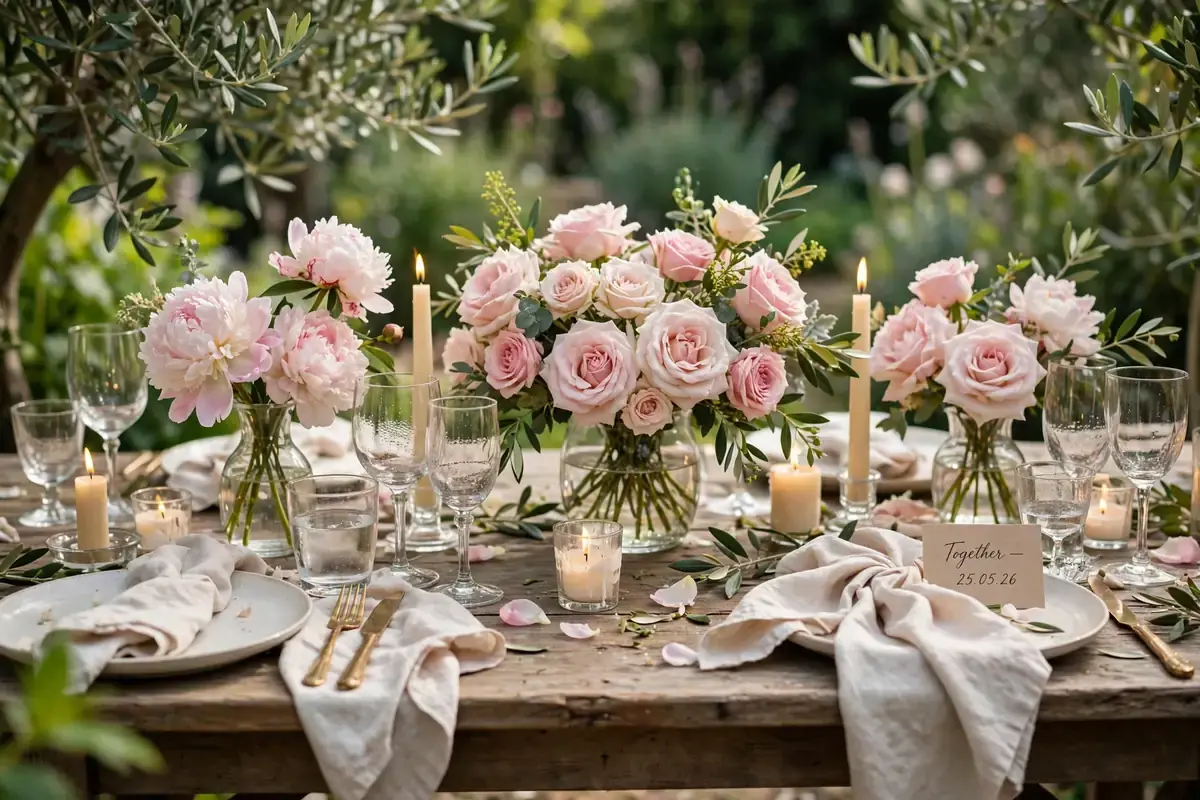
Pastel florals, a long table under string lights, and a menu of tea sandwiches, fruit, and lemonade spiked with elderflower. Dress code: sundresses and linen suits. Best in spring or early fall. Budget tip: buy flowers from a farmer’s market the morning of the party instead of ordering arrangements.
2. Rooftop cocktail hour
City skyline, a signature cocktail named after the couple, passed appetizers, and a jazz playlist. Dress code: cocktail attire. Book a rooftop bar’s semi-private section rather than renting the whole roof; most venues offer packages for 30 to 50 guests that include the space with a drink minimum.

3. Backyard barbecue
Smoked brisket or grilled burgers, lawn games (cornhole, giant Jenga), coolers of beer, and a s’mores station after dark. Dress code: casual, and say so explicitly so no one overdresses. The most budget-friendly theme on this list and often the most fun.
4. Restaurant celebration
A private room, a family-style Italian or tapas dinner, and a champagne toast. Dress code: dressy casual to cocktail. The easiest theme to execute because the venue handles food, service, and cleanup. Confirm the room’s AV setup if you want a short slideshow of the couple.
5. Champagne brunch
Quiche, a waffle bar, mimosas and bellinis, and a flower-arranging station as the activity. Dress code: brunch chic. Ideal for Sunday afternoons and for guest lists heavy on family. Brunch pricing is almost always lower than dinner pricing at the same venue.

6. Wine and cheese night
A guided tasting of four to six wines with a cheese and charcuterie spread, hosted at home or in a wine bar’s private room. Dress code: smart casual. Ask a local wine shop to run the tasting; many do it for the cost of the bottles plus a small fee. Works beautifully for fall and winter engagements.
7. Holiday-season celebration
If the proposal happened in November or December, lean into it: a tree-trimmed living room or a restaurant decked for the holidays, mulled wine, and a cookie-decorating station. Dress code: festive cocktail. The decor is half done for you, which keeps costs down, and out-of-town family is often already traveling.
The Engagement Party Planning Timeline
Work this countdown from the party date backward. Adjust the lead times for larger or more formal events.
Two to three months out
- Confirm the host and who is paying for what
- Set the total budget and lock the date
- Choose the format and book the venue
- Draft the guest list and run it past the couple
- Pick a theme if you are using one
One month out
- Send invitations (four to six weeks of notice is the standard)
- Book vendors: caterer, florist, rentals, photographer if hiring one
- Plan the menu and the bar (use the drink math below)
- Order decor, favors, and party supplies
- Decide who is giving toasts and give them a heads-up
Two weeks out
- Follow up on RSVPs and give the caterer a final headcount
- Build the party playlist or confirm the DJ’s song list
- Buy perishables-free supplies: napkins, candles, favors, signage
- Confirm vendor arrival times in writing
Week of the party
- Confirm the timeline with every vendor by text or email
- Prep anything DIY: favors, signage, photo displays
- Charge the speaker, confirm the ice delivery, clear fridge space
- Share the day-of run sheet with anyone helping (template below)
Day of
A relaxed three-hour evening run sheet looks like this:
| Time | What happens |
|---|---|
| 1 hour before | Setup complete, music on, drinks iced, host dressed |
| 6:00 PM | Guests arrive, welcome drinks |
| 6:45 PM | Food served |
| 7:30 PM | Toasts (keep the whole block under 10 minutes) |
| 7:45 PM | Game, activity, or mingling |
| 8:15 PM | Dessert and coffee |
| 9:00 PM | Party wraps, thank guests at the door |
If you are the couple and this timeline has you thinking about the bigger planning road ahead, our wedding planning checklist picks up right where the engagement party leaves off.
Engagement Party Games and Activities
Games are optional, but one or two low-key activities solve the biggest social problem of the night: two families meeting for the first time with nothing to talk about. Keep them short, voluntary, and never embarrassing.
Couples trivia
Ten questions about the couple (where they met, first date, who said “I love you” first), answered on cards or by show of hands. The couple reveals the answers. Takes fifteen minutes and gives both families instant conversation material.
The advice jar
Set out cards and a jar labeled “Advice for the Newly Engaged.” Guests write marriage advice, date-night ideas, or predictions. The couple reads them later. Costs almost nothing and produces a keepsake.
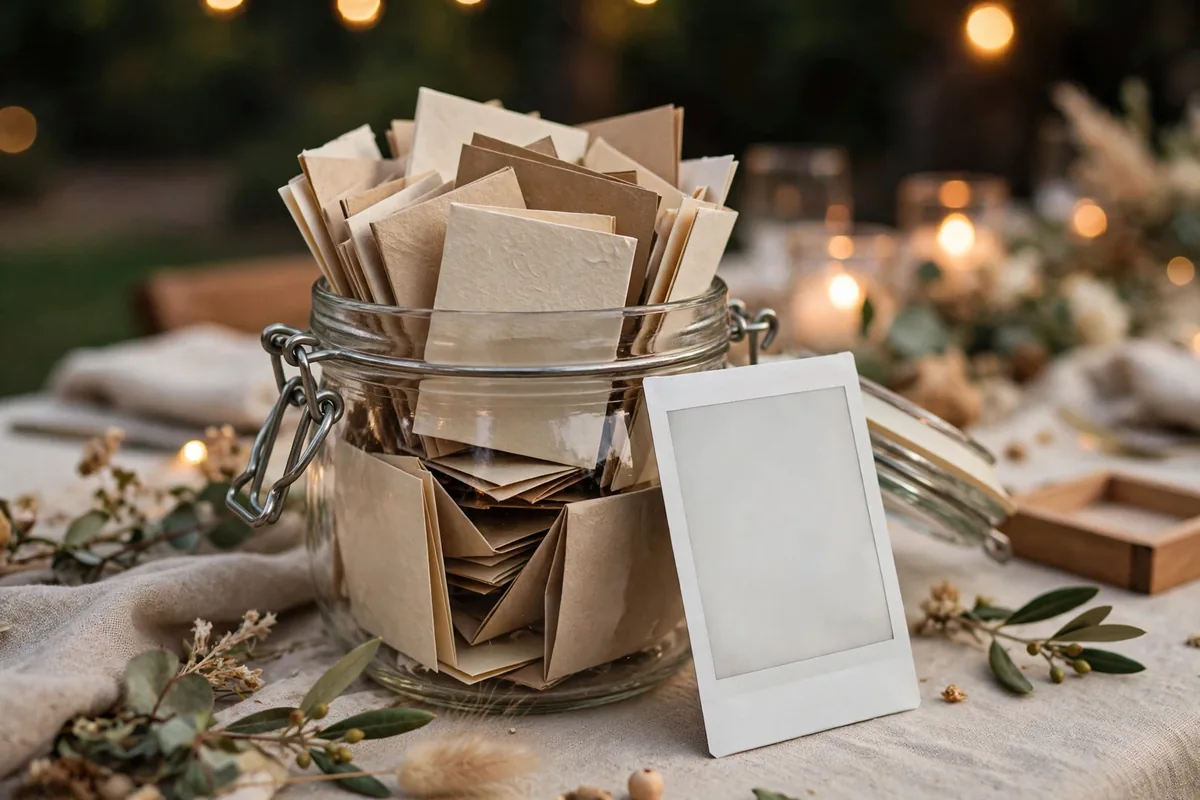
Photo guest book
A Polaroid or instant camera plus a blank book. Guests snap a photo, stick it in, and write a note. It doubles as the evening’s activity and the couple’s favor.
Lawn games (outdoor parties)
Cornhole, giant Jenga, or bocce running quietly in a corner. No organization needed, people drift in and out, and it fills the natural lulls between food and toasts.
One rule for all of it: never force participation. Announce the activity once, let people join or skip freely, and end it while it is still fun.
Food, Drinks, and the Toast
Match the menu to the format
Afternoon party: sandwiches, salads, fruit, pastries, cheese boards, and light cocktails. No one expects a full meal at 2 PM.
Evening party: passed appetizers, small plates, or a family-style dinner. Pizza and tacos are completely acceptable for casual crowds; guests remember good food, not fancy food.
Cocktail party: choose food people can eat standing up: crostini, mini sliders, skewers, flatbreads, and small desserts. Plan 6 to 8 bites per person for a two to three hour party.

Bar math that works
For a three-hour party, plan on two drinks per guest for the first hour and one per hour after. For 40 guests, that is roughly 160 drinks: a workable split is 40% beer, 40% wine, and 20% for a signature cocktail batch. Always stock non-alcoholic options at the same visibility as the alcohol: sparkling water, lemonade, and one fun mocktail. Buy the champagne for the toast separately (one bottle serves about six to eight toast pours) and keep it chilled until toast time.
Three easy signature cocktails
A signature cocktail adds personality for the price of one batch recipe. Mix a large dispenser so no one is playing bartender all night:
- Rosemary grapefruit spritz (spring): grapefruit juice, gin or vodka, rosemary simple syrup, topped with prosecco.
- Blackberry bourbon smash (fall): muddled blackberries, bourbon, lemon juice, and a splash of soda.
- Cranberry moscow mule (winter): vodka, cranberry juice, ginger beer, and lime, served in copper mugs if you have them.
Batch each recipe in a large drink dispenser with a labeled tag showing the name and ingredients. Guests serve themselves, the bar looks intentional, and you skip the cost of a bartender.
Do you need a cake?
Not necessarily. Cupcakes, cookies, doughnuts, macarons, or a dessert board all work, and a small cake still creates a nice photo moment without feeling wedding-like. Match the dessert to the party’s formality, not the other way around.
Toast tips that keep it short
The flow that works: the host welcomes everyone, one or two short toasts follow (a parent or a best friend), and the couple closes by thanking the host and the guests. That is it. Engagement party toasts are not rehearsal-dinner speeches.
Use the three-part structure: one sentence of welcome or thanks, one short story or observation about the couple (30 seconds, kind and positive, nothing embarrassing), and one sentence raising the glass. Aim for 60 to 90 seconds per speaker and keep the whole toast block under ten minutes. If you are speaking, write three bullet points on your phone, not a script. Reading a full speech at an engagement party feels stiff; glancing at bullets feels warm.

Invitations and Gift Etiquette
Sending the invitations
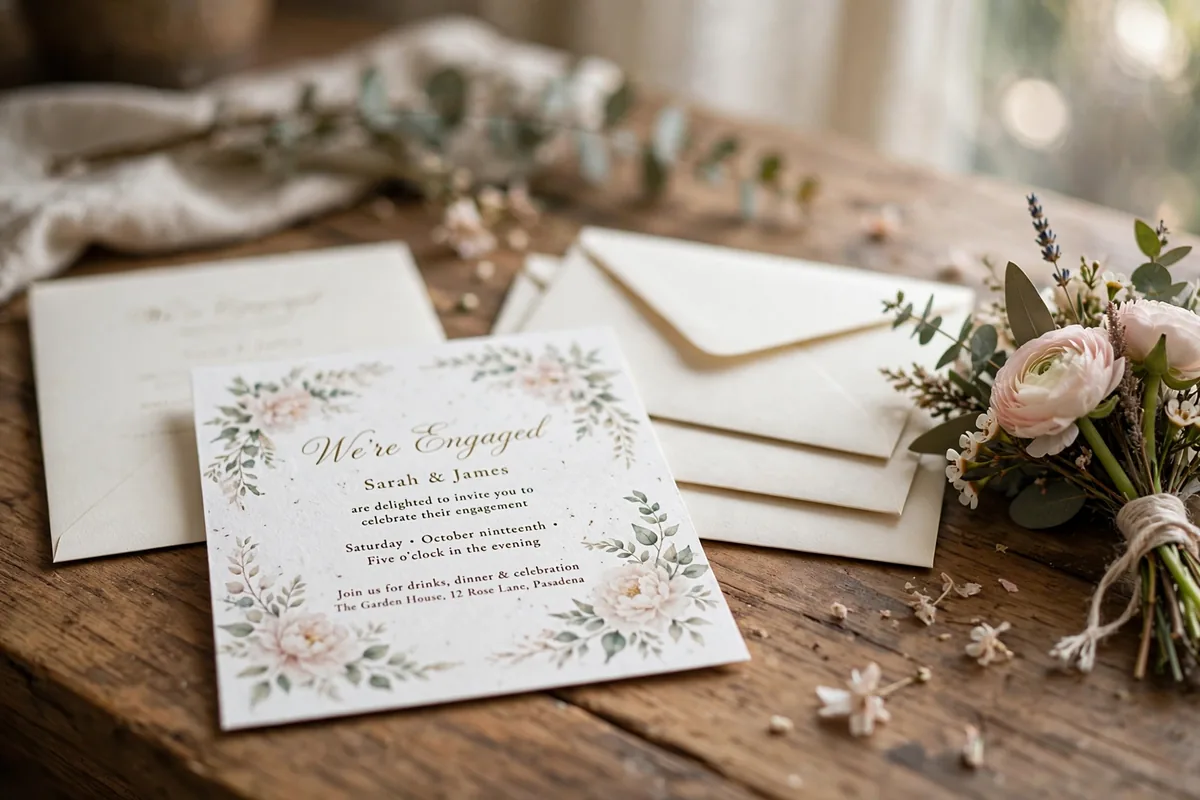
Send invitations four to six weeks before the party. Printed cards suit formal parties; digital invitations (Paperless Post, Evite, or even a well-designed group message) suit casual ones. Include the essentials: the couple’s names, date, time, venue address, dress code, RSVP date and contact, and who is hosting. A simple gift line removes awkwardness: “Your presence is the present, no gifts please.”
The gift rules
Gifts are optional at engagement parties. Etiquette experts agree: unlike showers and weddings, the engagement party is not a gift-driven event. Guests who want to bring something typically bring a bottle of wine, champagne, or a small sentimental gift. If the couple is hosting the party themselves, the invitation should definitely say “no gifts please” so it does not look like a gift grab.
Never print registry information on the engagement party invitation. Share registry details only when a guest asks directly. If you are the couple, have the registry set up before the party anyway; some guests will want to send a gift ahead of time, and having a few options ready makes it easy for them.
Thank-you notes
Send thank-you notes to everyone who attended, especially anyone who brought a gift, no later than one month after the party. If someone hosted the party for you, a handwritten note plus a small gift (a bottle of their favorite wine, a restaurant gift card) is the right gesture. Keep a notepad at the party to track who brought what; it takes thirty seconds in the moment and saves real embarrassment later.
What to Wear
For the couple
This is the fun part. The couple should dress one notch above the party’s formality: if it is a backyard barbecue, wear the nicest casual outfit you own; if it is a rooftop cocktail party, go full cocktail attire. White is fair game for the engaged partner at an engagement party (unlike at someone else’s wedding), and it photographs beautifully. The key rule: coordinate with each other, not match. Complementary colors and similar formality levels look better in photos than identical outfits.

For guests
Follow the dress code on the invitation. No dress code listed? Default to the venue: a restaurant dinner means dressy casual or cocktail attire, a backyard party means sundresses and button-downs, a brunch means brunch chic. When in doubt, it is better to be slightly overdressed than underdressed. Avoid white if the engaged partner is wearing it (ask the host if you are unsure), and skip anything you would wear to an actual wedding, like floor-length gowns or black tie.
For the host
Wear something polished but practical. You will be on your feet most of the event making sure everything runs smoothly, so choose comfortable shoes and an outfit with pockets. Do not outshine the couple; this is their spotlight.
5 Mistakes That Ruin Engagement Parties
Mistake 1: Inviting people who are not invited to the wedding
The golden rule exists for a reason. Every year, couples invite coworkers or distant relatives to the engagement party and then face an impossible choice: expand the wedding or have an awful conversation. Decide the wedding list first, then cut the party list from it.
Mistake 2: Spending wedding money on the party
The engagement party should feel easier than the wedding, not like wedding planning started early. Cap the party budget as a fixed line item and protect the wedding fund. A $500 backyard party with people you love beats a $5,000 event that stresses you out for months.
Mistake 3: Treating it like a mini wedding
Long speeches, a seating chart, a first dance, a bouquet toss: none of this belongs at an engagement party. The party is a celebration, not a rehearsal. Keep the structure light and let people mingle.

Mistake 4: Forgetting dietary needs
Ask about allergies and dietary restrictions on the RSVP. At a 40-person party, you will almost certainly have a vegetarian, a gluten-free guest, or a nut allergy. Label the food, keep one clearly safe option, and tell the caterer in advance. This costs nothing and prevents a real problem.
Mistake 5: No plan for the toast moment
The single most awkward engagement party moment is the toast that never quite happens: the host keeps meaning to gather everyone, the music stays loud, half the guests miss it. Put the toast on the run sheet at a fixed time, have the host or DJ announce it, and lower the music. Ten minutes of structure saves the evening’s centerpiece.
What About a Second Engagement Party?
It is increasingly common, especially when families live in different states. One partner’s parents host in their city, the other partner’s family hosts in theirs, and close friends might throw a third casual gathering. There is nothing wrong with multiple celebrations, but run them by the same rules.
Keep each party’s guest list separate so no one is expected to travel to both. Scale each event to its audience: the big family party can be the formal one, the friends gathering can be a bar night. And apply the golden rule per party: everyone at any engagement party must be invited to the wedding. Multiple parties do not create a loophole for inviting wedding-excluded guests to “just the small one.”
Budget-wise, treat the parties as one combined line item. Two $800 parties are a $1,600 engagement-party budget, not two separate $800 decisions. The wedding fund does not care how many parties there were.
After the Party: What Comes Next
The engagement party is the starting gun, not the finish line. In the week after the party, do three things while the momentum is fresh. First, send the thank-you notes within the month, as covered above. Second, lock your wedding date if you have not already; every vendor conversation gets easier once the date is real. Third, set the total wedding budget before you book anything, so the engagement party spending stays in its lane.
Then the real planning begins: venues, vendors, and the long checklist that carries you to the wedding day. It is a bigger project than the party, but you have already proven you can throw a great event. The party was practice.
Engagement Party FAQ
Do you have to have an engagement party?
No. It is completely optional, and many couples skip it, especially with short engagements, destination weddings, or tight budgets. That said, it is the only pre-wedding event designed for both families to meet in a relaxed setting, which makes it functionally valuable even when it is not traditional.
How long should an engagement party last?
Two to three hours is ideal. Two hours suits a brunch or afternoon gathering; three hours works for an evening cocktail-style celebration. Shorter than 90 minutes feels rushed, and longer than three hours loses energy unless there is structured entertainment.
Who traditionally pays for the engagement party?
Traditionally the bride’s parents hosted and paid. Today the rule is simpler: the host pays, whoever the host is. That is often the couple themselves, one or both sets of parents, or close friends. Whoever offers to throw the party is signing up to cover the cost.
Do guests bring gifts to an engagement party?
Gifts are optional and not expected. Guests who want to bring something usually choose a bottle of wine, champagne, or a small sentimental gift. Never print registry details on the invitation; share them only when asked.
How far in advance should you plan an engagement party?
Four to six weeks of planning time is enough for most parties. Larger events, destination gatherings, or holiday-weekend dates need eight to twelve weeks so guests get proper notice and you can secure the venue and vendors.