Who Buys the Groom’s Ring? Rules Explained

Tradition has a clear answer, and modern couples have a different one. So who buys the groom’s ring? Traditionally, the bride buys the groom’s wedding band. The groom buys the engagement ring and the bride’s wedding band, and the exchange is reciprocal: each partner gives the other a ring. Today, most couples in the United States do something simpler. They shop together, buy both bands from one shared budget, and split the cost however fits their finances.
This guide explains the tradition properly, shows the full traditional ring split in one table, covers how modern couples actually handle it, gives real US prices for groom’s bands by metal, and walks through the practical decisions: when to buy, how to match metals, what to do when a parent offers to pay, and how same-sex couples approach the question. Every price, custom, and timeline here is for weddings in the United States.
Who Buys the Groom’s Ring: The Short Answer
Here is the answer in one table, tradition on the left and modern practice on the right.
| Ring | Traditional buyer | What most couples do today |
|---|---|---|
| Engagement ring | The groom | Whoever proposes buys it |
| Groom’s wedding band | The bride (or her family) | Bought together from a shared budget |
| Bride’s wedding band | The groom | Bought together from a shared budget |
| Both bands combined | Split between the two families | Split between the couple, or gifted by family |
If you follow tradition, the bride buys the groom’s ring. If you follow modern practice, you buy both rings together. Neither choice is wrong, and nobody at the wedding will know or care which one you picked. What matters is that the decision feels fair to both of you and fits your budget.
Who Buys the Groom’s Ring: The Tradition Explained
The tradition comes from a time when wedding expenses were divided by family, not by couple. The bride’s family hosted and paid for most of the wedding, and the groom’s family paid for a handful of specific costs, including the rehearsal dinner and the honeymoon. Rings were part of the same split. The groom bought the engagement ring, often saving for months, and presented it with the proposal. The bride answered that gesture by buying his wedding band, and he bought hers, so each partner gave the other a ring at the altar.

The symbolism is what kept the tradition alive long after the old family economics faded. The bride buying the groom’s ring was a reciprocal promise: he gave her a ring when he asked, and she gave him one when she answered. It was never really about the money. It was about the exchange. That is why the tradition still appeals to couples who otherwise split everything evenly. Buying each other’s rings feels more romantic than splitting a receipt, even when the money comes from the same joint account.
The custom is rooted in Western, mostly American and British, wedding practice from the nineteenth and twentieth centuries. It was never universal. In many cultures, wedding rings are not central to the ceremony at all, and in others the families buy both rings together. Treat the tradition as a starting point, not a rule.
How Modern Couples Handle Who Buys the Groom’s Ring
Modern couples in the United States mostly choose one of five approaches. A 2023 survey by The Knot found that nearly 60 percent of couples contribute jointly to their wedding budgets, including jewelry, and about 48 percent split all wedding expenses. Rings are no exception. Here are the five approaches, with who they suit best.

Each partner buys the other’s ring. The traditional approach, kept for the symbolism. It works well when both partners want the surprise of choosing a ring for the other, and when both bands cost roughly the same. It gets awkward when one band costs $200 and the other costs $2,000, so couples who pick this route usually agree on a budget range first.
Buy both bands together from one budget. The most common modern approach. You shop together, pick both rings, and pay from your shared wedding budget. It makes matching metals and styles easy, and nobody feels they got the cheaper or more expensive deal. This is the approach most jewelers in the United States expect now.
Split the total cost evenly. Same as buying together, but with a deliberate 50-50 split even if you pay from separate accounts. It suits couples who keep their finances separate but want the ring purchase to feel equal.
The groom buys his own ring. Some grooms prefer this, especially if they have strong opinions about metal, width, comfort fit, or a specific style like tungsten or titanium. It suits couples who value autonomy over symbolism, and it is more common than people think.
A parent or family member pays. In some families, a parent buys the rings as a wedding gift, or contributes part of the cost. This is a generous gesture and a normal one, especially when a parent wants to give something lasting. Accept it graciously if it comes with no strings attached, and agree beforehand on who chooses the style.
Who Buys the Groom’s Ring in Same-Sex Weddings
In same-sex weddings, the old bride-buys-his and groom-buys-hers split simply does not apply, and couples decide together. The most common approach is buying both rings from a shared budget, exactly like the modern approach above. Some couples keep a version of the tradition by each buying the other’s ring, which preserves the reciprocal symbolism without any gendered roles. Others split the total evenly.
The practical advice is the same for every couple: agree on the budget first, shop together or surprise each other by mutual agreement, and match the metals if you want a coordinated look. No guest, vendor, or family member will expect a traditional gendered split at a same-sex wedding, and any jeweler you visit will be used to couples deciding together.
Who Buys the Groom’s Ring: How Much Does a Groom’s Wedding Band Cost
A groom’s band usually costs less than a bride’s band, because it is typically a plain metal band without stones. The average men’s wedding band in the United States runs roughly $500 to $600, but the range is wide because the metal makes most of the difference.
| Metal | Typical price range | Best for |
|---|---|---|
| Stainless steel | $50 to $200 | Tight budgets, a backup or travel ring |
| Tungsten | $100 to $300 | Scratch resistance, modern look, active jobs |
| Titanium | $150 to $400 | Lightweight, hypoallergenic, comfort fit |
| 14k gold | $400 to $1,200 | Classic look, easy to resize and repair |
| 18k gold | $600 to $2,000 | Richer color, softer metal, traditional feel |
| Palladium | $800 to $1,800 | Platinum look, lighter weight, lower price |
| Platinum | $1,000 to $2,500+ | Heirloom quality, hardest wearing, hypoallergenic |
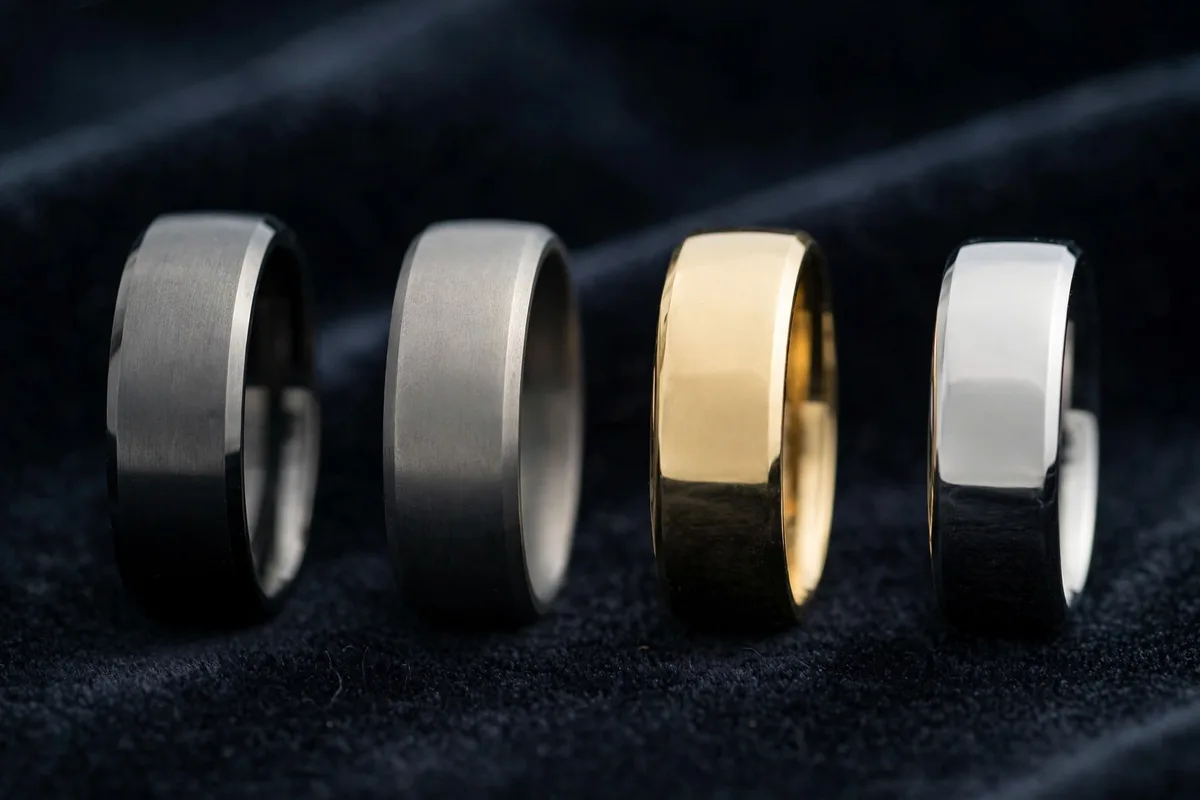
Diamonds or other stones, engraving, and a comfort-fit interior each add to the price. A plain tungsten band can cost under $150, while a platinum band with a diamond inlay can pass $2,000. Set the budget before you shop, not after you fall in love with a ring in the case. And remember that the band is only part of the jewelry budget. The engagement ring usually costs far more, and the bride’s band often costs more than the groom’s because it may include stones or match an engagement ring setting. Our guide to the wedding budget breakdown shows where rings usually sit in a full US wedding budget.
Should the Rings Match
Matching bands are traditional and they photograph beautifully, but they are not required. Couples match in three ways: same metal, same width, or same design details like a brushed finish or a beveled edge. Matching the metal is the most common choice, because two rings in the same gold or platinum look like a set even if the widths differ. A groom who works with his hands might choose a wider, heavier band in the same metal as his partner’s slimmer ring, and the pair still looks intentional.
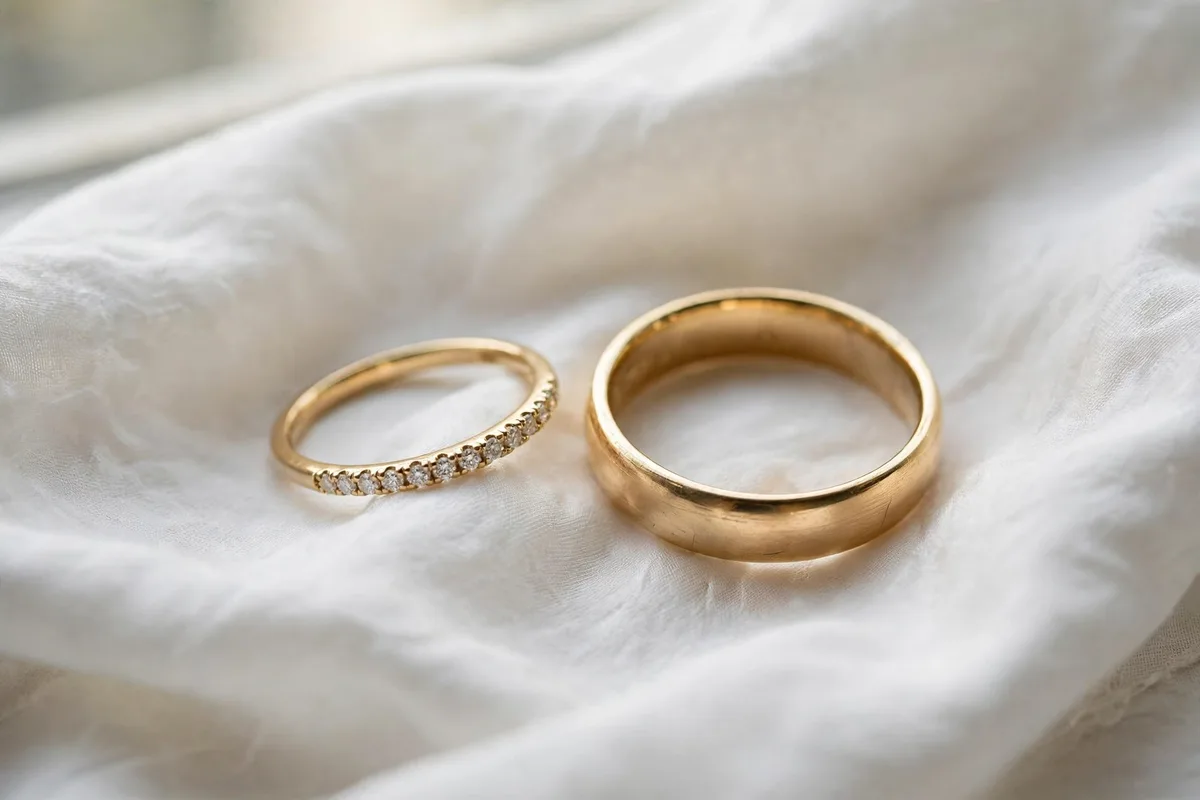
Mismatched rings are completely fine too. Some grooms prefer tungsten or titanium while their partner wears gold, and the rings simply reflect two different tastes. If you do mix metals, keep one element consistent, like the finish or the profile, so the rings feel related rather than random. The only real rule is comfort: the groom will wear this ring every day, so fit matters more than matching.
Who Buys the Groom’s Ring and When to Buy It
Buy the groom’s band two to three months before the wedding. That leaves time for sizing, engraving, and any custom work, which usually takes four to six weeks. Order earlier if the ring is custom-made, if it needs stones set, or if you are buying during the busy spring and fall wedding seasons when jewelers run longer lead times.

Get sized properly, and get sized more than once. Finger size changes with temperature, time of day, and activity, so visit the jeweler in the afternoon when your hands are warm, and try the exact width you plan to buy, because wider bands fit tighter than narrow ones. If the groom works outdoors or with his hands, consider a comfort-fit band, which is rounded inside and slides on more easily. Ask about the jeweler’s resizing and exchange policy before you pay, and keep the receipt and any warranty paperwork with your wedding documents.
What If a Parent Wants to Pay
When a parent offers to buy the rings, it is usually a genuine gift, and accepting it is fine. A few ground rules keep it smooth. First, agree on who chooses the rings. The couple should pick the style, even if a parent pays, because the couple wears them for life. Second, set a budget together before shopping, so nobody is embarrassed at the counter. Third, say thank you properly, in person and in a note, because a ring is a lasting gift and parents remember how it was received.
If a parent’s offer comes with strong opinions about style or cost, it is okay to decline politely and pay for the rings yourselves. A gift that creates tension is not worth it. The same applies to any family contribution to the wedding: our groom wedding checklist covers the groom’s other responsibilities and costs, and it helps to see the full picture before deciding which expenses to accept help with.
Cultural Variations in Who Buys the Groom’s Ring
Ring-buying customs vary widely, and the American tradition is only one version. In the United Kingdom, the custom is similar: the bride traditionally buys the groom’s ring and the groom buys the bride’s, though modern British couples also increasingly buy together. In many Latin American traditions, the couple exchanges rings called arras, sometimes as part of a set of thirteen coins symbolizing prosperity, and the purchase is often shared. In parts of Europe, couples commonly buy both rings together and split the cost. In many South Asian, East Asian, and African traditions, wedding rings are either not central to the ceremony or are purchased by the families as part of a larger exchange of gifts.
If your families come from different traditions, talk about it early and pick the approach that respects both sides. A blended approach is common: follow one family’s custom for the ceremony and the other family’s custom for the cost split, or simply buy the rings together and let the tradition live in the exchange itself rather than in who paid. The ceremony is where the symbolism happens, not at the checkout.
How to Decide Who Buys the Groom’s Ring Without the Awkwardness
Most couples find the ring conversation awkward only because nobody starts it. Start it with three simple questions. First, what is the total budget for both rings, including the engagement ring if it is not bought yet? Second, do we want the tradition of buying each other’s rings, or do we want to shop together? Third, who is paying, and from which account? Answer those three, and the rest is shopping.
A few practical tips make the conversation easier. Shop together at least once, even if you plan to surprise each other with the final choice, so you both know what the other likes. Try rings on in person before ordering online, because photos lie about weight and width. Agree on a ceiling price before you walk into a store, and tell the jeweler your budget upfront so they show you the right case. Finally, remember that the ring is a symbol, not a score. A $200 tungsten band worn every day means more than a $2,000 ring that sits in a drawer because it is uncomfortable.
Frequently Asked Questions About Who Buys the Groom’s Ring
Who buys the groom’s ring traditionally? Traditionally, the bride buys the groom’s wedding band, while the groom buys the engagement ring and the bride’s wedding band. The exchange is reciprocal: each partner gives the other a ring.
Does the bride buy the groom’s ring today? Some brides still do, for the symbolism, but most modern couples in the United States buy both bands together from a shared budget. A 2023 survey by The Knot found that nearly 60 percent of couples contribute jointly to wedding budgets, including jewelry.
Does the groom buy his own wedding ring? Not usually, but some grooms do, especially if they have specific preferences about metal, width, or fit. It is a normal choice and suits couples who prefer autonomy over tradition.
Who buys the engagement ring? Whoever proposes buys the engagement ring. In a traditional proposal, that is the groom. In a mutual or same-sex proposal, the couple decides together, and some couples buy engagement rings for each other.
How much should a groom’s wedding band cost? The average men’s band in the United States runs roughly $500 to $600. Tungsten and titanium bands cost $100 to $400, gold bands $400 to $2,000, and platinum $1,000 to $2,500 or more. Stones, engraving, and custom work add to the price.
Do the bride and groom’s rings have to match? No. Matching metals look like a set and photograph well, but mismatched rings are completely fine. If you mix metals, keep one element consistent, like the finish, so the pair feels intentional. Comfort and fit matter more than matching.
When should we buy the groom’s ring? Buy it two to three months before the wedding. Allow four to six weeks for sizing, engraving, or custom work, and longer in the busy spring and fall seasons.
Final Thoughts on Who Buys the Groom’s Ring

Who buys the groom’s ring comes down to one choice: follow the tradition or follow your budget. Tradition says the bride buys his band while he buys hers, a reciprocal exchange that has lasted for generations because the symbolism is genuinely lovely. Modern practice says buy both rings together from a shared budget, which is simpler, fairer, and easier on matching. Either answer is correct, and the only wrong move is letting an unspoken assumption turn into an argument.
Talk about the budget early, shop together at least once, buy two to three months before the wedding, and choose a ring the groom will actually enjoy wearing every day. If you are still sorting out who pays for what across the whole wedding, our guide to engagement party planning is a good next read for the first event where those same questions come up.