
How to Plan a Wedding in 6 Months: A Condensed Timeline (2026)

So you got engaged and you want the wedding this year. Not next year. This year. Maybe you have a deployment coming up, a family member whose health is uncertain, or you are simply done waiting. Whatever the reason, here is the honest truth: six months is enough time to plan a beautiful wedding, but only if you plan differently than couples with a year and a half. If you’re wondering how to plan a wedding in 6 months without losing your mind, this condensed timeline gives you the exact playbook.
The couples who pull this off are not superhuman. They are just decisive. With a six month timeline, you cannot afford three weeks of venue tours or a month of dress shopping paralysis. Every big decision gets made in days, not months, and you accept upfront that your third choice Saturday in October will be a better wedding than your dream venue’s next available date in 2027.
This is the condensed version of our full 12-month wedding planning checklist, rebuilt from scratch for a six month engagement. Same fundamentals, tighter timeline, sharper priorities. For a second opinion, compare with The Knot’s wedding planning checklist to make sure nothing slips through the cracks.
How to Plan a Wedding in 6 Months: Is It Really Enough Time?
Yes, with two conditions. First, you need flexibility on the date. If your heart is set on one specific Saturday in peak season (May, June, September, or October in most of the US), the best venues and photographers may already be booked. Couples who open up to Fridays, Sundays, or off peak months suddenly find wide open calendars. Second, you need to make decisions fast. The six month timeline is really a decision making timeline. The logistics fit fine. The hesitation is what sinks people.
Six months gets harder if you want a fully custom wedding dress (most made to order gowns need 4 to 6 months of production plus 2 to 3 months of alterations), a specific in demand photographer, a live band with a cult following, a guest list over 150, or elaborate DIY decor for every table. None of these are dealbreakers on their own, but stack two or three of them together and the timeline starts cracking.
The 5 Things to Book in the First 30 Days
Weeks one through four are the whole game. Everything after this is details. Book these five in roughly this order, and do not pause between them:
1. Your venue
Nothing else can move until this is locked. Call venues this week, not next month. Tour three at most, then decide. Availability matters more than perfection right now. If you want the biggest shortcut available, look at all inclusive venues that bundle catering, rentals, coordination, and sometimes florals into one package. One contract replaces five or six vendor searches, which is gold on a six month timeline. Before you sign anything, run through these questions to ask a wedding venue so a rushed decision does not become a regretted one.
On a short timeline, mastering how to plan a wedding in 6 months comes down to locking the venue first and letting every other decision follow.
2. Your photographer
Good wedding photographers in the US book 9 to 12 months out for peak Saturdays. You are shopping the leftovers, which sounds discouraging until you realize the leftovers include plenty of excellent photographers who happen to be free on your date. Start inquiring the same week as the venue. Ask for full galleries from real weddings, not just highlight reels, and move on fast if communication is slow. A photographer who takes five days to answer emails now will not get faster by your wedding day.
3. Your wedding dress or suit
If there is one lesson in how to plan a wedding in 6 months, it is this: buy the dress before you fall in love with one that cannot arrive in time.
This is the timeline item that surprises people. A made to order dress typically needs 4 to 6 months for production and another 6 to 8 weeks for alterations, which means a custom order placed today is genuinely risky. Your safe options: buy off the rack, buy a sample gown from a salon (many sell their floor samples at 30 to 50 percent off), or shop designers known for fast turnaround. Suit and tuxedo rentals need far less lead time, usually 2 to 4 weeks, but custom suits need 8 to 10 weeks. Start trying things on in week one either way.

4. Your caterer
Couples who lock in catering early find that the rest of how to plan a wedding in 6 months feels surprisingly manageable.
If your venue is not all inclusive, the caterer is next because food drives your rental needs (tables, chairs, linens, kitchen equipment) and your final headcount drives the bill. Book a tasting within the first month. Typical US catering runs $75 to $150 per person for a plated dinner in 2026, so a 100 guest wedding means a $7,500 to $15,000 commitment. This is also where couples on a short timeline bleed money without noticing, so read up on the hidden wedding costs that inflate catering bills, like service charges, gratuity calculated on top of tax, and cake cutting fees.

5. Your entertainment
Any expert on how to plan a wedding in 6 months will tell you to book entertainment the same week as the venue, since the best DJs and bands go first.
DJs and bands set the energy of the entire reception, and the good ones book out early just like photographers. A professional DJ in most US markets costs $1,200 to $2,500; a live band runs $4,000 to $10,000 or more. Lock one in during the first month. If your budget is tight, this is also the vendor most worth downgrading: a great DJ beats a mediocre band every time.
Your Month-by-Month 6-Month Wedding Timeline
Here’s how to plan a wedding in 6 months, month by month: Here is the full condensed timeline in one view. Each month has one big job and a supporting cast of smaller ones. Most couples figuring out how to plan a wedding in 6 months say the overwhelm fades once every month has one clear job.
| Month | Big Job | Key Tasks |
|---|---|---|
| 6 months out | Lock the foundation | Set your budget and guest list. Book venue, photographer, caterer, entertainment. Start dress or suit shopping. Decide whether you need a planner or day of coordinator. |
| 5 months out | Attire and design | Order or buy your dress, veil, and accessories. Order or rent the groom’s attire. Book florist, baker, and hair and makeup artist. Start your gift registry. Choose your color palette and overall style. |
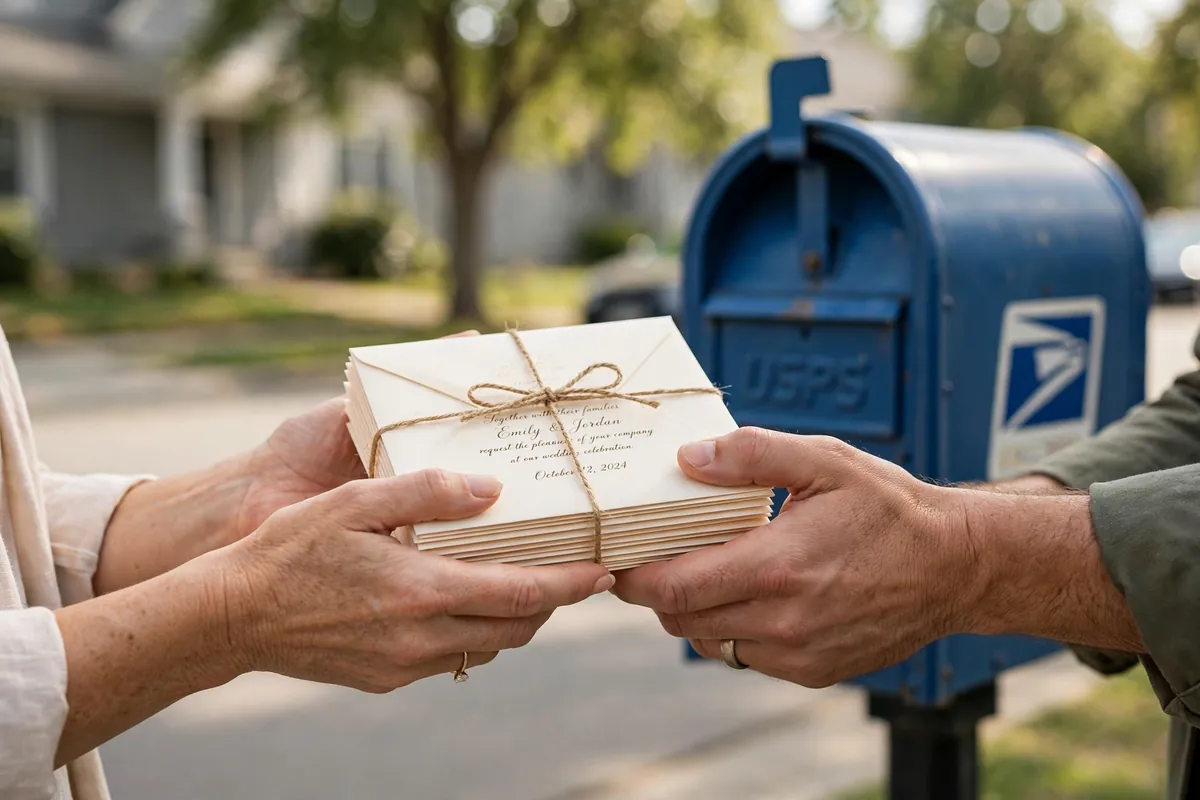
| 4 months out | Invitations and logistics | Order invitations and mail them 8 to 10 weeks before the wedding (on a six month timeline, that is roughly now). Book hotel room blocks. Finalize menu with your caterer. Book rentals if your venue is not all inclusive. Plan the rehearsal dinner. |
| 3 months out | Details and fittings | First dress fitting. Order wedding bands. Write your vows. Book transportation. Finalize ceremony details with your officiant. Plan decor and finalize your florist’s plan. |
| 2 months out | Numbers and confirmations | Collect RSVPs and finalize your headcount. Build your seating chart. Confirm final details with every vendor. Create your wedding day timeline. Have your final dress fitting. |
| 1 month out | Legal and final checks | Get your marriage license (requirements vary by state, and some states have waiting periods, so check early). Pay remaining vendor balances. Pack for the wedding night and honeymoon. Do your hair and makeup trial. |
| Final week | Rehearse and breathe | Hold the ceremony rehearsal and rehearsal dinner. Confirm arrival times with all vendors. Delegate day of tasks to your coordinator, wedding party, or family. Get some sleep. |
What You Can Skip With a 6-Month Engagement
Here is the part nobody tells you: a shorter engagement is not about doing everything faster. It is about doing less, so give yourself permission to cut these without guilt. Knowing how to plan a wedding in 6 months means knowing what to cut, and these are the first things to go:
Save the dates. They are designed for 12 month engagements. With six months, go straight to invitations. If you want a digital heads up for out of town guests, a group text or a simple wedding website update does the job for free.
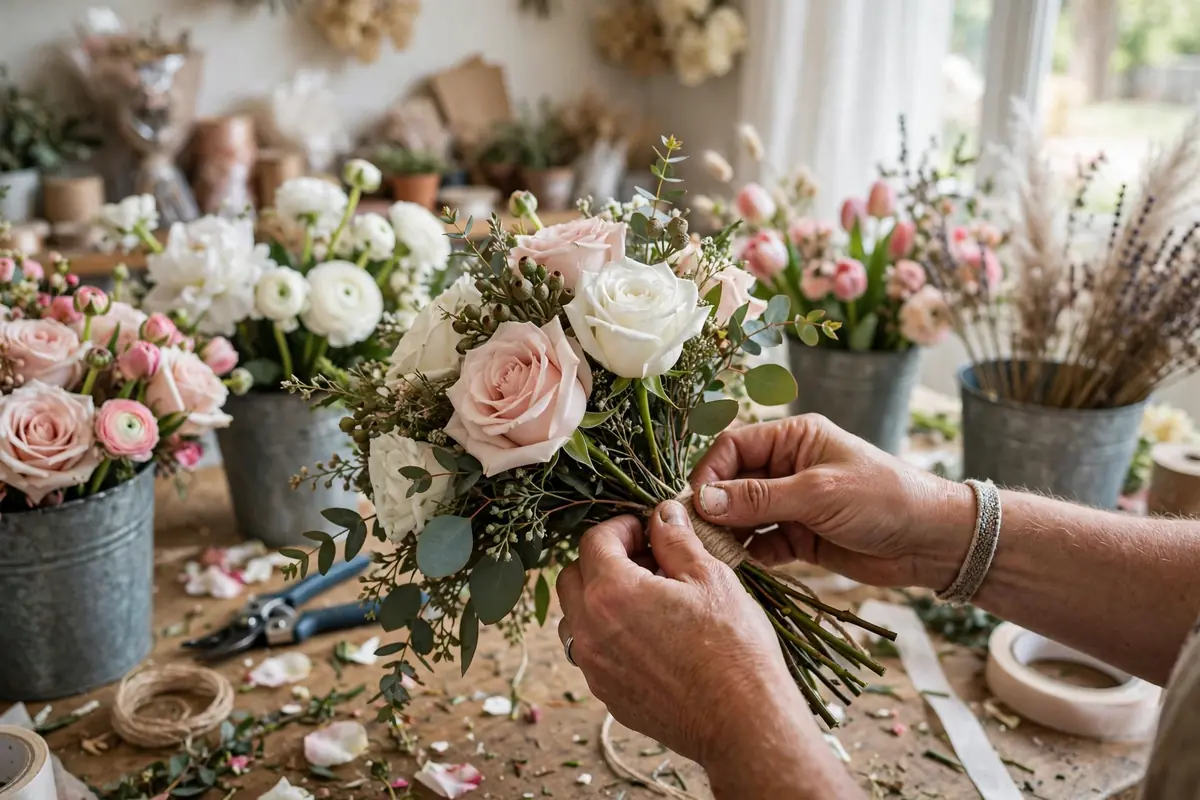
Elaborate DIY projects. Handmade favors for 120 guests, a 40 foot photo garland, calligraphed place cards for everyone. These eat weekends you do not have. Pick one meaningful DIY project at most, or skip them entirely. Nobody remembers the favors.
Engagement photos. Lovely, but optional. If your photographer includes them in the package, great. If not, skip the separate session.
Programs, menus at every seat, and other paper goods. One welcome sign with the order of events replaces printed programs. A single menu board replaces 100 printed menus. Your stationery budget will thank you.
A champagne wall, donut wall, or other trendy installations. They photograph well and cost $500 to $2,000 for about twenty minutes of guest attention. On a compressed timeline, that money and energy belong in your photography, food, or music budget.
6-Month Wedding Tips That Actually Save You Money
A short engagement changes the economics of your wedding. Here is how to work the timeline instead of fighting it:
Embrace the Friday or Sunday. This is the single biggest lever you have. Venues routinely discount non Saturday dates by 10 to 30 percent, and suddenly your first choice venue has availability. A Friday evening wedding with the same vendors costs meaningfully less than the Saturday version.
Ask about rush fees before you commit. Rush alterations on a dress can add $150 to $400. Rush shipping on invitations or attire adds up fast. Get these numbers in writing so they do not ambush your budget in month three.
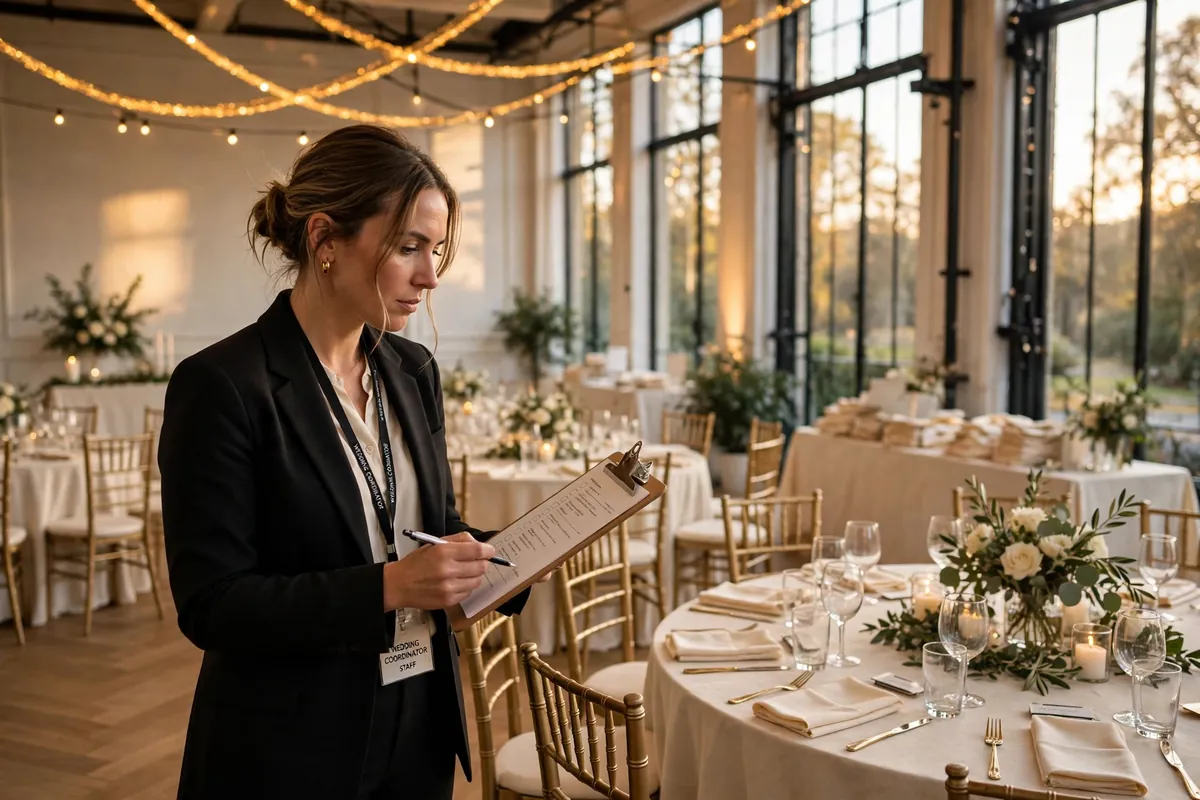
Consider a planner, even a day of coordinator. It feels counterintuitive to spend money when time is short, but a coordinator who has run 200 weddings compresses months of learning into your six. Day of coordination typically costs $1,000 to $2,500 in the US and is the highest ROI purchase on a compressed timeline.
Go digital where it does not matter. Digital RSVPs through your wedding website eliminate stamp costs, speed up your headcount, and save a full mailing cycle you do not have time for. Paper invitations still feel special for the main invite; follow ups can live online. If you want an all-in-one digital helper, WeddingWire’s planning tools bundle a checklist, budget tracker, and vendor manager in one free account.
Keep the guest list honest. Every guest costs you $100 to $200 or more once you add up catering, rentals, and favors. Cutting 20 guests on a short timeline saves $2,000 to $4,000 and, just as important, saves you hours of seating chart and logistics work.
A lean, honest list is the clearest sign you understand how to plan a wedding in 6 months, because every other decision gets easier once the headcount is real.
A Realistic Budget Snapshot for a 6-Month Wedding
The national average US wedding cost in 2026 sits around $30,000 to $35,000, but six month weddings cluster in two camps. Camp one spends less, around $15,000 to $20,000, because the short timeline forces simplicity: smaller guest lists, Friday dates, fewer vendors.
Camp two spends more than average because rush fees, limited venue availability, and decision fatigue lead to premium choices.
Which camp you land in is a choice you make in month six, when you set the budget and the guest list. The couples who write down both numbers first almost always land in camp one. Whichever camp you are aiming for, writing both numbers down early is one of the smartest moves in how to plan a wedding in 6 months without money stress.
The Bottom Line
Planning a wedding in six months is not a lesser version of planning a wedding in eighteen months. It is a different skill: deciding quickly, cutting ruthlessly, and spending your limited time on the five vendors that shape the day.
Book the venue, the photographer, the attire, the food, and the music in the first month, and the remaining five months are genuinely enjoyable. Start there, keep your guest list honest, and do not look back. Learning how to plan a wedding in 6 months comes down to three things: booking big vendors first, skipping the extras, and staying decisive. If this guide to how to plan a wedding in 6 months leaves you with one rule, make it this: momentum beats perfection every time.