
Lace Wedding Dresses: Styles, Prices & Shopping Guide

Lace wedding dresses have been the first choice of American brides for generations, and for good reason. Lace adds texture, romance, and detail that plain fabric simply cannot match, and it works on almost every silhouette, from a fitted mermaid gown to a full ball gown. But not all lace is the same, and the difference between a $300 dress and a $3,000 dress often comes down to the type of lace, how it is applied, and how well the gown is made.
This guide explains the main lace types, the styles they suit best, realistic US prices, and how to shop for lace wedding dresses without overpaying or ordering too late. In short, lace wedding dresses reward careful shopping: compare lace wedding dresses by lace, fit, price, and venue.
Types of Lace Used in Lace Wedding Dresses
The word lace covers a whole family of fabrics, and knowing the names helps you read dress descriptions like a stylist. Here are the types you will see most often in US bridal shops.
Chantilly lace is the classic French lace: fine, soft, and delicate, with a floral pattern on a light net background. It drapes beautifully, which makes it a favorite for sleeves, veils, and soft A-line gowns. Because it is so fine, it usually sits over a lining rather than standing on its own.
Alencon lace is heavier and more structured than Chantilly, with a raised corded outline around each motif. It holds its shape, so it is the go-to lace for structured bodices, ball gowns, and gowns with a defined waist. If you love the look of lace that you can almost feel in a photo, it is usually Alencon.
Guipure lace, sometimes called Venetian lace, has bold, chunky motifs joined by small bars instead of a net background. It looks modern and graphic, and it is a popular choice for boho and contemporary gowns. It is also heavier, so it suits dresses that do not need a lot of drape.
Embroidered applique lace is lace motifs sewn onto another fabric, usually tulle or organza. This is how most modern gowns get their “lace” look: the appliques are placed by hand on the bodice, sleeves, or skirt, which lets the designer control exactly where the detail falls. Many gowns mix applique with a Chantilly or tulle base.
Beaded lace adds beads, sequins, or pearls to any of the laces above. It catches the light beautifully in photos and evening receptions, but it adds weight and cost, and beaded hems are more expensive to alter. Ask how the beading is attached before you buy, because glued beads shed far more easily than sewn ones.
| Lace type | Look and feel | Best for | Price effect |
|---|---|---|---|
| Chantilly | Fine, soft, delicate floral | Sleeves, veils, soft A-lines | Moderate |
| Alencon | Raised, structured, defined motifs | Ball gowns, structured bodices | Moderate to high |
| Guipure | Bold, chunky, modern motifs | Boho and contemporary gowns | Moderate to high |
| Embroidered applique | Motifs placed by hand on tulle | Almost any silhouette | Varies with coverage |
| Beaded lace | Sparkle from beads or sequins | Evening and formal receptions | High, plus higher alteration cost |

Lace Wedding Dress Styles by Silhouette
Lace flatters every body shape, but the way it is used should match the silhouette. A fitted mermaid gown in allover lace looks dramatic and curve-hugging, while the same lace on an A-line gown reads softer and more forgiving. Here is how the most popular styles use lace.
Mermaid and trumpet gowns use lace to celebrate curves. Allover lace or lace appliques over a fitted bodice and flared skirt create a sculpted look, and illusion lace panels at the neckline or back add coverage without hiding the shape. These gowns photograph beautifully but leave little room for last-minute weight changes, so order your true size and plan fittings carefully.
Ball gowns pair lace bodices with full tulle or organza skirts. The lace usually concentrates on the bodice and the top of the skirt, with the rest of the volume coming from layers underneath. This is the classic princess look, and it suits formal church and ballroom weddings best.
A-line gowns are the most versatile lace wedding dresses of all. A lace bodice with a flowing skirt suits petite brides, plus-size brides, and everyone in between, and it works in almost any venue. If you are unsure which silhouette to choose, start with A-line lace and branch out from there.
Sheath and slip gowns use lace as a light overlay, often Chantilly or embroidered applique, over a simple column shape. These are the easiest lace gowns to wear all day, and they are a natural fit for beach, garden, and courthouse weddings. If you want lace without the weight of a big gown, this is your style.
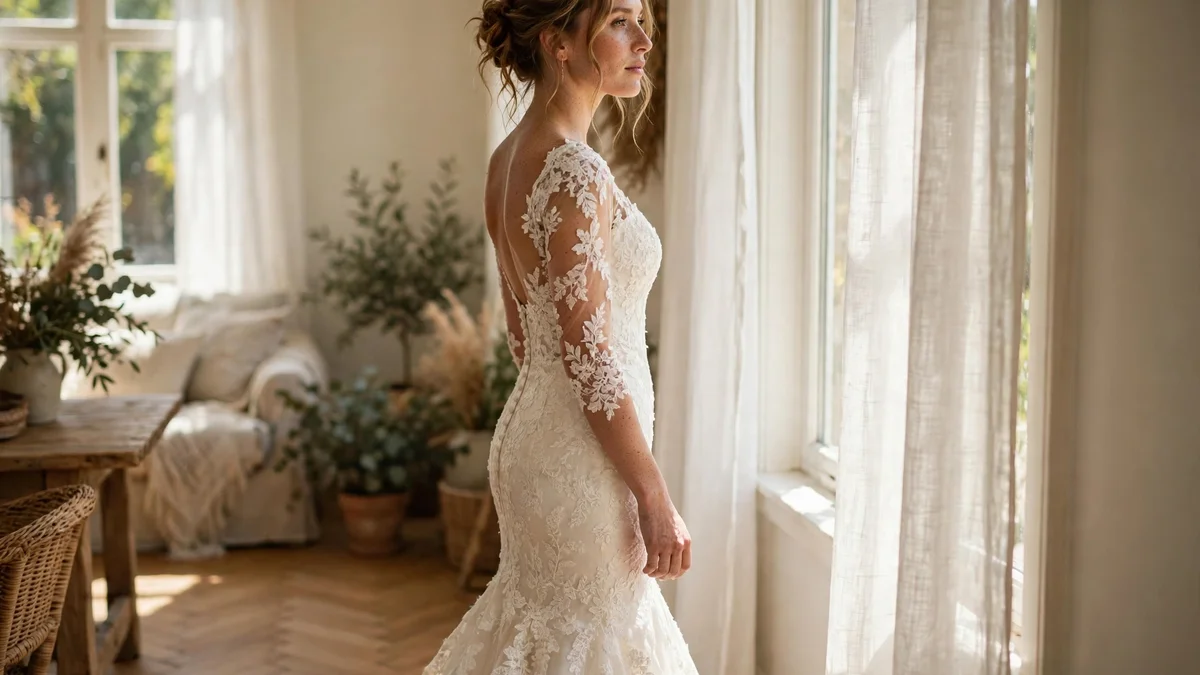
Long-sleeve lace gowns deserve their own mention, because lace sleeves solve two problems at once: they add coverage for a church ceremony and they look romantic in photos. Illusion lace sleeves, where the lace sits on sheer net, give the look of bare arms with the modesty of coverage. They are also the most alteration-sensitive part of a lace gown, so budget extra fitting time.
Lace Wedding Dress Prices in the US
Lace wedding dresses span nearly every budget, and the price ladder below reflects what US brides actually pay in 2026, from national chain stores to designer boutiques. The same silhouette can cost ten times more at the top of the ladder, and the difference is almost always the lace quality, the construction, and the label.
| Price tier | Typical range | What you get |
|---|---|---|
| Budget | $150 to $500 | Machine-made polyester lace, simpler construction, chain stores and online retailers |
| Mid-range | $500 to $1,500 | Better lace and lining, more silhouette choices, national bridal chains and boutiques |
| Boutique | $1,500 to $3,500 | Higher-grade lace, hand-finished appliques, designer labels, boutique service |
| Designer and couture | $3,500 and up | Imported lace, handwork, made-to-order sizing, couture construction |
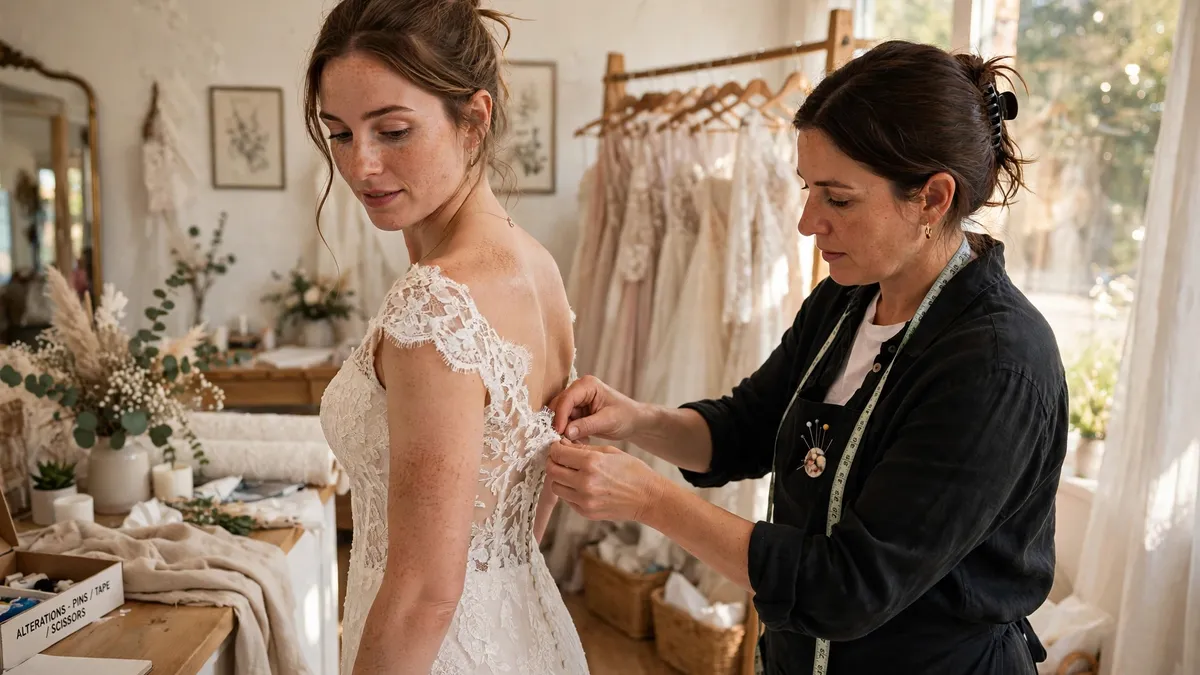
Three costs catch brides by surprise. First, alterations for lace gowns typically run $200 to $800, and beaded or long-sleeve lace costs more because the seamstress must rework the pattern by hand. Second, ordering less than four months before the wedding often triggers a rush fee of $100 to $400.
Third, accessories add up: a lace-edged veil runs $150 to $600, and a matching lace bolero or jacket can add another $200 or more. If you are mapping the whole wedding budget, our guide to wedding dress shopping walks through the full timeline and cost checklist.
Two smart ways to pay less for real lace: sample sales and pre-owned gowns. Boutiques sell floor samples at 30 to 60 percent off, usually in sizes 8 to 12, and a good seamstress can resize most samples by a size or two. Pre-owned lace gowns from reputable resale sites often sell for half their original price, and since lace hides light wear better than plain satin, a once-worn gown can look nearly new after professional cleaning.

Matching Lace Wedding Dresses to Your Venue
The venue should shape your lace choice as much as your taste does. Heavy Alencon and beaded lace can feel hot and heavy at a July beach wedding, while a light Chantilly sheath can look underdressed in a grand ballroom. Use this quick match as a starting point, then trust the mirror.
| Venue | Best lace choices | What to avoid |
|---|---|---|
| Church or cathedral | Alencon, long illusion lace sleeves | Very sheer unlined lace |
| Ballroom or hotel | Beaded lace, Alencon ball gown | Ultra-casual guipure sheaths |
| Garden or outdoor | Chantilly, embroidered applique A-line | Heavy beaded gowns, long trains on grass |
| Beach or destination | Light Chantilly sheath, guipure slip | Heavy ball gowns, long cathedral trains |
| Courthouse or city hall | Short lace sheath, lace tea-length dress | Full ball gowns and long trains |
Color matters too. Most lace wedding dresses come in ivory, white, or champagne, and the undertone changes the whole look. Pure white lace can look harsh on warm skin tones and in photos, while ivory softens the lace pattern and champagne adds warmth. Try all three under natural light, not just boutique lighting, before you decide. Our guide to wedding color palettes can help you match the gown shade to your overall palette.

How to Shop for Lace Wedding Dresses
Start shopping 9 to 12 months before the wedding. That leaves time for ordering (most gowns take 4 to 8 months to arrive), alterations (6 to 8 weeks), and a final fitting two weeks before the day. If your timeline is shorter, ask about rush ordering and off-the-rack options before you fall in love with a dress that cannot arrive in time.
Book two or three appointments, not ten. After the third shop, most brides stop learning and start second-guessing. Bring the undergarments and shoes you plan to wear, or at least the same heel height, because lace gowns fit very differently with the right foundation. Wear minimal makeup so you do not mark the samples, and bring one honest friend, not a committee.
At each appointment, ask five questions. What type of lace is this, and is it imported or domestic? How is the lace attached, by hand or by machine? What does the designer charge for rush delivery? How many fittings are included in the alteration quote? And what is the return or exchange policy if the dress arrives damaged? The answers tell you more about value than the price tag does.
When you try a gown on, check the lace up close. Run your fingers over the seams and look for mismatched patterns at the joins, loose threads, or scratchy netting against your skin. Sit down in the dress, raise your arms, and walk a few steps. A lace gown that only looks good standing still will not survive a full wedding day.
Finally, photograph the dress from the back as well as the front. Many lace gowns have their most beautiful detail at the back: illusion lace panels, button closures, or a lace-edged train. You will see your back in more wedding photos than you expect, so it deserves the same attention as the front.
Caring for a Lace Wedding Dress
Lace needs gentler care than plain fabric, both before and after the wedding. Before the day, store the gown hanging in a breathable garment bag, never in plastic, which traps moisture and can yellow lace. Keep it away from direct sunlight and scented products like perfume and hairspray, which can stain delicate fibers.
On the day, assign one person to bustle duty and practice the bustle at your final fitting. Lace trains catch on heels, chair legs, and dance floors, and a torn lace hem is one of the few wedding-day problems that cannot be fixed with a safety pin. Carry a small sewing kit with white thread and a needle just in case.
After the wedding, have the gown professionally cleaned within a few weeks, and tell the cleaner about every stain you noticed, including champagne, grass, and makeup.
Then decide: preserve it as an heirloom in an acid-free box, sell it, or donate it. Professional preservation costs $250 to $500 in the US and keeps lace from yellowing for decades, which makes it worth considering if the dress has sentimental value. If you are still deciding on the overall wedding look, our guide to wedding guest dress codes explains the formality rules that also apply to choosing your own gown style.
Mistakes to Avoid With Lace Wedding Dresses
The most common mistake is choosing lace for the photo instead of the day. A heavily beaded lace gown looks stunning in a studio shot and exhausting after six hours on your feet, so weigh comfort as heavily as appearance.
The second mistake is ordering the size you wish you were rather than the size you are; bridal sizing runs one to two sizes smaller than street sizing, and taking a lace gown in is far easier than letting it out.
The third mistake is skipping the veil test: hold the veil against the gown in the shop, because a lace veil over a lace gown can look busy, and a plain tulle veil often shows the dress off better. Get these three decisions right, and your lace wedding dress will look as good at midnight as it did walking down the aisle.