
Matron vs Maid of Honor: What’s the Difference?
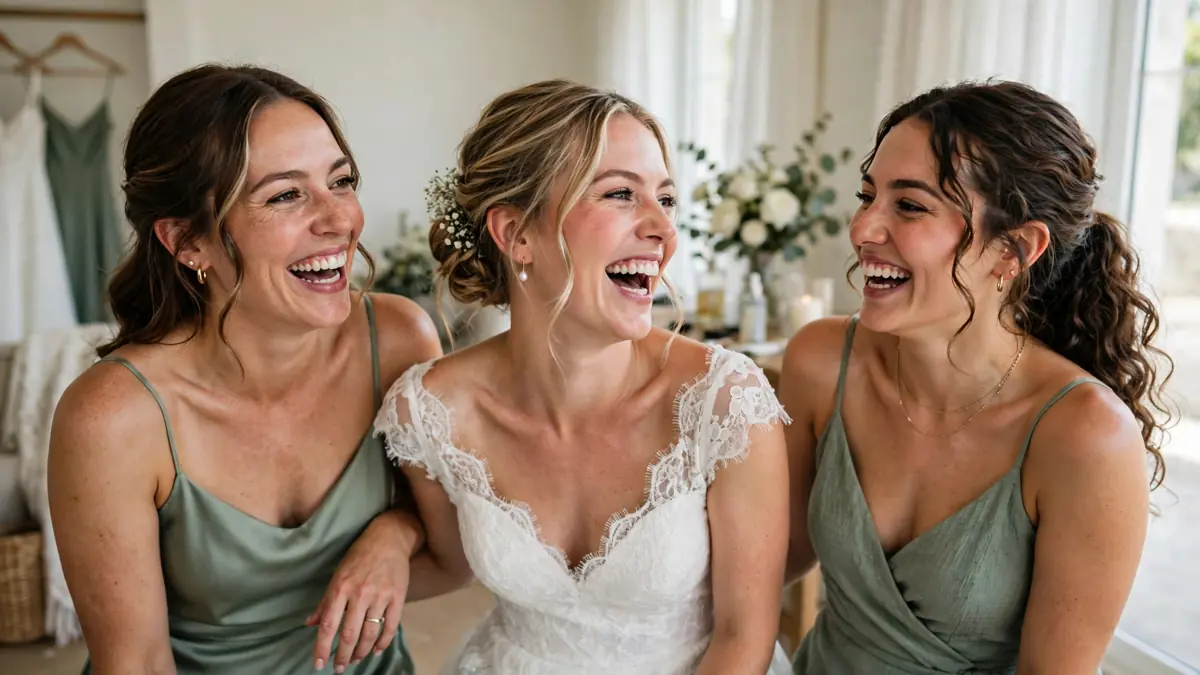
Matron vs maid of honor is one of the first wedding party questions brides ask, and the answer is simpler than most people expect. A maid of honor is unmarried. A matron of honor is married. That is the only real difference. The duties, the importance, and the closeness to the bride are the same either way, and understanding that one fact removes almost all of the stress around choosing.
If you are choosing between your married sister and your unmarried best friend, or wondering whether you can honor both, this guide gives you the full picture: clear definitions, a side by side duty comparison, who actually makes the choice, what to do if your maid of honor gets married before your wedding, and how two honor attendants can share the role without stepping on each other.
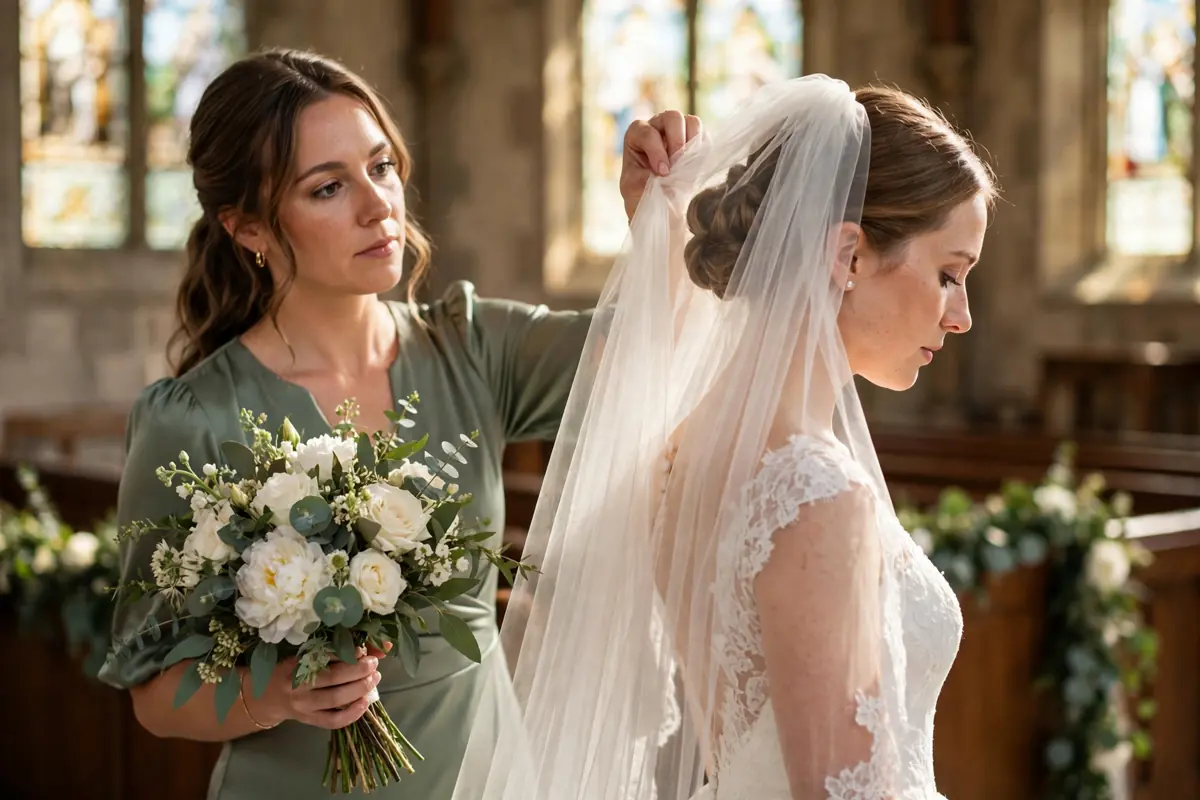
Matron vs Maid of Honor: The One Difference That Matters
The matron vs maid of honor distinction comes down to marital status, nothing more. The word “maid” comes from “maiden,” an older word for an unmarried woman. The word “matron” comes from the Latin “matrona,” meaning a married woman. Neither title is a rank. Neither one outranks the other, and neither one carries more authority over the rest of the bridal party.
In practice, many US couples today use the titles loosely. Some brides call a married chief attendant their maid of honor simply because that is the phrase everyone knows. Others use matron of honor proudly and correctly. Both choices are fine, as long as the person honored understands the role and feels genuinely chosen rather than labeled.
What is a maid of honor?
A maid of honor is the bride’s chief female attendant, and she is unmarried. She is usually the bride’s sister, cousin, or closest friend. She leads the bridal party, helps plan the pre-wedding events, and stands closest to the bride during the ceremony. Her single status has no bearing on how well she can do the job.
What is a matron of honor?
A matron of honor is the bride’s chief female attendant, and she is married. She may be an older sister, a married best friend, or a sister-in-law. Because she has planned a wedding herself, she often brings practical experience: she knows what dress fittings feel like, how long a reception timeline really runs, and which small problems are worth worrying about. That experience is a bonus, not a requirement, and it does not make her role bigger than a maid of honor’s role.
Matron vs Maid of Honor Duties: Side by Side
Almost every duty overlaps. The table below shows how close the two roles really are, and where a matron’s married experience sometimes adds a slightly different flavor.
| Duty | Maid of Honor | Matron of Honor |
|---|---|---|
| Lead the bridal party | Yes, main point of contact | Yes, main point of contact |
| Plan the bridal shower | Usually leads planning | Usually leads planning |
| Plan the bachelorette party | Usually leads planning | Usually leads planning |
| Help with dress shopping | Yes | Yes, often with fitting experience |
| Emotional support | Yes, throughout planning | Yes, plus marriage perspective |
| Wedding day support | Dress, bouquet, timeline | Dress, bouquet, timeline |
| Give a reception speech | Yes | Yes |
| Sign as a witness | Where state law allows | Where state law allows |
| Help after the wedding | Returns, thank yous, keepsakes | Returns, thank yous, keepsakes |

The honest summary is this: if you swapped the titles, the job description would barely change. What changes is the person, her schedule, her strengths, and her relationship with you. Choose the person, not the label.
Matron vs Maid of Honor: Who Chooses: The Bride, Full Stop
The bride chooses her maid or matron of honor. Not her mother, not her future mother-in-law, not family tradition, and not a sense of obligation. This sounds obvious, but it is the point where most wedding party drama starts. A mother may push for a sister. A family may expect the oldest sibling to get the title. A friend may assume she has it because she has known the bride longest.
None of that decides it. The bride should choose the person she trusts most to stay calm under pressure, to tell her the truth kindly, and to show up consistently for months. If that person happens to be married, she is your matron of honor. If she is unmarried, she is your maid of honor. If two people fit that description equally, you can choose both, which we cover below.
When you ask, ask privately and personally, not in a group text and not as an announcement at a party. A short, warm ask works best: say why you chose her, what the role means to you, and that you understand it is a real time commitment. Give her a day or two to say yes honestly, especially if she is balancing work, kids, or a tight budget. A gracious yes after a pause is worth far more than a pressured yes on the spot.
Matron vs Maid of Honor: Can You Have Both a Maid and a Matron of Honor?
Yes, absolutely. Having both a maid of honor and a matron of honor is common in the US, and it solves the hardest choice many brides face: a married sister and an unmarried best friend who both matter equally. There is no rule limiting you to one honor attendant, and venues, officiants, and photographers handle two honor attendants routinely.

The key is a clear split so neither woman feels like the backup. Decide the split together, early, and write it down. Here is a split that works well for many couples:
| Task | Maid of Honor | Matron of Honor |
|---|---|---|
| Bridal shower | Lead planner | Co-host, guest list help |
| Bachelorette party | Lead planner | Budget and bookings help |
| Dress fittings | Attend fittings | Attend fittings, day-of dress duty |
| Reception speech | Speech one | Speech two (keep each under 3 minutes) |
| Day-of timeline | Morning timeline | Ceremony and reception timeline |
| Emergency kit | Carries beauty fixes | Carries fashion fixes and documents |
Two practical tips make the dual setup work. First, keep both speeches short so the toast section does not drag. Second, tell your photographer and coordinator in advance that there are two honor attendants, so portraits and the processional order are planned properly. In the processional, honor attendants usually walk just before the bride, with the matron and maid in an order the bride chooses, often the person closest to her walking closest to her.
What If Your Maid of Honor Gets Married Before Your Wedding? – a Matron vs Maid of Honor Question
This happens all the time, and it changes nothing important. If your maid of honor gets married between the time you ask her and your wedding day, she becomes your matron of honor. The title updates to match her new marital status. Her role, her importance, and her place beside you stay exactly the same.
You do not need to re-ask her, buy new stationery, or make a big announcement. If you already printed programs that say “maid of honor,” most couples simply leave them as they are or quietly update the wording if the programs have not gone to print yet. The person matters, the word on the program does not. If anyone comments, a light answer ends it: “She got married, so she is my matron of honor now. Lucky me, I get to celebrate her twice.”
The reverse is also worth knowing. If a married honor attendant divorces before your wedding, etiquette does not require you to strip her title or re-label her. Titles describe a moment, not a person’s worth. Handle it privately, kindly, and with zero fuss.
Matron vs Maid of Honor: Money, Time, and Expectations in the US
Honest expectations prevent resentment, so talk about money and time early. In the US, bridesmaids and honor attendants typically buy their own dresses, shoes, and accessories, while the bride usually covers hair and makeup if she requires a specific professional look. Honor attendants often share or cover the cost of the bridal shower and bachelorette party, with guests contributing where appropriate.
Typical US ranges help set the conversation: a bridesmaid dress often runs $150 to $300, a local bachelorette weekend can run $200 to $600 per person depending on travel, and a bridal shower contribution varies widely by city and guest count.
A matron of honor with kids or a mortgage may have less free cash and less free time than an unmarried friend, and that is normal. It is not a flaw in the choice. It is a reason to plan early, split costs fairly, and never assume one person’s budget matches another’s.
Time matters just as much. From the ask to the wedding day, an honor attendant should expect dress shopping, at least one shower, a bachelorette event, a rehearsal, and a full wedding day that starts early and ends late. If your matron of honor has young children, build childcare into the plan for big events. If your maid of honor lives out of state, plan video calls for planning sessions and keep her travel to the events that matter most. Flexibility is what makes the role sustainable.
The Full Matron vs Maid of Honor Timeline: What an Honor Attendant Actually Does
Most short explainers list duties without showing when they happen. This timeline fills that gap, and it pairs naturally with a full wedding planning checklist so nothing falls through the cracks.
12 to 9 months before: the ask and the plan
The bride asks her honor attendant, shares the wedding date and rough budget expectations, and introduces her to the rest of the bridal party. The honor attendant helps with early decisions like dress shopping timelines and shower guest list ideas, and starts a shared note or group chat for planning.
9 to 6 months before: showers and fittings
This is peak planning season. The honor attendant helps plan the bridal shower, attends dress fittings, and helps the bride with decisions she is stuck on, from invitation wording to vendor shortlists. She also keeps the bridal party informed so the bride is not answering the same question ten times.
6 to 3 months before: bachelorette and details
The bachelorette party usually happens in this window, planned around what the bride actually wants, not a generic party template. Some brides want a night out. Others want a spa day, a cabin weekend, or a quiet dinner. The honor attendant also helps confirm the engagement party planning follow-ups if that celebration is still fresh, and starts gathering items for the day-of kit.
1 month before: rehearsal and final checks
The honor attendant attends the rehearsal, learns the ceremony order, confirms the processional, and checks the day-of timeline with the coordinator. She confirms her speech length, packs her own bag, and makes sure the bride’s wedding emergency kit is stocked with fashion tape, safety pins, pain relief, tissues, and a phone charger.
Wedding day: the real job
On the day itself, the honor attendant arrives early, helps the bride get dressed, holds the bouquet during vows, fixes the train for photos, keeps water and touch-up lipstick nearby, and runs interference when the bride needs a quiet minute. At the reception she gives her speech, helps with the bouquet toss and send-off, and makes sure gifts, cards, and personal items get home safely. It is a long day, and it is also the day the whole role is really about.

Common Matron vs Maid of Honor Mistakes to Avoid
First, do not pick based on guilt. Choosing a sister out of obligation while your best friend does all the work helps nobody. If a sister is hurt, a meaningful role like a reading, a toast at the rehearsal dinner, or a place in the getting-ready room can honor her without forcing the wrong fit.
Second, do not give one honor attendant all the work when you have two. Split it in writing, and check in monthly so small resentments do not grow.
Third, do not assume the title tells guests anything about importance. Guests rarely know or care about the marital status rule. What they notice is warmth, calm, and a bride who looks genuinely supported.
Fourth, do not let the speech become a roast. A great honor attendant speech is short, specific, and kind: one real story about the bride, one line about the couple, and a toast. Three minutes is plenty. Practice it out loud at least twice.
Frequently Asked Questions About Matron vs Maid of Honor
Is a matron of honor higher rank than a maid of honor?
No. The two titles are equal. The only difference is marital status. Neither one outranks the other, and neither one gives orders to the rest of the bridal party beyond coordinating as the bride’s lead attendant.
Can a married woman be a maid of honor?
Traditionally, no, she would be a matron of honor. In modern US weddings, many couples still use “maid of honor” for everyone out of habit, and guests accept it without a second thought. If correctness matters to you, use matron of honor for a married attendant. If simplicity matters more, maid of honor works socially.
Can you have two maids of honor, or two matrons of honor?
Yes. Two maids, two matrons, or one of each are all fine. The same split-the-duties rule applies: agree early who leads what, and keep both speeches short.
Does the honor attendant have to be female?
No. Many brides choose a “man of honor” or “person of honor,” a brother or best male friend, for the same role. The duties stay the same, and the title simply reflects the person.
What does a matron of honor wear?
She wears what the bride chooses for the bridal party, usually the same dress as the bridesmaids or a slightly different style in the same color. Some brides give the honor attendant a different bouquet or a small detail, like a different neckline, to set her apart in photos.
The Bottom Line on Matron vs Maid of Honor
Matron vs maid of honor is not a contest, and it is not a hierarchy. A maid of honor is unmarried, a matron of honor is married, and everything else, the trust, the work, the speeches, the long wedding day, and the friendship underneath it all, is shared.
Choose the person who will stand beside you with steady hands and an honest heart. Give her clear expectations, fair costs, and a real thank you. The title will take care of itself, and your wedding day will be better for having the right person in the role, whatever word goes beside her name.